

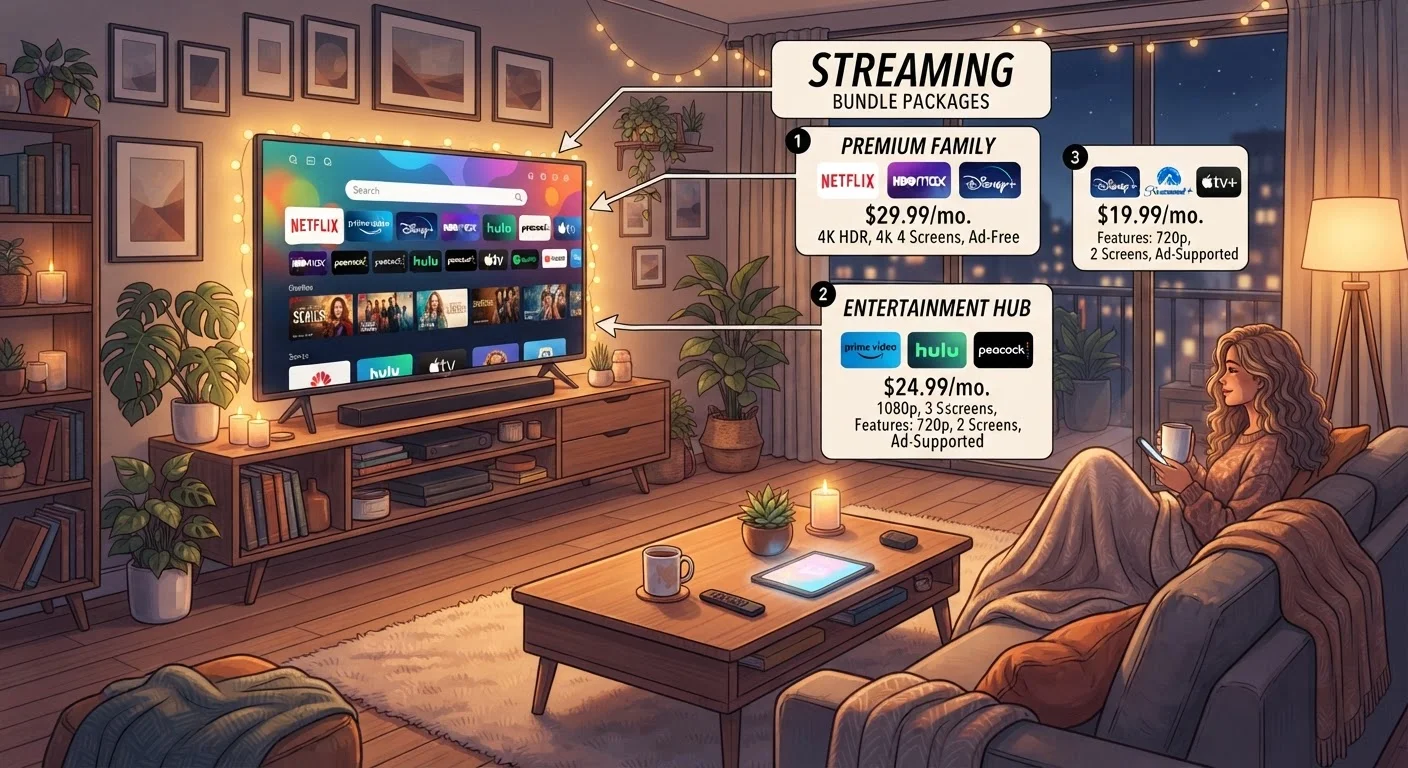
Key Takeaways
- Streaming bundles combine multiple services into one subscription, often at a reduced combined price.
- They are designed to reduce subscriber churn and increase the perceived value of a company's platforms.
- Bundles may integrate services tightly or keep them separate with a shared billing structure.
- Not every bundle represents proportional savings - the value depends on which services you actually use.
- Telecom and device companies increasingly use bundles to compete for long-term customer loyalty.
Streaming Bundle
A streaming bundle is a single subscription package that gives access to two or more streaming services - often at a combined price lower than subscribing to each one separately. Bundles are typically offered by large media or telecom companies that own multiple platforms. They're designed to make subscribing feel like better value while keeping customers within one company's ecosystem.
Bundles may be 'hard' (services merged into one login) or 'soft' (separate logins billed under one plan). Revenue-sharing arrangements between bundled services are negotiated privately and vary by deal.
What a Streaming Bundle Actually Is
At its simplest, a streaming bundle is a package deal - multiple streaming services sold together under one subscription. Instead of paying for each platform separately, subscribers get access to several at once, typically through a single monthly charge. The services included might cover video-on-demand, live TV, music, audiobooks, or sports, depending on the provider.
Bundles aren't new as a concept - cable TV was essentially a bundle of channels - but the streaming era has reframed how they're assembled and marketed. Today's bundles often reflect corporate ownership structures: a media conglomerate that owns several platforms has strong incentive to package them together and keep subscribers in its orbit.
For consumers wondering how these packages compare to standalone plans, it helps to understand that not all bundles are built the same way. Several common assumptions about streaming - including the idea that bundles always save money - don't always hold up under scrutiny.
Bundles Vary Widely by Provider
There is no standardized definition of a 'streaming bundle' across the industry. Some packages combine only video services; others mix video, audio, gaming, or cloud storage. Before subscribing, it's worth reading exactly what's included and how each component is accessed, since the experience can differ significantly from one bundle to the next.
The Business Logic Behind Bundling
Streaming companies face one persistent problem: churn. Subscribers cancel when they finish a show, lose interest, or feel the price isn't justified. Bundles are a direct response to that problem. When multiple services are packaged together, the combined library becomes harder to walk away from - there's always something left to watch across one or more of the platforms.
Beyond retention, bundles create what economists call switching costs. A subscriber who has bundled a streaming service with their home internet or mobile plan faces more friction when leaving. Telecom companies leverage this aggressively, offering streaming add-ons as a way to deepen the relationship with customers who might otherwise shop around.
~70%
US adults with at least one streaming subscription
Pew Research Center surveys have consistently found streaming service use is widespread across US age groups, with most households holding multiple subscriptions.
4+
Average streaming services per US household
Industry analysts at firms like Antenna and Deloitte have reported that multi-service households are now the norm, fueling demand for bundled options.
There's also a data dimension. When a company owns multiple services within a bundle, it gains broader visibility into user behavior across platforms - information that can sharpen how recommendations are served to you and inform content investment decisions.
How Bundles Are Structured in Practice
Bundles fall into two broad structural categories. Hard bundles integrate services into a unified interface - one login, one app, one place to search across all included content. Soft bundles keep services operationally separate but consolidate billing, so subscribers see one charge without necessarily experiencing one product.
The billing integration matters for more than convenience. In a soft bundle, if one service raises its price, the overall bundle cost may rise without the consumer realizing the source. Understanding which model a bundle uses is worth knowing before committing.
Some bundles also come with tiered options - ad-supported access at a lower price versus ad-free at a higher one. This mirrors what's available in standalone plans, and the tradeoffs between those tiers apply within bundles just as much as they do elsewhere.
Check Cancellation Terms Before You Subscribe
Some streaming bundles require you to cancel the entire package if you want to drop one component, even if you're only dissatisfied with a single service. Review the cancellation policy upfront - especially if the bundle is tied to a telecom or internet plan - so there are no surprises if your needs change.
Evaluating Whether a Bundle Makes Sense for You
The first question worth asking is simple: do you actually use - or plan to use - the services in the bundle? A discounted package that includes three platforms you'll never open isn't a deal; it's just a higher monthly bill dressed up as one.
It also helps to think about how frequently your viewing habits change. If you tend to subscribe to services for a season or two and then move on, a rigid bundle may limit that flexibility. For those who prefer flexibility, strategies for managing multiple subscriptions can help keep costs from drifting upward over time.
Before committing to any package, there are practical questions worth asking - about content libraries, device compatibility, and cancellation terms - that apply to bundles just as much as individual services.