

Key Takeaways
- Antioxidants neutralize free radicals, which are unstable molecules linked to cellular damage.
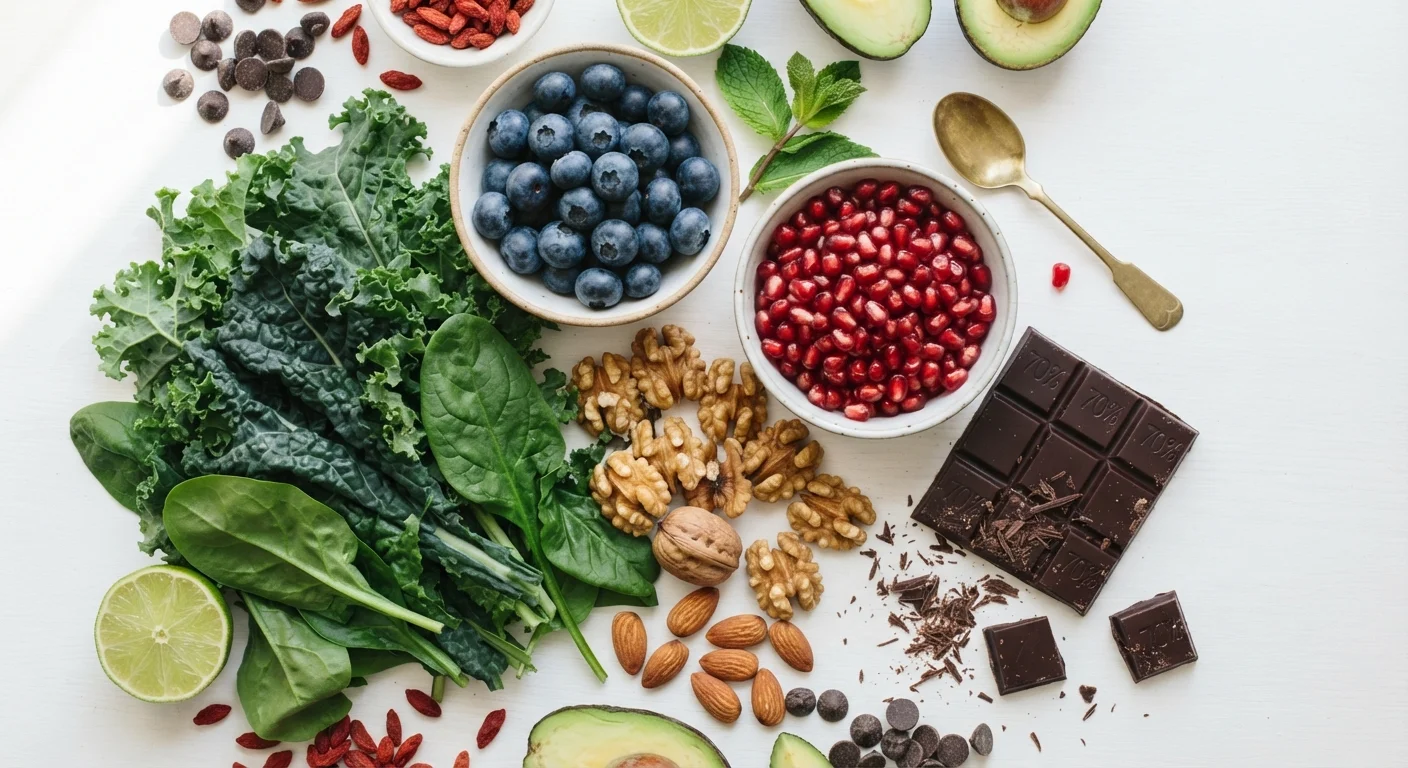
- Many antioxidants come from plant-based foods like fruits, vegetables, nuts, and whole grains.
- Common dietary antioxidants include vitamins C and E, beta-carotene, and polyphenols.
- Research supports eating antioxidant-rich foods as part of a balanced diet, not relying on supplements.
- Consuming a wide variety of colorful plants is one of the most practical ways to increase antioxidant intake.
Antioxidants
Antioxidants are compounds - found naturally in many foods and produced by the body itself - that help neutralize unstable molecules called free radicals. Free radicals are byproducts of normal metabolism and environmental exposures that can damage cells when they accumulate in excess. By intercepting these molecules, antioxidants help protect cells from a process known as oxidative stress.
Antioxidants work through several mechanisms, including donating electrons to free radicals or activating the body's own antioxidant enzyme systems, such as superoxide dismutase and glutathione peroxidase.
Free Radicals and Why They Matter
To understand antioxidants, it helps to first understand what they're working against. Free radicals are atoms or molecules with an unpaired electron, making them chemically unstable and highly reactive. The body generates free radicals constantly as a normal part of energy metabolism, immune responses, and other essential functions.
Exposure to cigarette smoke, ultraviolet radiation, air pollution, and certain dietary patterns can increase free radical production beyond what the body can readily handle. When free radicals accumulate, they can damage DNA, proteins, and cell membranes - a process called oxidative stress. Over time, sustained oxidative stress has been linked in research to aging and conditions including cardiovascular disease and certain cancers, though the causal picture is complex.
The body maintains its own internal antioxidant defenses, but dietary antioxidants provide additional support. This is one reason nutrition researchers pay close attention to antioxidant intake as part of overall diet quality. For a broader look at how nutrients function together, see our guide to vitamins and minerals.
The Body Makes Its Own Antioxidants Too
Not all antioxidants come from diet. The body produces its own, including glutathione - often called the "master antioxidant" - as well as enzymes like superoxide dismutase. Dietary antioxidants complement, rather than replace, these internal systems. Supporting overall health through adequate sleep, regular movement, and avoiding smoking also helps maintain the body's endogenous antioxidant capacity.
Types of Antioxidants Found in Food
Antioxidants are not a single compound - they're a broad category that encompasses hundreds of different substances. The most commonly discussed include:
- Vitamin C - a water-soluble antioxidant found in citrus fruits, bell peppers, strawberries, and broccoli.
- Vitamin E - a fat-soluble compound found in nuts, seeds, sunflower oil, and wheat germ.
- Beta-carotene - a precursor to vitamin A found in orange and yellow vegetables such as carrots and sweet potatoes, as well as leafy greens.
- Selenium - a trace mineral with antioxidant properties found in Brazil nuts, seafood, and whole grains.
- Polyphenols - a large family of plant compounds that includes flavonoids (found in berries, tea, and red wine), resveratrol (in grapes), and curcumin (in turmeric).
Each of these operates through somewhat different mechanisms and is found in different food sources, which is why dietary variety is consistently emphasized by nutrition researchers. These compounds often work alongside macronutrients and other dietary factors as part of a whole-diet approach to health.
~4,000
Known flavonoid compounds in plants
Researchers have identified approximately 4,000 flavonoids - a major class of polyphenol antioxidants - highlighting the enormous diversity of antioxidant compounds in plant-based foods.
2x-3x
Higher antioxidant intake in plant-rich diets
Studies comparing dietary patterns consistently find that people following predominantly plant-based diets consume substantially more antioxidants than those eating heavily processed Western diets.
~90%
U.S. adults falling short of vegetable intake guidelines
According to the CDC, roughly 90% of U.S. adults do not meet federal recommendations for vegetable consumption, suggesting most people have room to increase antioxidant-rich food intake.
What the Research Actually Shows
Epidemiological research - studies that track dietary patterns and health outcomes in large populations - has consistently found that people who eat more fruits, vegetables, and plant-based foods tend to have lower rates of certain chronic diseases. Antioxidants are among the factors researchers study to explain these associations.
However, translating that observation into a simple "antioxidants prevent disease" conclusion has proven difficult. Clinical trials testing isolated antioxidant supplements have produced mixed, and sometimes surprising, results. Large trials examining beta-carotene supplements, for example, found no protective effect and, in some high-risk populations, possible harm.
“The evidence consistently points to dietary patterns rather than individual nutrients. Whole foods deliver antioxidants in combinations and concentrations the body has evolved to work with - that context appears to matter enormously.”
— Walter Willett, Professor of Epidemiology and Nutrition, Harvard T.H. Chan School of Public Health
The current scientific consensus suggests that the protective effects observed in diet studies are likely due to the combination of compounds found in whole foods - not any single antioxidant acting alone. Dietary patterns like the Mediterranean diet, which is naturally rich in antioxidant-containing foods, are among the most studied in this context. See our overview of the Mediterranean diet's core principles for more context.
This article is for general informational and educational purposes only and is not a substitute for professional medical or nutritional advice. Consult a qualified healthcare provider before making significant dietary changes or starting any supplement regimen.
Practical Ways to Increase Antioxidant Intake
Nutrition experts generally agree that obtaining antioxidants through food rather than supplements is the preferred approach for most people. Here are research-informed strategies for boosting dietary antioxidant intake:
- Eat the rainbow. Different pigments in fruits and vegetables correspond to different antioxidant compounds. Variety across colors - red, orange, purple, green, yellow - helps ensure a broader intake.
- Include legumes and whole grains. Beans, lentils, and whole grains contribute antioxidants alongside fiber and other beneficial nutrients.
- Choose minimally processed versions. Whole or lightly cooked foods generally retain more antioxidant content than heavily processed alternatives.
- Use herbs and spices. Ingredients like turmeric, oregano, and cinnamon are concentrated sources of polyphenols and add antioxidant value to meals.
- Read labels thoughtfully. When evaluating packaged foods, understanding the ingredient list matters - our guide to reading nutrition labels can help.
Cooking Can Affect Antioxidant Content
Some antioxidants are heat-sensitive and can be reduced by cooking, while others become more bioavailable after gentle heating. For example, lycopene in tomatoes increases with cooking, while vitamin C in vegetables is best preserved with light steaming or raw preparation. Varying cooking methods across the week helps retain a broader range of antioxidant compounds.
For those considering antioxidant supplements, it is important to discuss this with a healthcare provider, particularly for people with existing health conditions or those taking medications.