

Key Takeaways
- Film genres are categories defined by shared storytelling conventions, visual styles, and audience expectations.
- Most films blend elements from multiple genres rather than fitting neatly into one box.
- Genre conventions can be followed, subverted, or deconstructed - each choice shapes meaning.
- Understanding genre helps viewers engage more critically and enjoyably with any film.
- Genre awareness opens doors to international and independent cinema that might otherwise seem unfamiliar.
Start here
What Is a Film Genre, Exactly?
Next
The Major Genres and What Makes Them Tick
Then
Genre Conventions: Rules Made to Be Bent
When you're ready
Why Genre Matters for Viewers
Go further
Going Deeper: Where to Take Your Genre Education Next
What Is a Film Genre, Exactly?
Think of a film genre as an unspoken contract between a movie and its audience. When you sit down for a horror film, you expect tension, darkness, and at least one good scare. When you queue up a romantic comedy, you're signing on for charm, mishaps, and a satisfying resolution. Genre sets those expectations - and filmmakers either honor, twist, or shatter them.
Formally, a genre is a category of film defined by recurring narrative structures, thematic concerns, visual styles, and emotional tones. These patterns didn't emerge from a committee; they developed organically over decades of filmmaking, audience response, and cultural shifts. The western, for instance, grew from early 20th-century American mythology. Film noir crystallized in the 1940s from hard-boiled crime fiction and post-war anxiety.
Genre
A category of film defined by shared themes, story structures, visual styles, and emotional tones that audiences learn to recognize over time.
Convention
A recurring element or pattern within a genre - like the haunted house in horror or the dueling scene in westerns - that audiences expect and filmmakers consciously use or avoid.
Subgenre
A more specific division within a broader genre. For example, 'slasher' is a subgenre of horror, and 'spaghetti western' is a subgenre of the western.
Genre Deconstruction
A filmmaking approach that critically examines or challenges the assumptions and conventions of a genre, rather than simply following them.
Hybrid Genre
A film that deliberately blends elements from two or more distinct genres, such as a horror-comedy or a sci-fi western.
Film Noir
A style of crime film (and later a broader genre) defined by shadowy visuals, morally complex characters, cynical themes, and a dark, fatalistic atmosphere.
Genres are fluid, not fixed. They evolve as culture evolves, and a single film can belong to several at once. What matters is recognizing the vocabulary each genre uses - so you can understand what a filmmaker is saying when they follow the rules, and what they mean when they don't.
The Major Genres and What Makes Them Tick
Here's a quick tour of the genres most American viewers encounter - and the core elements that define each:
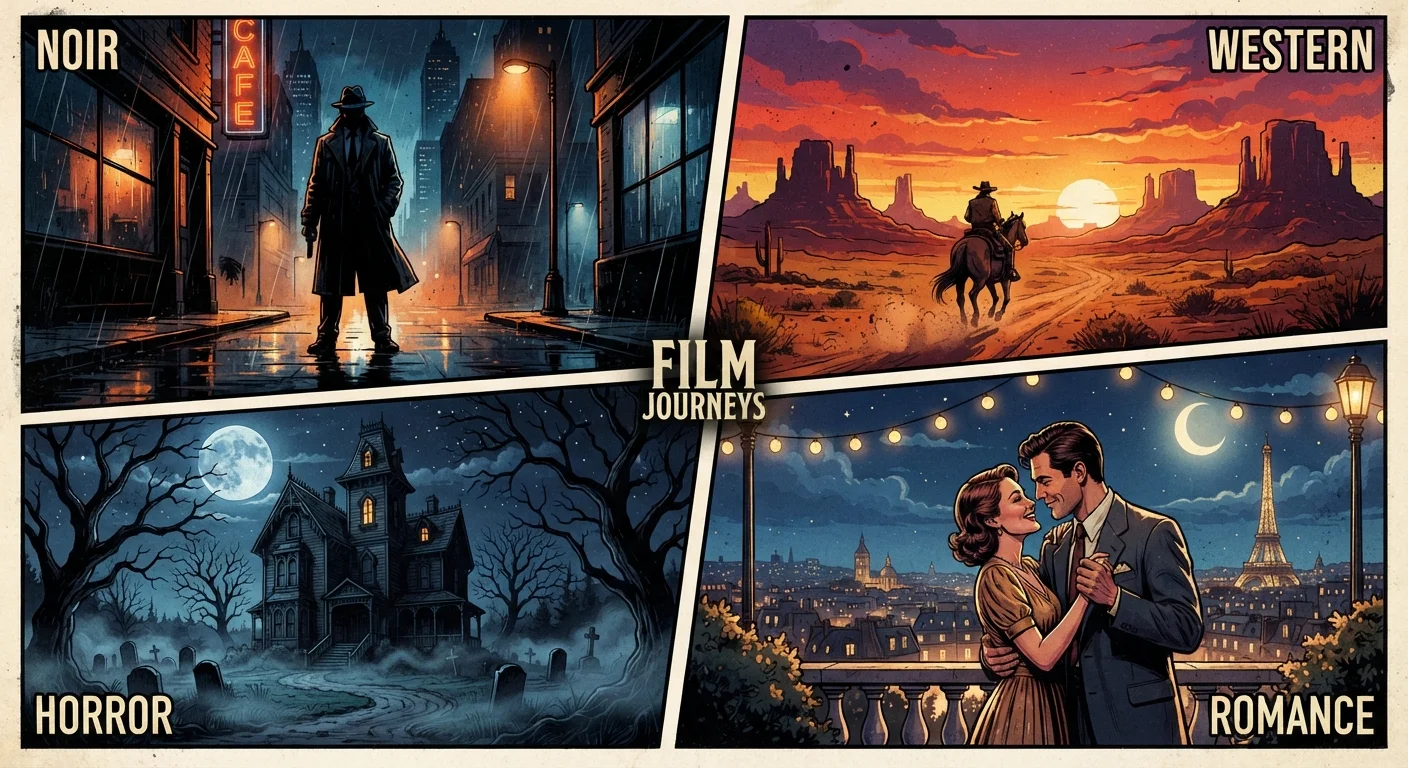
- Horror: Built on dread, threat, and the unknown. Classic tools include isolation, the monster (literal or psychological), and suspense built through sound design and camera movement.
- Film Noir: Morally ambiguous characters, shadowy cinematography, femmes fatales, and cynical worldviews define this crime-adjacent style born in Hollywood's Golden Age.
- Western: Frontier landscapes, honor codes, and the tension between civilization and lawlessness. The genre often interrogates American mythology as much as it celebrates it.
- Romantic Comedy (Rom-Com): Two people who belong together, kept apart by misunderstandings, timing, or circumstance - until they aren't. Warmth and wit are essential.
- Science Fiction: Uses speculative technology or alternate futures to examine present-day human concerns. Ideas drive the narrative as much as action does.
- Thriller: Suspense sustained over an entire film, usually involving danger, deception, or race against time. Often overlaps with action and crime.
- Musical: Characters express emotion and advance story through song and dance, demanding a particular kind of stylized commitment from performers and directors alike.
None of these categories is hermetically sealed. Many beloved films - think sci-fi westerns or horror comedies - live comfortably in the overlap. For international cinema, genres travel with interesting mutations; Korean thrillers and Iranian dramas show how genre conventions shift across cultures.
Genre Conventions: Rules Made to Be Bent
Every genre carries a toolkit of conventions - recurring elements audiences learn to recognize. In a thriller, you might expect a ticking clock. In a western, a climactic showdown. In a horror film, the moment a character enters the room they absolutely should not enter.
These conventions serve a purpose: they create a shared language. When a filmmaker uses a convention, they activate everything the audience already associates with it. When they subvert it - say, the horror film that never delivers the monster, or the rom-com that doesn't end with a reunion - the absence itself becomes meaningful.
Try a Genre Double Feature
A great way to spot conventions in action is to watch two films from the same genre back-to-back - one classic, one contemporary. The similarities reveal the genre's DNA; the differences show how filmmakers evolve and challenge it. Even two hours of viewing can dramatically sharpen your genre eye.
Genre deconstruction (pulling a genre apart to examine its assumptions) is one of filmmaking's richest traditions. Films in this mode don't just tell a story within a genre; they interrogate why the genre exists and what it reveals about culture. Understanding genre conventions is the entry point to appreciating that kind of critical filmmaking.
For a deeper look at how films communicate beyond plot, reading visual symbolism and subtext builds naturally on genre awareness.
Why Genre Matters for Viewers
Knowing genre helps you watch more actively. It gives you a framework to notice when a film is doing something unexpected - and to ask why. It also helps calibrate your expectations. Judging a slasher film by the standards of a psychological drama isn't fair to either; understanding what each genre is trying to do sharpens your ability to evaluate whether it succeeds.
Genre awareness also opens doors. Once you recognize the conventions of American noir, for example, you'll notice them echoed and reinterpreted across decades of international cinema. Genre is a universal film language with many regional dialects.
Genre and Music Cross-Pollinate Too
Genre conventions aren't unique to film. Music has its own parallel evolution of genre rules, subgenres, and boundary-blurring moments. If you're curious how genre deconstruction plays out in another medium, the blurring of country, pop, and hip-hop offers a useful comparison. Seeing how genres evolve across art forms makes the concept click faster.
For anyone curious about expanding their vocabulary beyond genre into broader film craft, this film terminology glossary covers essential terms in plain language. Pairing genre literacy with craft vocabulary dramatically enriches how you engage with any film.
Going Deeper: Where to Take Your Genre Education Next
The best way to learn genre is to watch with intention. Pick a genre, identify a few landmark films within it, and watch them in sequence - patterns emerge quickly. Then branch into subgenres, international interpretations, or genre-bending outliers.
After each film, reflection sharpens what you've absorbed. Thoughtful post-viewing questions can guide that process and help you articulate what the film was doing with its genre framework. And as you explore where films are available, it's worth understanding how release paths shape what gets made and seen - the streaming versus theatrical debate has real implications for genre diversity.
Criterion Channel
A streaming platform with curated collections organized by genre, director, and movement - ideal for exploring the history and evolution of any genre in depth.
Letterboxd
A social film diary platform where users create genre-specific lists and reviews, making it easy to discover landmark and hidden-gem films within any genre.
Film Studies Genre Guides (University Libraries)
Many university library systems publish freely accessible guides to film genre theory - a reliable resource for readers who want academic context behind the conventions.
Genre filmmaking is one of cinema's most democratic and enduring traditions. It meets audiences where they are, speaks in familiar terms, and - at its best - uses that familiarity to say something genuinely surprising. That's a deal worth accepting.