

Key Takeaways
- Wearing appropriate PPE dramatically reduces the most common DIY injury risks.
- Ladder misuse is one of the leading causes of serious home-repair injuries.
- Electrical, gas, and structural work typically requires licensed professionals and local permits.
- A tidy, well-lit work zone prevents accidents before tools even switch on.
- Having a basic first aid kit and knowing your shutoffs can limit damage when things go wrong.
Why Safety Habits Matter Before You Pick Up a Tool
Home repair is empowering - it saves money, builds skills, and keeps your property in good shape. But the same projects that feel routine can cause real harm when approached without preparation. Falls, lacerations, chemical burns, and power-tool injuries send hundreds of thousands of Americans to emergency rooms each year, and the majority of those incidents happen at home.
Safety doesn't mean being afraid of your toolbox. It means building habits that let you work confidently and finish the job in one piece. Whether you're patching drywall or replacing a faucet, the fundamentals covered here apply. And for tasks that go beyond cosmetic fixes, understanding your limits is part of that same mindset - see our guide on year-round maintenance inspections to understand which tasks are genuinely DIY-friendly.
500,000+
Annual ladder-related ER visits in the US
According to the American Academy of Orthopaedic Surgeons, ladder falls account for over 500,000 emergency room visits each year in the United States.
~33%
DIY injuries involving power tools
The Consumer Product Safety Commission estimates roughly one-third of home-repair injuries involve power tools, with saws representing the highest risk category.
Personal Protective Equipment: What to Have and When to Use It
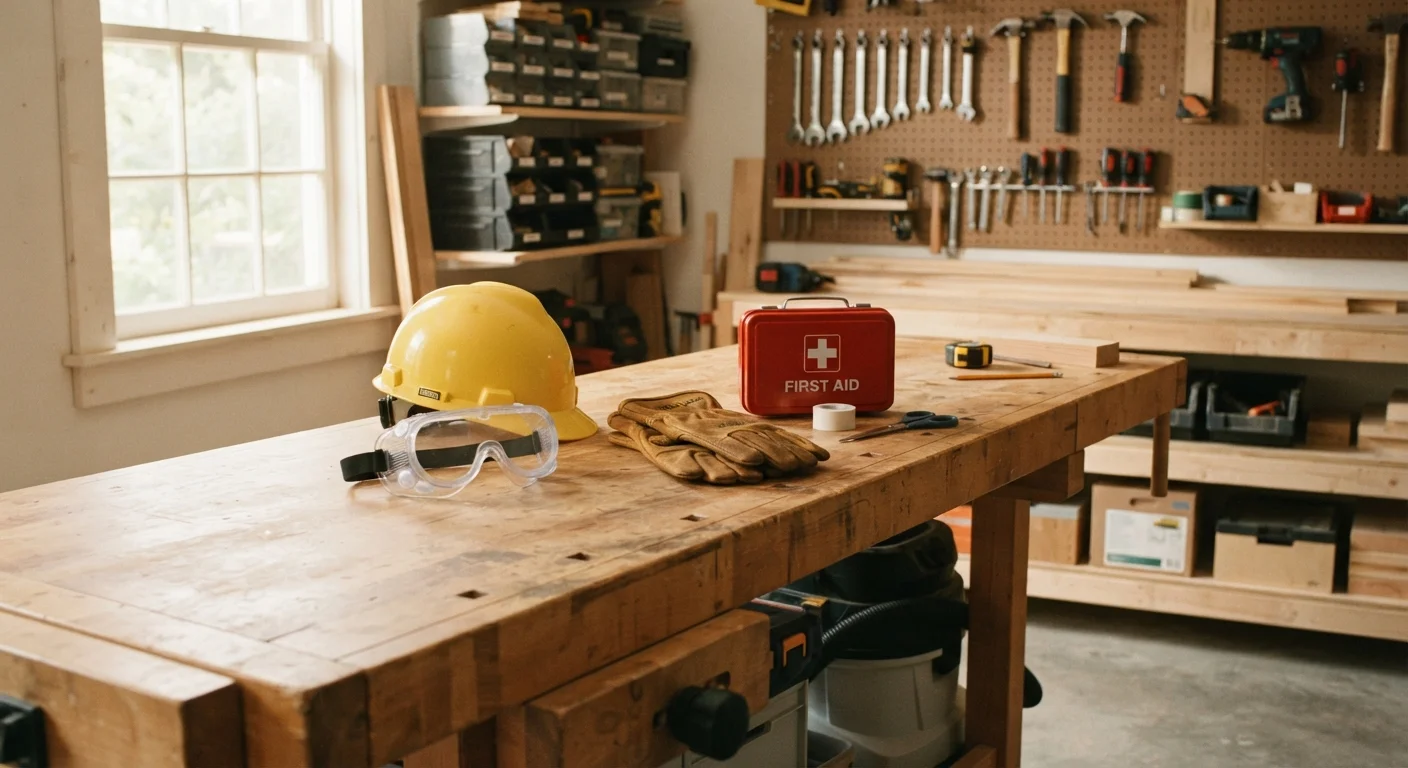
Personal protective equipment - commonly called PPE - is the first line of defense on any repair job. Think of it less as optional gear and more as a minimal standard before starting.
- Safety glasses or goggles: Required any time you're cutting, drilling, sanding, or mixing chemicals. Flying debris is fast and unpredictable.
- Work gloves: Protect against cuts, splinters, and abrasions. Choose gloves that still allow grip - loose gloves around rotating tools create their own hazard.
- Hearing protection: Prolonged exposure to power tools exceeds safe decibel thresholds. Foam earplugs cost very little and protect long-term hearing.
- Dust mask or respirator: A basic N95 mask handles sanding dust and fiberglass insulation. If you're working with older paint or suspected asbestos-containing materials, stop and consult a certified professional.
- Hard-soled, closed-toe footwear: Flip-flops and open shoes have no place on a worksite, even a home one.
Fit your PPE before you enter the workspace, not after you've already started - by the time debris is flying, it's too late to reach for your glasses.
Compliance with safety gear drops sharply when workers have to pause mid-task to retrieve it. Making it a pre-work ritual removes that hesitation entirely.
When using a respirator for dusty work, do a quick seal check: cup the mask, exhale sharply, and feel for air leaking around the edges. A poor seal means you're breathing what you're trying to block.
Many homeowners wear dust masks incorrectly - too loose or with the nose clip unbent - reducing their protective value significantly.
Ladder and Fall Safety Fundamentals
Falls from ladders are among the most common and most serious DIY injuries. The hazard usually isn't the height - it's poor setup or overreach. Follow these principles every time you climb:
- Inspect the ladder first. Check for cracked rungs, bent rails, or loose hardware before trusting your weight to it.
- Set it at the right angle. For extension ladders, the standard guidance is a 4-to-1 ratio: one foot of base distance for every four feet of height. The ladder should lean against a stable surface, not a gutter or loose trim.
- Maintain three points of contact. Two hands and one foot, or two feet and one hand, should be touching the ladder at all times when climbing.
- Don't overreach. If you can't reach something comfortably without leaning past your belt buckle, descend and reposition the ladder.
- Use the right ladder for the job. Step ladders for indoor tasks, extension ladders for rooflines and exterior walls. Never stand on the top cap of a step ladder.
Never Use a Metal Ladder Near Electrical Lines
Metal ladders conduct electricity. If your work puts you anywhere near overhead power lines or exterior electrical service equipment, use a fiberglass ladder instead. Maintain a clearance of at least ten feet from any energized line - and if that's not possible, contact your utility provider before proceeding.
Power Tool Handling and Safe Work Zones
Circular saws, drills, angle grinders, and nail guns are genuinely useful - and genuinely capable of serious injury. Treating them with consistent respect is what separates experienced DIYers from people who end up in urgent care.
Before you start any power tool:
- Read the manual at least once, especially the safety section.
- Inspect the tool for damaged cords, dull or cracked blades, and loose guards.
- Secure your workpiece with clamps - never hold material with one hand while cutting with the other.
- Keep cords behind you and out of the cutting path.
Your work zone matters, too. A cluttered floor is a trip hazard. Poor lighting causes misjudged cuts. Ensure your workspace is clean, well-lit, and free of bystanders - especially children - before switching anything on. Outdoors projects carry their own considerations; our outdoor maintenance hub covers deck and yard repair context worth reviewing.
Electrical, Gas, and Structural Work: Know When to Stop
Some repairs clearly belong to licensed professionals. Electrical, gas, and load-bearing structural work fall into this category - not because DIYers lack intelligence, but because the consequences of errors in these areas are severe and not always immediately visible.
Stop Before Working on Gas or Electrical Systems
Gas leaks and electrical faults can cause fires, explosions, and electrocution - and errors are not always immediately apparent. If you smell gas, leave the building immediately and call your gas utility from outside. For any wiring work beyond replacing a switch cover, engage a licensed electrician. These are not areas where DIY carries acceptable risk.
Electrical work in particular is full of dangerous misconceptions. Before you touch a circuit breaker or outlet, review common myths about DIY electrical repairs that trip up even experienced homeowners. For a deeper look at why wiring projects carry unique risks, see why DIY electrical work carries risks cosmetic projects don't.
Most jurisdictions also require permits for electrical, plumbing, HVAC, and structural changes. Working without them can affect your homeowner's insurance, complicate future sales, and expose you to liability. Our article on understanding permits before starting a project breaks down what typically triggers a permit requirement.
Keeping Your Workspace and Home Ready for Emergencies
Even careful workers have accidents. How you respond in the first minutes matters enormously. A few preparations take very little time and can make a significant difference:
- First aid kit: Keep a stocked kit in your workshop or garage. Include bandages, antiseptic wipes, medical tape, and nitrile gloves at minimum.
- Know your shutoffs: Locate your main water shutoff, gas shutoff, and electrical panel before you start any project. In an emergency, fumbling to find them costs precious time.
- Fire extinguisher: A multipurpose ABC-rated extinguisher should be accessible in any space where you use power tools, solvents, or heat sources.
- Ventilation: Any work involving paints, stains, adhesives, or solvents requires adequate airflow. Open windows, use fans, and step outside regularly.
- Tell someone: If you're working alone on a project with any real hazard - rooftop, crawlspace, electrical panel - let a household member or neighbor know. A check-in call is a simple safety net.
This article is for general informational purposes only. For hazardous repairs involving electrical systems, gas lines, or structural components, always consult a licensed professional and verify local permit requirements before beginning work.