

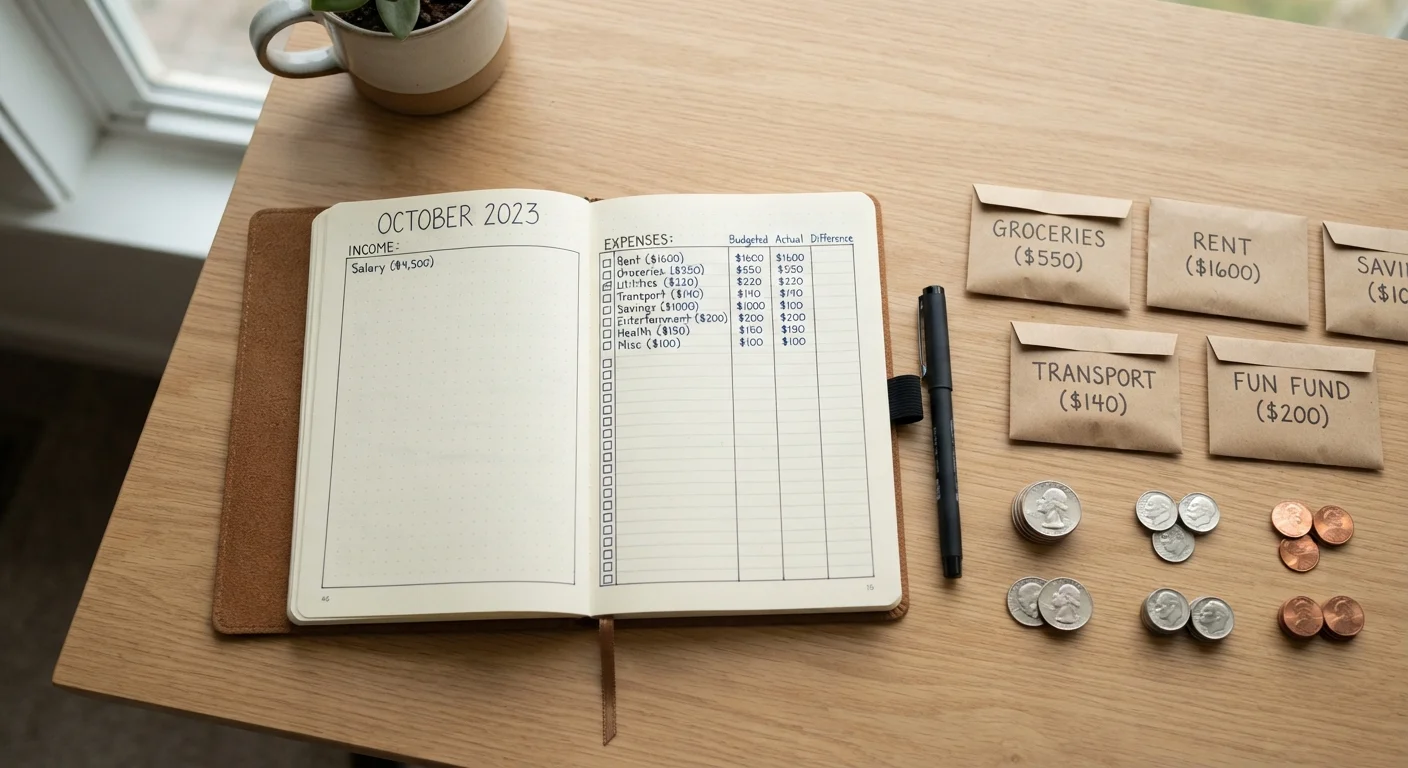
Key Takeaways
- Zero-based budgeting requires income minus all allocations to equal exactly zero each month.
- Every dollar is assigned a category - including savings, debt payoff, and discretionary spending.
- The method demands more active tracking than set-and-forget approaches.
- It works especially well for people who want granular control or are working to eliminate debt.
- Those with irregular income can adapt ZBB by budgeting from their lowest expected monthly earnings.
Zero-Based Budgeting
Zero-based budgeting (ZBB) is a method where you assign every dollar of your income to a specific category - expenses, savings, or debt repayment - until nothing is left unallocated. The goal is for income minus all allocations to equal zero. This doesn't mean spending everything; it means every dollar has a deliberate purpose before the month starts.
ZBB was originally developed as a corporate financial planning tool in the 1970s by Pete Pyhrr and later adapted for personal finance. In household budgeting, it operates on a monthly income-reset cycle rather than rolling balances.
How Zero-Based Budgeting Works
The core rule of zero-based budgeting is straightforward: take your total monthly income, then assign every single dollar to a category until the remaining balance is zero. Those categories span your full financial picture - housing, groceries, transportation, utilities, subscriptions, entertainment, savings, emergency fund contributions, and debt payments.
Here's a simplified example. If your take-home pay is $3,500 a month, you'd list every anticipated expense and savings goal, assign dollar amounts to each, and keep adjusting until the sum of all allocations equals $3,500. Not $3,450 with $50 floating - exactly $3,500. That leftover $50 gets a job: maybe it goes toward a vacation fund or an extra debt payment.
The process resets every month. Because spending patterns vary - holidays, car repairs, seasonal utility bills - you build a new zero-based budget at the start of each period rather than copying last month's numbers blindly. This monthly reset is one of ZBB's defining features and one of its greatest strengths.
Give Your 'Remaining Balance' a Name
If you finish building your budget and have dollars left over, don't leave them in a generic 'miscellaneous' bucket. Create a specific category - 'extra debt payment,' 'vacation savings,' or 'next month's buffer.' Named allocations are far less likely to vanish without explanation than unlabeled funds.
Who Benefits Most from This Approach
Zero-based budgeting tends to be most effective for people who feel their money disappears without a clear accounting of where it went. If you consistently reach the end of the month wondering what happened to your paycheck, ZBB forces that reckoning upfront rather than in retrospect.
It's also particularly useful for households aggressively paying down debt or building an emergency fund. Because savings and debt repayment are treated as non-negotiable line items - not whatever is left over - they become priorities rather than afterthoughts.
65%
Americans living paycheck to paycheck
According to a 2023 LendingClub report, nearly two-thirds of U.S. consumers reported spending all or most of their monthly income, highlighting the widespread need for structured allocation methods.
$1,000
Minimum emergency fund benchmark
Many personal finance educators suggest a starter emergency fund of at least $1,000 as a first savings milestone - a goal ZBB can prioritize by treating it as a required budget line.
By contrast, people with very tight margins and unpredictable income may find the monthly rebuilding process stressful. If that sounds like your situation, budgeting strategies tailored for tight income may offer a more practical starting point before layering in ZBB's structure.
For a side-by-side comparison with other frameworks, see how ZBB stacks up against other popular budgeting methods.
Building Your First Zero-Based Budget
Start by calculating your actual take-home income for the month - after taxes and any automatic deductions. If you've never built a budget before, this five-step beginner's budgeting walkthrough covers the foundational tracking steps that make ZBB easier to implement.
- List fixed expenses first. Rent or mortgage, insurance premiums, loan minimums, and subscriptions are predictable - enter their exact amounts.
- Estimate variable expenses. Groceries, gas, dining out, and clothing fluctuate. Use recent bank statements to set realistic ranges and pick a number within that range.
- Assign savings and debt goals. Treat these as expenses. Decide how much goes to an emergency fund, retirement contributions, or extra debt payments before finalizing discretionary categories.
- Fill in discretionary spending. Entertainment, hobbies, gifts - allocate what remains after the essentials and goals are covered.
- Reconcile to zero. If you still have dollars unassigned, give them a purpose. If you're over budget, trim discretionary categories until the math balances.
Track actual spending throughout the month and compare it to your allocations. Adjust categories - not the total - when real life diverges from the plan.
This article is for general informational and educational purposes only and does not constitute personalized financial advice. Consult a qualified financial professional for guidance tailored to your individual circumstances.