

Key Takeaways
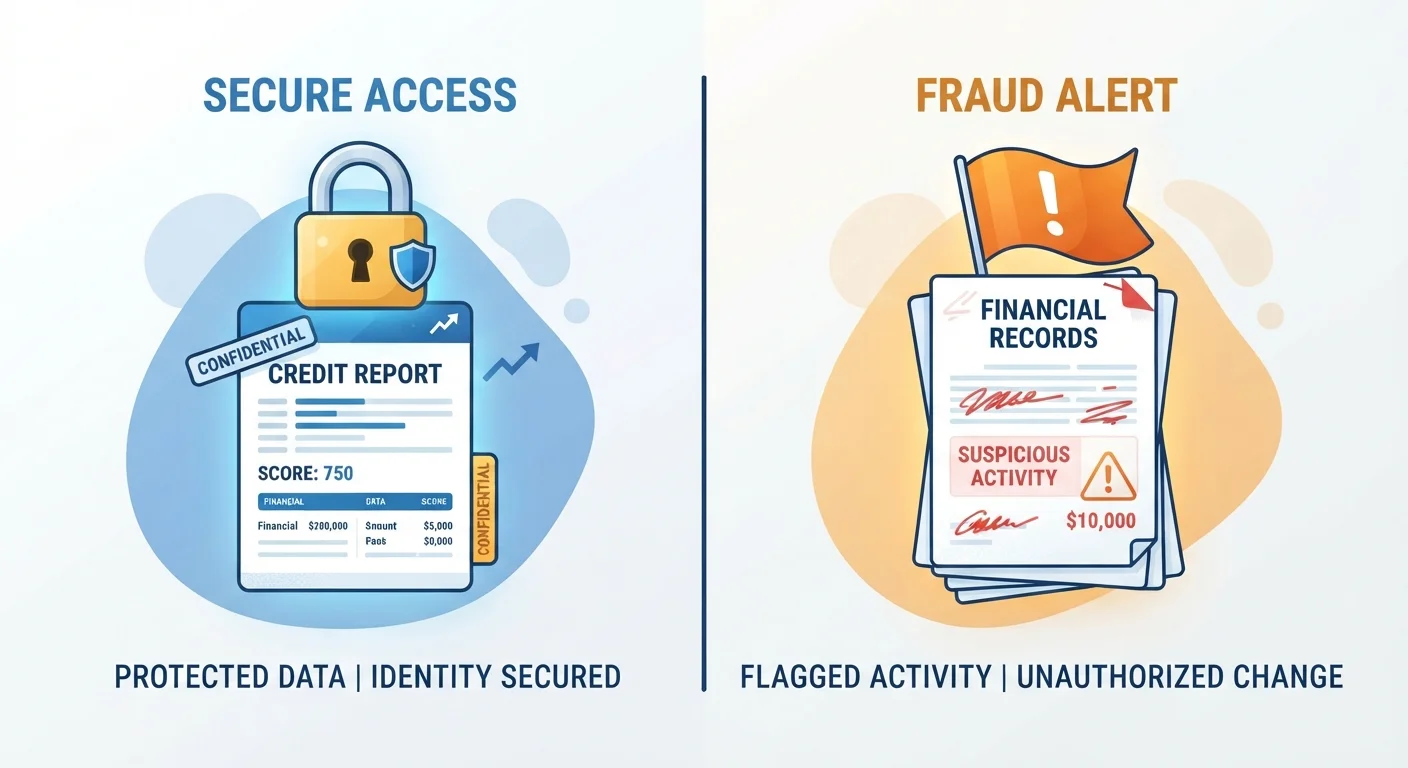
- A credit freeze blocks new credit from being opened in your name entirely, while a fraud alert only requires lenders to take extra verification steps.
- Credit freezes are free at all three major bureaus and must be lifted before you can apply for new credit yourself.
- A fraud alert lasts one year for an initial alert or seven years for an extended alert tied to identity theft.
- Both tools protect your credit file but work best in different situations - the right choice depends on your level of risk.
- Neither a freeze nor a fraud alert monitors your existing accounts for suspicious activity.
Our Verdict
A credit freeze offers the strongest protection by effectively locking your credit file from new inquiries, making it the better choice after a confirmed data breach or identity theft. A fraud alert is a lighter-touch option suited to situations where you suspect risk but still need easy access to credit. For most consumers dealing with a serious threat, a credit freeze is the more reliable safeguard.
| Best for | Recommended |
|---|---|
| Those who want maximum protection after a data breach or confirmed identity theft | Credit Freeze |
| Those who suspect risk but still need to apply for credit in the near term | Fraud Alert |
| Active-duty military members seeking automatic protections | Fraud Alert (Active Duty) |
How Each Tool Works
Both a credit freeze and a fraud alert are tools you can place on your credit file at no cost, but they operate in fundamentally different ways. Understanding the mechanics helps you choose the right response to a potential threat.
Credit freeze: Also called a security freeze, this restricts access to your credit report so that most new lenders cannot pull it. Because lenders typically need to review your report before extending new credit, a freeze effectively prevents new accounts from being opened in your name - even by you. It does not affect your existing accounts, your credit score, or your ability to access your own report.
Fraud alert: This places a notice on your credit file instructing lenders to take extra steps to verify your identity before extending credit. It doesn't block access outright; rather, it flags your file and prompts lenders to call you or use additional verification. A standard initial fraud alert lasts one year. If you've been a confirmed victim of identity theft, an extended fraud alert lasts seven years.
Placing a fraud alert at one bureau automatically notifies the other two, while a credit freeze must be placed individually at each of the three major credit reporting agencies - Equifax, Experian, and TransUnion - as well as at specialty reporting agencies if you want comprehensive coverage.
Comparing the Two Options Side by Side
The table below summarizes how each option compares across the factors that matter most to everyday consumers.
| Credit Freeze | Fraud Alert | |
|---|---|---|
| Level of protection | Blocks most new credit access entirely | Flags file; requires extra lender verification |
| Cost | Free at all three bureaus | Free at all three bureaus |
| Duration | Indefinite until you lift it | 1 year (7 years for extended alert) |
| Where to place it | Must be placed at each bureau separately | One bureau notifies the other two automatically |
| Impact on applying for new credit | Must temporarily lift freeze to apply | No freeze; lenders add verification step |
| Effect on existing accounts | No effect on existing accounts | No effect on existing accounts |
| Best suited for | Confirmed breach or identity theft | Suspected risk; still need credit access |
It's worth noting that neither option protects accounts you already have open. For that layer of protection, consider pairing either tool with regular account monitoring. You can also learn more about how lenders access your file in our guide to hard vs. soft credit inquiries.
When to Choose a Credit Freeze
A credit freeze is the stronger of the two protections and is most appropriate when:
- Your Social Security number or financial data has been exposed in a confirmed breach.
- You've discovered accounts on your credit report that you didn't open - see our guidance on disputing errors on your credit report if you spot unfamiliar entries.
- You do not expect to apply for new credit in the near future.
- You want the most definitive barrier against someone fraudulently opening credit in your name.
The main trade-off is convenience. Every time you apply for credit - a mortgage, auto loan, or new credit card - you'll need to temporarily lift the freeze at each relevant bureau first, then reapply it afterward. The process can typically be done online or by phone, but it does require planning ahead.
Lift Your Freeze Before Applying for Credit
If you have a credit freeze in place and need to apply for a loan or credit card, contact each relevant bureau ahead of time to temporarily thaw your file. Most bureaus allow you to set a specific date range for the lift so the freeze re-engages automatically. Plan for this a few days in advance to avoid delays during the application process.
When to Choose a Fraud Alert
A fraud alert is a better fit when you want a layer of protection without the friction of managing a freeze. Consider it if:
- You've lost your wallet or suspect your personal information may have been exposed, but no fraudulent activity has been confirmed yet.
- You're still actively applying for credit and need lenders to be able to pull your report.
- You want a simpler, one-step process - placing a fraud alert at one bureau is enough to trigger notifications across all three.
Active-duty military members are entitled to a free active-duty fraud alert that lasts one year and can be renewed. This alert also removes you from pre-screened credit offer lists during that period.
Keep in mind that a fraud alert relies on lenders following through with additional verification steps, which isn't always guaranteed. It's a meaningful signal, not a hard block. For a broader picture of what your credit file contains and how to audit it regularly, see our annual credit report audit checklist.
This article is for general informational purposes only and does not constitute personalized financial, legal, or credit counseling advice. Consult a qualified financial professional for guidance specific to your situation.