

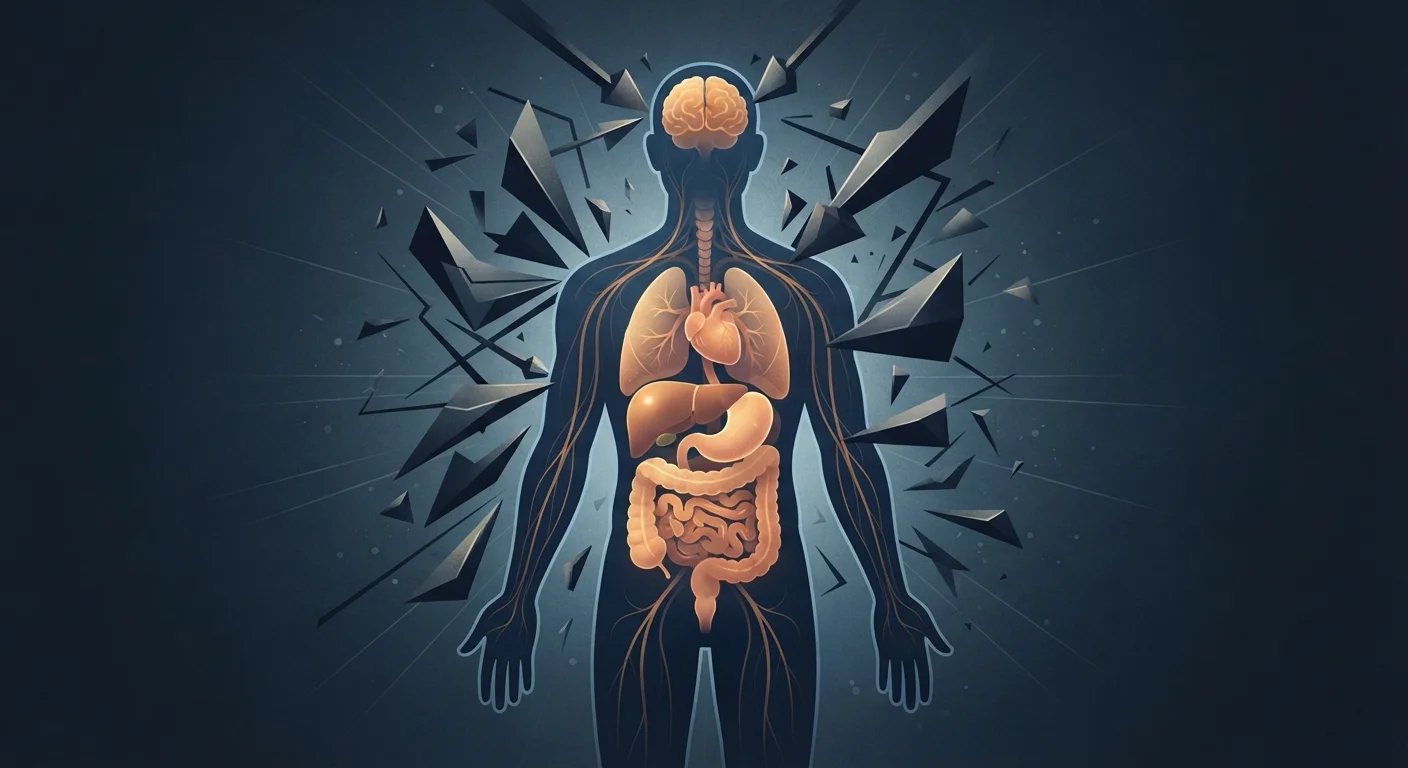
Key Takeaways
- The body's stress response evolved for short-term threats, not long-term pressures.
- Prolonged stress hormones like cortisol can affect the heart, immune system, and brain over time.
- Chronic stress is linked to increased risk of cardiovascular disease, disrupted sleep, and immune suppression.
- Recognizing stress early and seeking support can meaningfully reduce its long-term impact.
- Lifestyle factors such as physical activity and social connection may buffer the effects of stress.
Chronic Stress
Chronic stress is a prolonged state of psychological and physiological tension that persists when the body's stress response is repeatedly or continuously activated. Unlike short-term stress - which serves a protective purpose - chronic stress occurs when the body doesn't fully return to its resting state between stressors. Over time, this sustained activation can affect multiple organ systems and contribute to a range of health concerns.
The physiological stress response is primarily mediated by the hypothalamic-pituitary-adrenal (HPA) axis and the sympathetic nervous system, both of which regulate the release of hormones including cortisol and adrenaline.
The Body's Stress Response: Built for Short Bursts
When the brain perceives a threat - whether physical danger or a looming deadline - it triggers a cascade of hormonal signals designed to prepare the body for action. Adrenaline increases heart rate and sharpens focus. Cortisol raises blood sugar for immediate energy and suppresses non-essential functions like digestion. This fight-or-flight response is a highly effective short-term survival mechanism.
The problem arises when that response doesn't switch off. Modern life presents stressors - financial pressure, workplace demands, relationship difficulties - that don't resolve in minutes. When the body remains in a heightened state for days, weeks, or months, the same systems meant to protect it begin to work against it.
Short-Term Stress Isn't Always Harmful
Not all stress is damaging. Acute stress - a brief, intense response to a real challenge - can sharpen focus, motivate action, and even strengthen immune responses temporarily. The concern with chronic stress is specifically its duration and the body's inability to return to baseline. Context and recovery both matter significantly when evaluating stress's impact on health.
What Happens to the Body Under Long-Term Stress
Sustained exposure to stress hormones affects nearly every major system in the body. Here's what the evidence suggests about some of the most well-documented areas:
Cardiovascular System
Chronically elevated cortisol and adrenaline keep blood pressure and heart rate higher than baseline. Over time, this sustained pressure increases wear on blood vessel walls and raises the risk of hypertension and cardiovascular disease. Research published through institutions such as the American Heart Association has consistently identified chronic stress as a contributing factor in heart health outcomes.
Immune Function
Cortisol is anti-inflammatory in the short term - useful when you need to recover from injury quickly. But over time, the immune system can become less responsive to cortisol's signals, leading to dysregulated inflammation. This may contribute to greater susceptibility to illness and slower recovery times.
Sleep and the Brain
Stress and sleep have a bidirectional relationship: stress impairs sleep quality, and poor sleep amplifies the stress response. Chronically disrupted sleep affects memory consolidation, emotional regulation, and cognitive function. Prolonged exposure to elevated cortisol has also been associated in research with changes to the hippocampus, the brain region involved in memory and learning.
77%
Adults reporting physical symptoms from stress
According to the American Psychological Association's Stress in America survey, a significant majority of US adults report experiencing physical symptoms they associate with stress.
2-3×
Increased cardiovascular risk with chronic stress
Research suggests chronically high stress levels are associated with a substantially elevated risk of cardiovascular events compared to low-stress counterparts, though individual risk depends on many factors.
40%
Adults reporting stress affects sleep quality
Surveys consistently find that a large share of US adults identify stress as a primary factor disrupting their ability to fall or stay asleep on a regular basis.
Digestive Health
The gut has its own complex nervous system - often called the enteric nervous system - and is highly sensitive to stress signals. Chronic stress is associated with symptoms such as nausea, bloating, altered bowel habits, and exacerbation of conditions like irritable bowel syndrome (IBS).
Stress, Behavior, and a Reinforcing Cycle
Chronic stress doesn't only act directly on the body through hormones - it also shapes behavior in ways that compound physical risk. People under sustained stress are more likely to sleep poorly, exercise less, eat irregularly, and rely on alcohol or other substances for relief. Each of these behaviors, in turn, creates additional physiological burden.
This reinforcing cycle is one reason why addressing stress early matters. Understanding the difference between everyday stress and burnout is an important first step - they aren't the same thing and respond to different interventions.
Social isolation can also amplify the effects of stress. Research on social connection and physical health suggests that strong relationships may serve as a meaningful buffer against some of the body's stress-driven changes.
Small Recovery Habits Can Make a Difference
You don't need to eliminate stress entirely - that's neither realistic nor necessary. What matters is building in genuine recovery: time when the body's stress systems can downregulate. Even brief daily practices like a short walk, a few minutes of slow breathing, or a consistent sleep routine can support the nervous system's ability to reset. Consistency over intensity is what research tends to support most.
What Can Help - and Why Professional Support Matters
A growing body of evidence supports several general strategies for managing chronic stress, including regular physical activity, mindfulness-based practices, adequate sleep, and social support. Physical activity has documented effects on mood and stress hormones, making it one of the more consistently supported lifestyle approaches.
For stress tied to workplace demands, recognizing and addressing everyday work stressors is often a meaningful starting point. And when stress is connected to difficult past experiences, understanding trauma's role in the stress response may offer important context.
None of these approaches substitute for professional evaluation. If stress is affecting your daily functioning, physical health, or emotional wellbeing, speaking with a qualified healthcare provider - whether a primary care physician, psychologist, or licensed therapist - is the most appropriate next step. Treatment options exist and are effective for many people.
This article is for general informational purposes only and does not constitute medical advice. Always consult a qualified healthcare professional for guidance about your personal health circumstances.