

Key Takeaways
- Iron comes in two forms - heme and non-heme - and your body absorbs them at very different rates.
- Pairing plant-based iron sources with vitamin C significantly improves how much your body absorbs.
- Certain compounds in coffee, tea, and dairy can inhibit iron absorption when consumed alongside iron-rich meals.
- People with higher iron needs include menstruating individuals, pregnant people, and vegetarians.
- Food-based strategies can meaningfully improve iron status before supplements become necessary.
What you will need
Why Iron Absorption Is More Complex Than It Looks
Iron is one of the most studied minerals in nutrition, yet low iron status remains among the most common nutritional deficiencies worldwide. The reason isn't always a shortage of iron-containing foods - it's often about how much of that iron the body can actually use.
The gut regulates iron absorption tightly. When stores are low, absorption increases; when they're adequate, less is taken up. But your dietary choices - which foods you combine, when you drink coffee, whether you cook legumes before eating them - can shift absorption rates dramatically even before that biological regulation kicks in.
This is especially relevant for people relying on plant-based foods as their primary iron source. Non-heme iron is far more sensitive to enhancers and inhibitors than heme iron, making meal planning a genuinely useful lever. For a broader look at how hydration intersects with nutrient absorption, see our article on the connection between hydration and nutrition.
What you will need
How to Build Iron-Friendly Meals
Applying iron absorption science doesn't require overhauling your diet. It's mostly about thoughtful pairing and timing. The steps below walk through a practical approach - from identifying the right food sources to adjusting when you drink your morning coffee.
Food journal or nutrition tracking app
Helps you identify how often iron-rich foods appear in your meals and spot gaps over time.
Vitamin C-rich foods (citrus, bell peppers, strawberries)
Used as absorption enhancers when paired with non-heme iron sources at meals.
Cast iron cookware
Cooking acidic foods in cast iron can contribute small amounts of dietary iron to meals.
Understand the two types of dietary iron
Dietary iron exists in two forms: heme iron and non-heme iron. Heme iron is found exclusively in animal products - red meat, poultry, and seafood - and is absorbed at roughly 15-35% efficiency. Non-heme iron, found in plant foods and fortified products, is absorbed at a much lower rate, typically 2-20%, and is far more sensitive to the other foods you eat alongside it.
Understanding this distinction is the first step toward building meals that actually deliver the iron your body needs.
Identify your best food sources
Prioritize iron-dense foods across both categories:
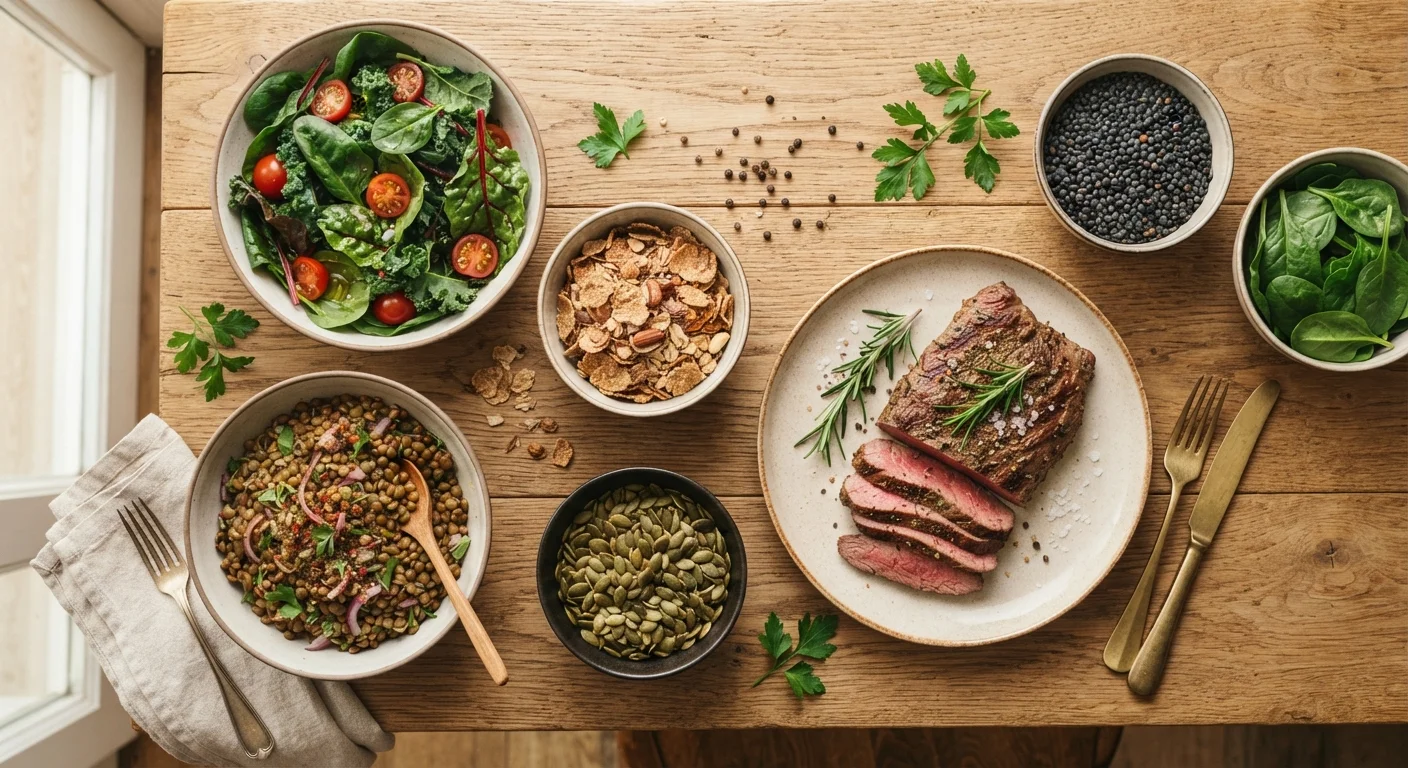
- Heme sources: beef, lamb, oysters, clams, sardines, chicken liver, turkey
- Non-heme sources: lentils, chickpeas, kidney beans, tofu, tempeh, pumpkin seeds, fortified breakfast cereals, spinach, quinoa, blackstrap molasses
For context, a 3-ounce serving of beef provides roughly 2-3 mg of iron, while a half-cup of cooked lentils delivers around 3 mg - though absorption rates differ considerably. For a broader look at where iron fits among essential nutrients, see our guide to essential micronutrients.
Pair non-heme iron with vitamin C
Vitamin C (ascorbic acid) converts non-heme iron into a form that's easier for your intestinal cells to absorb. Research consistently shows that consuming vitamin C alongside a plant-based iron source can increase absorption by a meaningful margin.
Practical pairings to try:
- Lentil soup with a squeeze of lemon juice
- Spinach salad topped with sliced strawberries or orange segments
- Bean tacos with salsa and fresh bell pepper strips
- Fortified oatmeal with a small glass of orange juice
Time coffee, tea, and dairy strategically
Several common foods and beverages contain compounds that bind to iron and reduce how much your body absorbs:
- Tannins in black tea, coffee, and red wine
- Calcium in dairy products and fortified foods
- Phytates in whole grains and legumes (though cooking and soaking can reduce them)
- Polyphenols in certain herbal teas
You don't need to eliminate these foods - just avoid consuming them at the same time as your iron-rich meal. Waiting 1-2 hours before or after a meal is a reasonable approach for most people.
Consider cooking methods that preserve or add iron
How you prepare food matters. Cooking methods that retain nutrients rather than leaching them into water are preferable - steaming or sautéing spinach, for example, rather than boiling it. Cooking acidic foods like tomato sauce in a cast iron pan has been shown to modestly increase the iron content of the finished dish, which can be a useful supplementary strategy.
Soaking and sprouting legumes before cooking can also reduce phytates, improving the bioavailability of the non-heme iron they contain.
Assess whether your needs require additional attention
Some people face a consistently higher demand for dietary iron and benefit from paying closer attention to these strategies:
- People who menstruate heavily
- Pregnant individuals (always consult a healthcare provider for guidance specific to pregnancy)
- Infants and young children in growth phases
- People following vegetarian or vegan diets - our vegetarian nutrition guide covers this in more depth
- Endurance athletes
If you suspect your iron intake is consistently inadequate, speak with a healthcare provider before reaching for supplements. Iron supplementation without confirmed deficiency can cause adverse effects and is not appropriate for everyone.
Variety Is Your Best Long-Term Strategy
No single food will reliably meet all your iron needs on its own. Rotating across a variety of sources - different legumes, leafy greens, seeds, and lean proteins - ensures you benefit from diverse absorption pathways. If you're navigating meals away from home, our guide on eating out without losing track of nutritional goals offers practical approaches to keeping iron-friendly choices accessible.
Don't Self-Diagnose or Self-Supplement
Symptoms of low iron - fatigue, pallor, difficulty concentrating - overlap with many other conditions. Only a blood test ordered by a healthcare provider can confirm iron deficiency. Taking iron supplements without medical guidance can cause gastrointestinal discomfort and, in some cases, contribute to iron overload, which carries its own health risks.
This article is for informational purposes only and does not constitute medical advice. If you have concerns about your iron levels or nutritional needs, please consult a qualified healthcare provider.