

| Total essential vitamins | 13 (NIH Office of Dietary Supplements) |
| Total essential minerals | At least 16 recognized as essential (Institute of Medicine / National Academies) |
| Fat-soluble vitamins | A, D, E, K |
| Water-soluble vitamins | C and 8 B vitamins |
| Most common US deficiency | Vitamin D (widespread insufficiency reported) (NHANES data, CDC) |
| Best general dietary strategy | Varied whole-food diet across all food groups (Dietary Guidelines for Americans) |
What Are Micronutrients?
Micronutrients are the vitamins and minerals your body requires in relatively small amounts - but their impact is anything but minor. Unlike macronutrients like carbs, proteins, and fats, micronutrients don't supply calories. Instead, they act as essential catalysts for virtually every biological process: energy production, immune defense, bone formation, hormone regulation, and DNA repair.
There are two broad categories: vitamins, which are organic compounds (meaning they contain carbon), and minerals, which are inorganic elements sourced from soil and water. Both categories are further divided based on how the body stores and handles them.
| Total essential vitamins | 13 (NIH Office of Dietary Supplements) |
| Total essential minerals | At least 16 recognized as essential (Institute of Medicine / National Academies) |
| Fat-soluble vitamins | A, D, E, K |
| Water-soluble vitamins | C and 8 B vitamins |
| Most common US deficiency | Vitamin D (widespread insufficiency reported) (NHANES data, CDC) |
| Best general dietary strategy | Varied whole-food diet across all food groups (Dietary Guidelines for Americans) |
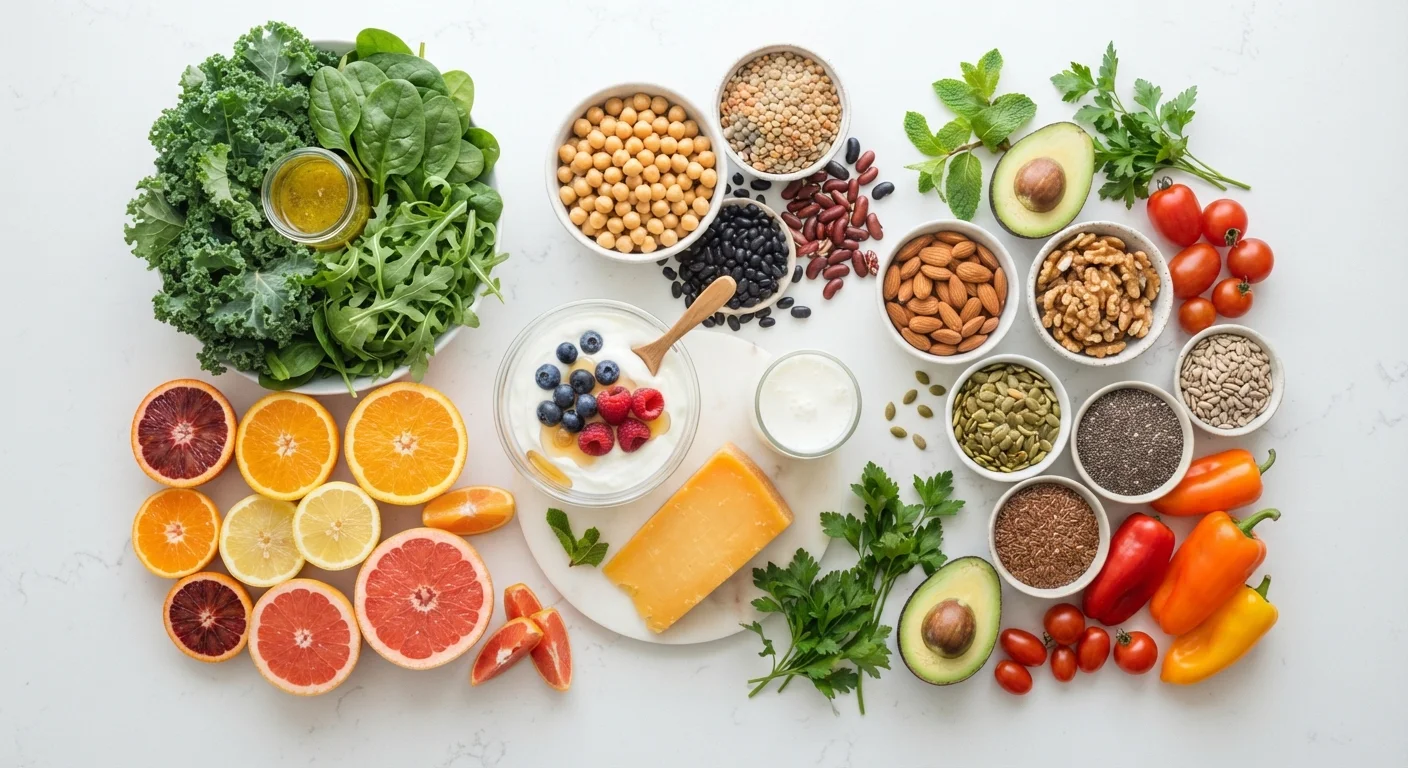
Because the body either cannot produce most micronutrients at all, or cannot make them in sufficient quantities, they must come primarily from food. This is why dietary variety isn't just a wellness cliché - it's a genuine nutritional strategy.
Key Vitamins and What They Do
Vitamins divide into two groups by solubility, which determines how the body absorbs and stores them.
Fat-Soluble Vitamins (A, D, E, K)
These dissolve in fat and are stored in body tissues, so they don't need to be consumed daily. However, excess accumulation - typically from high-dose supplementation rather than food - can reach toxic levels.
- Vitamin A: Supports vision, immune function, and cell growth. Found in liver, dairy, eggs, and as beta-carotene in orange and dark-green vegetables.
- Vitamin D: Regulates calcium absorption and bone health; also plays roles in immune function. Synthesized through sun exposure and found in fatty fish, fortified dairy, and egg yolks.
- Vitamin E: An antioxidant that protects cell membranes. Nuts, seeds, and vegetable oils are primary sources.
- Vitamin K: Essential for blood clotting and bone metabolism. Leafy greens like spinach and kale are among the richest sources.
Water-Soluble Vitamins (C and B-complex)
These are not stored in significant amounts, making regular dietary intake important. Excess is generally excreted in urine, though very high supplemental doses of some B vitamins carry their own risks.
- Vitamin C: Supports collagen synthesis, immune function, and iron absorption. Citrus fruits, bell peppers, and strawberries are excellent sources.
- B Vitamins (B1, B2, B3, B5, B6, B7, B9, B12): Collectively involved in energy metabolism, red blood cell production, and neurological function. Whole grains, legumes, meat, dairy, and leafy greens cover most of the spectrum. Vitamin B12, notably, is found almost exclusively in animal products - a key planning point for those following a vegetarian or plant-based diet.
Micronutrient
A vitamin or mineral required by the body in small quantities to support normal physiological functions. Unlike macronutrients, micronutrients provide no energy (calories).
Fat-soluble vitamin
A vitamin that dissolves in fat and is stored in body tissues. Vitamins A, D, E, and K fall into this category, and excessive intake from supplements can accumulate to harmful levels.
Water-soluble vitamin
A vitamin that dissolves in water and is not stored in significant amounts. Most excess is excreted, so regular dietary intake is necessary. This group includes vitamin C and the B vitamins.
Heme iron
A form of iron found in animal-based foods like red meat and shellfish that is absorbed more efficiently by the body than non-heme iron from plant sources.
Trace mineral
A mineral the body needs in very small amounts - typically less than 100 mg per day - but that is still essential for health. Examples include iron, zinc, iodine, and selenium.
Bioavailability
The proportion of a nutrient that the body actually absorbs and uses after consumption. It varies by food source, preparation method, and other nutrients eaten at the same time.
Essential Minerals at a Glance
Minerals are classified by the quantity the body needs: macrominerals (needed in larger amounts) and trace minerals (needed in smaller amounts, though no less important).
Macrominerals
- Calcium: The primary structural mineral in bones and teeth; also involved in muscle contraction and nerve signaling. Dairy products, fortified plant milks, and leafy greens are reliable sources.
- Magnesium: Participates in over 300 enzymatic reactions, including energy production and protein synthesis. Found in nuts, seeds, whole grains, and legumes.
- Potassium: Regulates fluid balance and supports heart and muscle function. Bananas, potatoes, beans, and dairy provide substantial amounts.
Key Trace Minerals
- Iron: Central to oxygen transport via hemoglobin. Red meat and shellfish supply highly absorbable heme iron; lentils, tofu, and fortified cereals provide non-heme iron. Consuming vitamin C alongside non-heme iron improves absorption.
- Zinc: Supports immune response, wound healing, and taste perception. Oysters, red meat, poultry, beans, and pumpkin seeds are strong sources.
- Iodine: Required for thyroid hormone production. Seafood, dairy, and iodized salt are the main dietary sources in the US.
- Selenium: Functions as an antioxidant and supports thyroid metabolism. Brazil nuts, tuna, and eggs are concentrated sources.
~42%
US adults with vitamin D insufficiency
Analysis of NHANES data published in Nutrition Research estimated that roughly 42% of US adults have insufficient vitamin D levels.
300+
Enzymatic reactions requiring magnesium
According to the NIH Office of Dietary Supplements, magnesium is a cofactor in more than 300 enzyme systems in the human body.
10 mg
Daily iron RDA for adult men
The recommended dietary allowance for iron differs substantially by sex and life stage; adult women of reproductive age require nearly double this amount, per the National Academies.
Physical activity can shift micronutrient demands - particularly for iron, magnesium, and B vitamins. For a closer look, see how activity level shapes nutritional needs.
This article is for informational and educational purposes only and does not constitute medical or dietary advice. Consult a qualified healthcare professional or registered dietitian before making significant changes to your diet or taking supplements.