

Key Takeaways
- Serving size drives every other number on the label - always check it first.
- Percent Daily Values are based on a 2,000-calorie reference diet and are a general guide, not a personal prescription.
- Nutrients like sodium, saturated fat, and added sugars are worth limiting; fiber and key vitamins are worth prioritizing.
- The ingredient list, read alongside the nutrition panel, gives a fuller picture of what's in a food.
- Front-of-package claims are regulated but often misleading without context from the full label.
What you will need
Why the Nutrition Facts Label Matters
The Nutrition Facts label has been a required feature of most packaged foods in the United States since 1994, with significant updates rolled out by the FDA starting in 2016. Its purpose is to give consumers standardized, comparable information about what they're eating - but the label only works if you know how to read it.
Many people focus on one or two numbers (usually calories or fat) while overlooking the rest. Others misread the entire label because they skip the serving size at the top. This guide walks through the label section by section so you can extract the information that's actually useful to you.
What you will need
Keep in mind that the Nutrition Facts label is a general informational tool, not a substitute for personalized dietary guidance. For decisions tied to a specific health condition or goal, a registered dietitian can help you apply this information to your individual situation.
How to Read the Label Step by Step
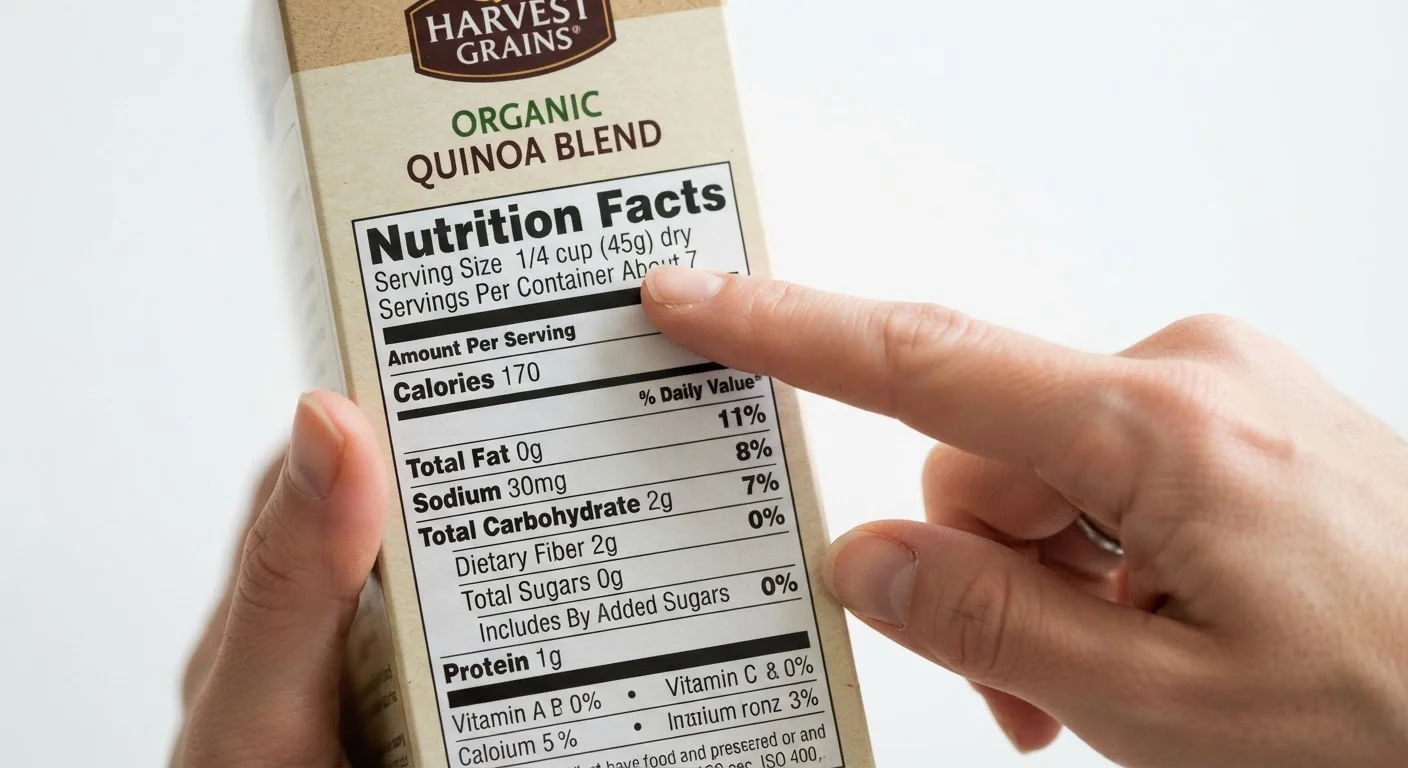
Start with serving size and servings per container
Every number on the label - calories, fat, sodium, everything - corresponds to one serving, not the entire package. The serving size is listed in familiar units (such as cups or pieces) followed by a metric weight in grams. Directly below it, you'll find servings per container.
If a bag of chips lists 7 servings and you eat the whole bag, multiply every value on the label by 7. This single step prevents one of the most common misreads of the entire label.
Read the calorie count in context
Calories measure the energy a food provides per serving. The FDA's updated label format displays this number in a larger, bolder font to make it easier to notice. While calorie awareness can be useful, a calorie count alone tells you nothing about the nutritional quality of a food - 200 calories from almonds and 200 calories from a candy bar carry very different nutritional profiles.
Identify nutrients to limit
The label groups certain nutrients under an implicit "limit these" framing. Look for:
- Saturated fat - most dietary guidelines suggest keeping this relatively low
- Sodium - excess intake is associated with elevated blood pressure in some populations
- Added sugars - distinct from naturally occurring sugars (as in fruit or dairy), added sugars now appear as their own line item on updated labels
- Trans fat - largely eliminated from the US food supply but still worth checking; a "0g" listing can mask small amounts if partially hydrogenated oils appear in the ingredient list
Note nutrients to prioritize
Below the "limit" nutrients, the label lists nutrients that many Americans fall short on and that support overall health:
- Dietary fiber - supports digestive health and is associated with reduced risk of several chronic conditions
- Vitamin D, calcium, iron, and potassium - these four appear by FDA requirement because inadequate intake is a public health concern
For these, a higher %DV is generally favorable.
Interpret Percent Daily Values (%DV)
The %DV column tells you what share of a nutrient's recommended daily amount one serving provides, based on a 2,000-calorie reference diet. This is a standardized benchmark, not a prescription - your actual needs may differ.
A practical rule of thumb recognized by the FDA: 5% DV or less is generally considered low for a nutrient; 20% DV or more is generally considered high. Use these thresholds to quickly gauge whether a food is a meaningful source - or a significant contributor - of any given nutrient.
Cross-reference with the ingredient list
The ingredient list, required to appear in descending order by weight, adds crucial context to the numbers. A food might show modest saturated fat on the label but list multiple types of added sugar under different names (corn syrup, dextrose, cane juice) near the top. The label's nutrition panel and the ingredient list work together - neither tells the complete story alone.
For a deeper look at reading ingredient lists effectively, see how ingredient list order and length can reveal food quality.
Front-of-Package Claims Need Context
Terms like "low fat," "multigrain," and "natural" are regulated by the FDA but are frequently misunderstood. A food labeled "low fat" may be high in added sugars to compensate for flavor. Always use the Nutrition Facts panel to verify what front-of-package language is actually claiming. For a full breakdown, see what FDA-defined front-of-package terms actually mean.
Once you're comfortable with the label's structure, you can use it to compare products efficiently, spot patterns across food categories, and make choices more aligned with your own priorities - whether that's managing sodium, increasing fiber, or simply understanding what you're eating. If you want to go further in evaluating nutrition information more broadly, how to assess the credibility of nutrition sources online is a useful next step.
This Is General Information, Not Medical Advice
The guidance here is educational and intended for a general audience. Your individual nutritional needs depend on your age, health status, activity level, and other factors. If you have a medical condition, dietary restrictions, or specific health goals, consult a registered dietitian or qualified healthcare provider before making significant changes to your diet.
This article is for informational purposes only and does not constitute medical or dietary advice. Consult a qualified healthcare professional for guidance specific to your health needs.