

Key Takeaways
- Guided meditation is generally the most accessible entry point for beginners starting a practice.
- Silent meditation requires more self-discipline but may support deeper long-term concentration skills.
- Movement-based practices like walking or yoga meditation integrate mindfulness into physical activity.
- No single approach is universally superior - the right fit depends on individual goals and lifestyle.
- Consistency matters more than technique; any approach practiced regularly yields the most benefit.
Our Verdict
Guided, silent, and movement-based meditation each address different needs and learning stages. Beginners often find guided formats most approachable, while experienced practitioners may prefer the depth of silent sitting. Those who struggle with stillness frequently respond well to movement-based options. Mixing approaches over time is a common and reasonable strategy.
| Best for | Recommended |
|---|---|
| Beginners or those with busy, distracted minds | Guided Meditation |
| Experienced practitioners seeking depth and self-direction | Silent Meditation |
| People who find sitting still difficult or prefer physical engagement | Movement-Based Meditation |
| Those managing screen time while maintaining a practice | Silent or Movement-Based Meditation |
Why the Approach You Choose Matters
Meditation is not a single technique - it is a broad category of mental training practices with meaningfully different structures, demands, and outcomes. Choosing an approach that fits your temperament, schedule, and goals can be the difference between a habit that sticks and one that quietly disappears.
For a grounded overview of what mindfulness-based practices actually involve - separate from popular misconceptions - see what mindfulness actually involves. This comparison focuses specifically on format and delivery rather than any single tradition or technique.
| Guided Meditation | Silent Meditation | Movement-Based Meditation | |
|---|---|---|---|
| Best for | Beginners, anxious minds | Experienced practitioners | Those who dislike stillness |
| Equipment needed | App, audio, or recording | None required | Comfortable footwear or mat |
| Learning curve | Low | High | Moderate |
| Technology dependence | Often required | None | None typically |
| Supports independent focus | Less over time | Strongly yes | Moderately yes |
| Flexibility of location | Anywhere with device | Anywhere quiet | Needs suitable space |
| Evidence base | Moderate to strong | Strong (long tradition) | Moderate, varies by type |
Guided Meditation: Structure for the Restless Mind
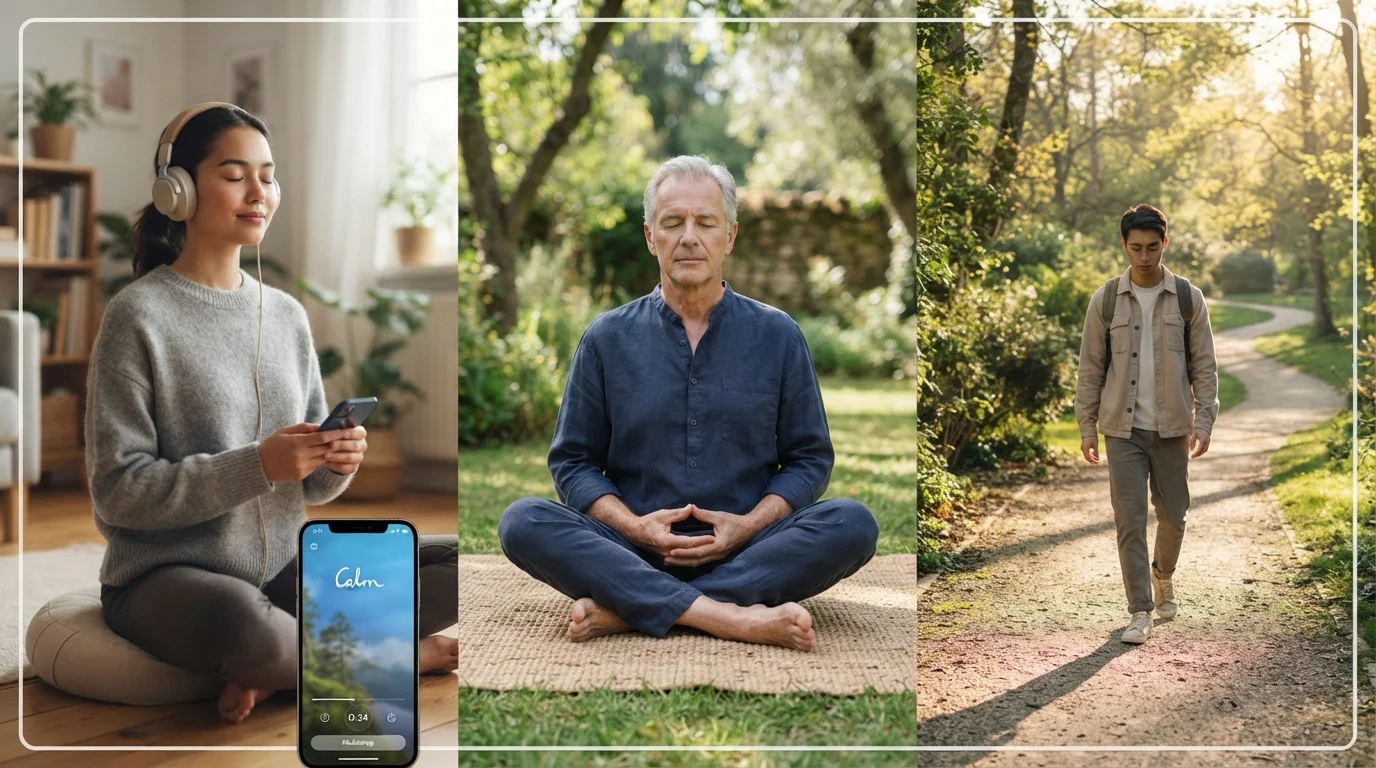
Guided meditation uses an external voice - a teacher, recording, or app - to direct attention throughout the session. The instructor typically prompts the listener to notice breathing, body sensations, or visualizations, reducing the cognitive load of self-directing attention.
Strengths: Low barrier to entry, widely available, helpful for managing anxiety in the short term. Research published in mental health literature suggests structured guided programs can reduce self-reported stress, particularly when practiced consistently over several weeks.
Limitations: Some practitioners report becoming reliant on the external cue, which can limit the development of independent attentional control. Screen use is often involved, which is worth considering if you are already managing technology exposure - a topic explored in depth in this comparison of digital detox versus intentional tech use.
Starting With Guided: A Practical Note
If you are new to meditation, beginning with short guided sessions of five to ten minutes can help establish the habit before adding complexity. Over weeks, try occasionally pausing the audio partway through and continuing silently - this builds the bridge toward self-directed practice without abandoning structure too soon.
Silent Meditation: Self-Direction and Depth
Silent meditation - often associated with traditions like Vipassana or Zen sitting - asks practitioners to maintain focus without any external guidance. The meditator anchors attention on breath, sensation, or a chosen object and returns to it whenever the mind wanders.
Strengths: Builds independent attentional capacity over time, requires no technology, and can be practiced anywhere without equipment. Many experienced practitioners and contemplative traditions regard sustained silent practice as the foundation of deeper meditative development.
Limitations: The learning curve is steeper. Without guidance, beginners may spend sessions ruminating rather than meditating - particularly early on. Starting with even five minutes and gradually extending duration is a practical strategy supported by most meditation teachers.
If you are new to the concepts involved, this plain-language introduction to mindfulness covers foundational ideas without unnecessary complexity.
Movement-Based Meditation: Mindfulness in Motion
Movement-based approaches - including walking meditation, tai chi, and mindful yoga - anchor awareness in physical sensation and motion rather than stillness. The body's movement becomes the object of attention, making this format well-suited to those who find seated practice difficult to sustain.
Strengths: Integrates mindfulness into daily activity, can be accessible for people with chronic pain or restlessness, and does not require a dedicated sitting space. Research on mindful movement practices like yoga and tai chi has shown associations with reduced anxiety and improved mood, though study quality varies.
Limitations: Coordination between movement and attention can be challenging to learn initially. Some settings - busy sidewalks, crowded gyms - are not conducive to the sustained inward focus these practices require.
Movement Meditation Is Not a Workout Substitute
Mindful walking or yoga-based meditation is focused on attentional quality, not physical exertion. Treating these sessions primarily as exercise often undermines the meditative component. Keep physical goals and meditative goals in separate sessions unless you are experienced in integrating both simultaneously.
Choosing What Fits - and Combining Approaches
Most practitioners do not commit exclusively to one format. A common pattern is using guided sessions to establish consistency, transitioning toward more silent practice as concentration develops, and incorporating movement-based meditation on days when sitting feels inaccessible.
It is worth noting that meditation is a complement to - not a replacement for - professional mental health support when that is needed. If you are considering structured therapy alongside or instead of self-directed practice, a comparison of online therapy versus in-person sessions may be useful context.
This article is for general informational and educational purposes only and does not constitute medical or mental health advice. Consult a qualified healthcare professional for guidance specific to your personal health circumstances.