

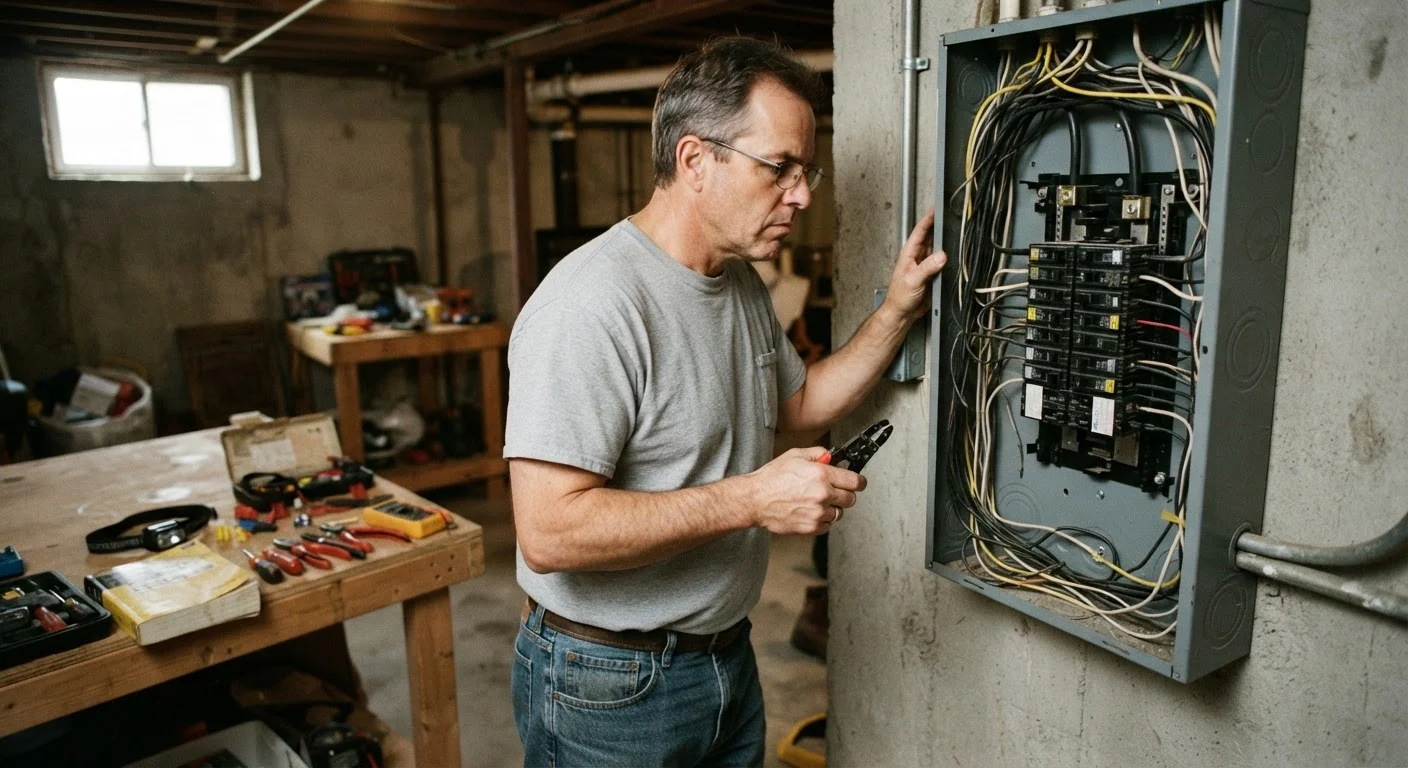
Key Takeaways
- Electrical work carries shock, fire, and code-violation risks that cosmetic projects simply do not.
- Most electrical upgrades require permits and inspections, which unlicensed work often cannot satisfy.
- Hidden wiring errors can pass visual inspection yet remain serious long-term fire hazards.
- Homeowners insurance may deny claims if unpermitted electrical work contributed to damage.
- Knowing when to call a licensed electrician protects your home, your family, and your investment.
Why Electrical Work Is a Different Category of DIY
Repainting a room or replacing cabinet hardware carries low stakes if you make a mistake - the worst outcome is usually cosmetic. Electrical work operates in a different category entirely. Errors can remain invisible inside walls for years before causing a fire or shock, and the consequences of getting it wrong extend beyond your home to your insurance, your finances, and potentially your family's safety.
This isn't meant to discourage homeowners from being engaged in how their home works - understanding your electrical system is genuinely empowering. But that engagement should come with a clear-eyed view of where the risks lie and why certain tasks are regulated for good reason.
~51,000
Home electrical fires reported annually in the US
According to the Electrical Safety Foundation International (ESFI), electrical fires cause thousands of injuries and billions in property damage each year.
~6%
Of home fires attributed to electrical distribution systems
The U.S. Fire Administration identifies electrical malfunction - including wiring errors - as a consistent contributor to residential fire fatalities.
Common Mistakes That Put Homeowners at Risk
Most electrical DIY problems don't stem from recklessness - they come from gaps in knowledge that look like confidence. The mistakes below are among the most frequently made, and each one illustrates why electrical work demands a different standard of care than other home improvement projects.
Skipping the permit process because the job feels small.
Why it happens: Homeowners often assume permits are only for major renovations like additions or full rewires. In reality, adding an outlet, upgrading a panel, or installing a ceiling fan with new wiring frequently triggers permit requirements under local building codes.
Overloading circuits by adding outlets or devices without assessing capacity.
Why it happens: It's easy to assume that because the lights and appliances currently work, the panel has room for more. Many older homes run on 60- or 100-amp service that wasn't designed for today's electrical demands.
Using incorrect wire gauge for the circuit's amperage rating.
Why it happens: Wire sizing isn't intuitive - a thinner wire may physically fit where a thicker one is required. Mismatched wire gauge and breaker ratings create a hidden overheating risk that can persist for years before causing a fire.
Believing that if the breaker doesn't trip, the wiring is safe.
Why it happens: Homeowners often trust circuit breakers as a complete safety net, not realizing that breakers protect against overcurrent - not against every type of wiring error, loose connection, or arc fault.
Leaving wire connections outside of approved junction boxes.
Why it happens: When fishing wire through walls or extending existing runs, it can be tempting to splice wires in a tight space and tuck the connection out of sight without boxing it properly.
Never Work on Live Circuits
One of the most common - and dangerous - DIY electrical errors is failing to fully de-energize a circuit before working on it. Simply flipping a breaker is not always sufficient if wiring is mislabeled or the panel is outdated. Always verify with a non-contact voltage tester before touching any wire, and when in doubt, shut off the main breaker and confirm with a licensed electrician.
What Homeowners Can Do Without Taking On Undue Risk
Knowing where to draw the line doesn't mean stepping back from your home entirely. Homeowners can safely replace like-for-like outlets and switches (after verifying circuits are de-energized), install plug-in smart home devices, swap out light fixtures on existing circuits where no new wiring is needed, and upgrade to LED bulbs throughout. These tasks stay within the realm of maintenance and don't typically require permits.
What's worth leaving to licensed electricians: anything involving your panel, new circuit runs, wiring in bathrooms or kitchens, GFCI installation in wet locations, or any work that local code requires to be inspected. The short-term cost of hiring a professional is almost always lower than the long-term cost of correcting unpermitted or unsafe work - or filing an insurance claim that gets denied.
Unpermitted Electrical Work Has Real Consequences
Electrical projects completed without required permits can void homeowner's insurance coverage and create serious complications when selling your home. An inspector or buyer's lender may flag unpermitted work, forcing costly remediation before a sale can close. Always check with your local building department before starting any electrical project - even seemingly minor ones.
This article provides general educational information about home electrical safety. It is not a substitute for advice from a licensed electrician or your local building authority. Always verify requirements with qualified professionals and your local jurisdiction before beginning any electrical project.