

Key Takeaways
- Extended warranties frequently overlap with coverage you already have from manufacturers or credit cards.
- The price of a plan rarely reflects the statistical likelihood you will actually use it.
- Fine print exclusions can leave most real-world failure scenarios uncovered.
- Self-insuring through a dedicated savings fund is a viable alternative worth considering.
- For vehicles, 'extended warranty' is a marketing term - these are legally service contracts.
Why Extended Warranty Myths Are So Persistent
Extended warranties - more accurately called service contracts - are one of retail's most profitable add-ons. Retailers can earn margins of 50% or more on these plans, which creates a strong incentive to sell them confidently and frame them as obvious value. That commercial pressure, combined with genuine consumer anxiety about repair costs, has produced a set of durable myths that cost shoppers real money.
Understanding what these plans actually do - and don't do - requires separating the sales pitch from the contract terms. For a grounding in the legal distinctions between coverage types, see warranty types explained. The myths below are among the most common and most costly.
Myth
An extended warranty means I'm covered for anything that goes wrong with the product.
Fact
Service contracts contain detailed exclusions that can disqualify the most common failure types, including accidental damage, wear-and-tear, and power surges.
The word 'extended' implies broad protection, but what you're buying is a narrowly defined contract. Most plans exclude failures deemed to result from misuse, environmental factors, or normal degradation. A cracked screen, a worn-out battery, or a motor that fails from regular use may all fall outside coverage. Reading the exclusions section - not just the coverage summary - is the only way to know what you're actually purchasing.
Myth
Extended warranties duplicate nothing - they start where the manufacturer's warranty ends.
Fact
Extended plans frequently overlap with the manufacturer warranty period, and some credit cards automatically extend manufacturer coverage by up to one year at no cost.
Many service contracts begin on the purchase date, not after the manufacturer's warranty expires. That means you may be paying for coverage that runs simultaneously with protection you already have. Additionally, a number of major credit cards offer purchase protection and automatic warranty extension as a cardholder benefit. Checking your card's benefits before purchasing a plan is a straightforward step that many consumers skip. Reviewing existing warranty terms can reveal overlap you didn't know existed.
Myth
If something costs a lot, the extended warranty is obviously worth it.
Fact
Price alone doesn't determine whether a service contract is worthwhile - reliability data, repair cost likelihood, and exclusion terms matter more.
An expensive appliance with a strong reliability track record may almost never need a repair that the contract would actually cover. Conversely, a lower-cost item with a known failure mode and affordable repair cost may be a poor candidate for a pricey plan. The relevant question isn't 'how much does this cost?' but 'how likely is a covered failure, and would the payout exceed the plan's price?' That calculation requires reliability data, not just sticker shock.
Myth
For cars, an extended warranty is the same as a manufacturer warranty.
Fact
Vehicle 'extended warranties' sold by dealers or third parties are legally service contracts - a meaningfully different product with different rights and remedies.
Manufacturer warranties are issued by the automaker and backed by their dealer network. Third-party vehicle service contracts are agreements with separate companies, sometimes of uncertain financial stability. If the service contract company goes out of business, your coverage disappears. These contracts also vary widely in which repair shops they authorize, what documentation they require, and how claims are processed. The distinction between warranty and service contract has real legal and practical consequences.
Myth
You can't void an extended warranty by doing your own maintenance or using a third-party shop.
Fact
Some service contracts do include restrictions on where or how maintenance is performed, and violating those terms can affect claims.
While federal law - specifically the Magnuson-Moss Warranty Act - places limits on how manufacturers can condition warranty coverage on the use of specific parts or services, third-party service contracts operate under their own terms and may impose requirements that differ from federal warranty law protections. Always check the service contract's maintenance requirements before assuming your preferred shop or DIY approach is permitted. What actually voids a warranty is a more nuanced question than most owners realize.
Making a Clearer Call Before You Sign
The math on extended warranties tends to favor the seller, not the buyer. Consumer advocacy research has consistently found that most people who purchase these plans never file a claim - and those who do often discover exclusions that reduce or eliminate any payout. A practical alternative is self-insuring: setting aside the cost of the plan in a dedicated savings account. Over several product cycles, this fund will typically cover any repairs that arise and return the unused balance to you.
Don't Let Checkout Pressure Drive the Decision
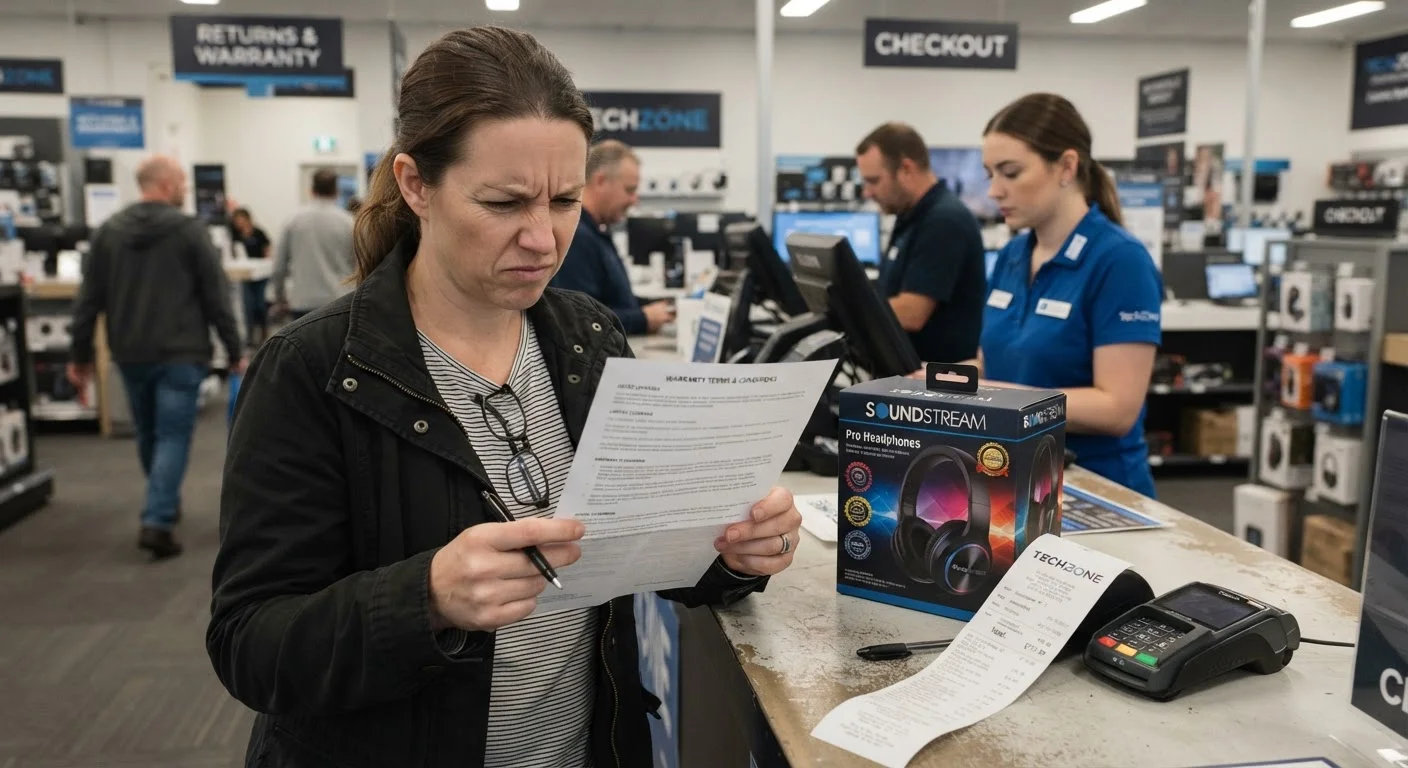
Extended warranties are most aggressively pitched at the moment of purchase, when you're least equipped to evaluate the contract. Retailers often use urgency or loss-framing ('you'd be left paying full repair costs') to close the sale quickly. You are almost always able to purchase a service plan after you leave the store - often for less, and with time to read the terms. Never let time pressure at the register substitute for a careful review of the actual contract document.
Before purchasing any plan, request the full contract - not a brochure - and review what is explicitly excluded. Common exclusions include cosmetic damage, power surges, consumable components, and failures attributed to 'misuse.' For electronics, the fine print is especially important: read what gadget warranty terms actually say before committing. For vehicle service contracts specifically, the legal framing is different from a product warranty - understand the distinction before signing anything.
Extended warranties aren't automatically a bad choice in every situation - high-cost appliances with known reliability issues or items where a single repair would be disproportionately expensive can shift the calculation. But that judgment should come from reading the contract, not from time pressure at the register.
50%+
Typical retailer margin on service contracts
Industry analysts and consumer advocacy groups have long noted that extended warranty plans carry among the highest profit margins of any retail product category.
~55%
Consumers who never file a warranty claim
Consumer Reports surveys have found that a majority of extended warranty purchasers never file a claim during the coverage period, meaning the plan cost is a net loss.
This article is for general informational purposes only and does not constitute financial or legal advice. Consult a qualified professional for guidance specific to your situation.