

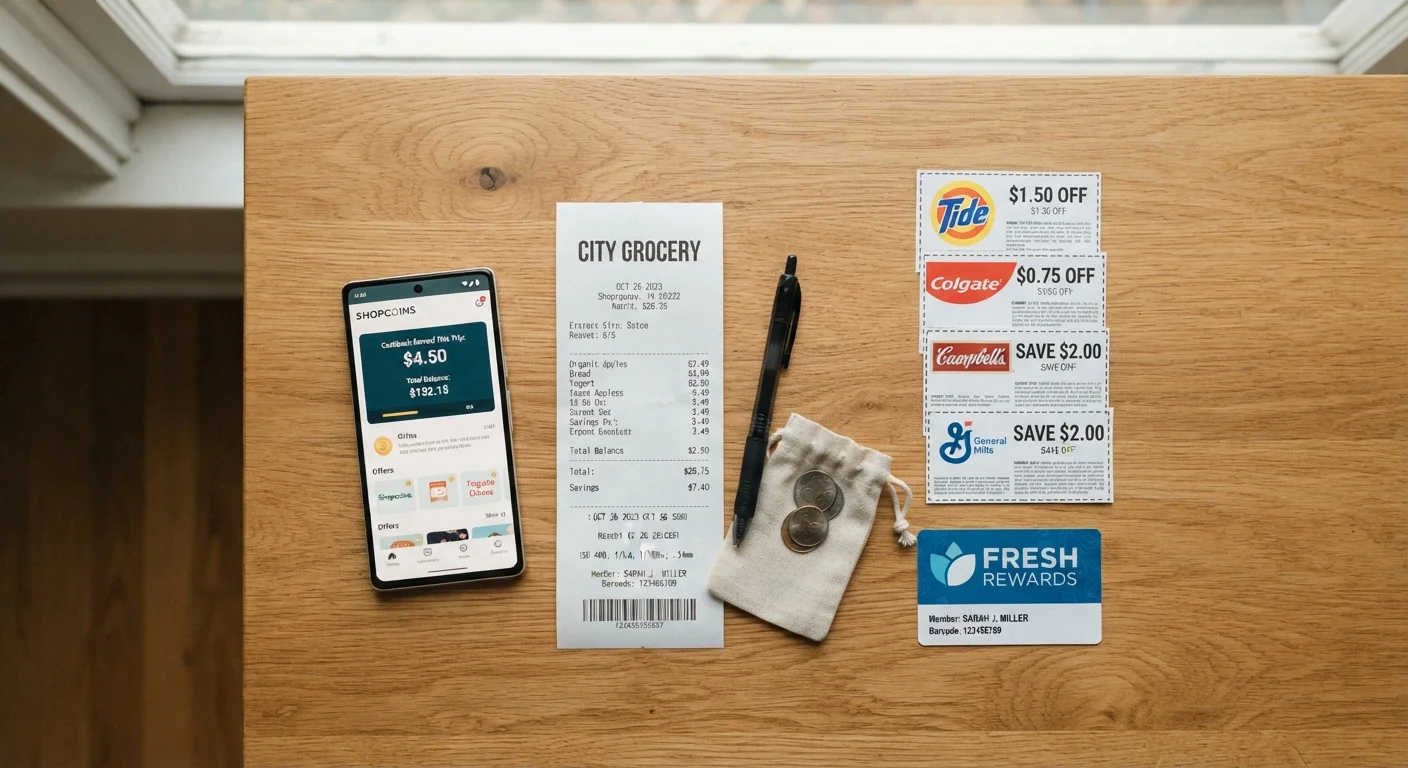
Key Takeaways
- Discount stacking is possible at many retailers, but each store sets its own stacking rules.
- Cashback portals and credit card rewards often layer on top of in-store discounts without conflict.
- Promo codes and coupons typically cannot be combined with each other unless the retailer explicitly allows it.
- Reading the fine print on each savings method before checkout prevents last-minute surprises.
- Sale prices alone don't guarantee real value - verify the baseline price independently.
What you will need
Why Stacking Works - and When It Doesn't
Discount stacking refers to applying more than one savings method to a single purchase. In principle, several layers can coexist: a sale price reduces the item's list price, a promo code shaves off an additional percentage, a cashback portal returns a portion of what you spent, and a rewards card earns points on the final charge. Each layer operates on a different part of the transaction or through a different platform.
In practice, retailers limit stacking at the point-of-sale level. A store can set its system to accept only one coupon per transaction, exclude sale items from code-based discounts, or block third-party coupons when member pricing is active. These restrictions are policy decisions, not technical limitations - meaning they vary by retailer and often by promotion type.
The layers that conflict most often are those that touch the same system: two promo codes, a manufacturer coupon plus a store coupon for the same item, or a stackable loyalty offer on top of an already-discounted clearance item. The layers that rarely conflict are those operating on separate platforms - a retailer's in-store sale, a cashback portal's tracking cookie, and a credit card's rewards engine don't communicate with each other, so each can apply independently.
Stacking Rules Are Set by the Retailer
There is no universal standard that requires retailers to allow discount stacking. Each store - whether online or brick-and-mortar - defines its own policy on what can be combined. Always check the terms of each savings method before assuming they will work together at checkout.
Understanding how loyalty programs structure their rewards can also affect your stacking strategy. See our breakdown of loyalty points versus immediate discounts to weigh which approach fits your shopping habits.
What to Watch Out For
Don't Assume a Sale Price Is Your Baseline
Some promotional pricing is set against inflated reference prices, which can make a discount look larger than it is. Before stacking additional savings on top of a sale, confirm the item's typical market price through independent sources. Our guide on what separates a sale price from actual savings explains how to spot the difference.
Affinity-based discounts - such as student, senior, or membership pricing - add another layer of complexity. These are often applied at the register or through a verified account and may explicitly exclude further discounts. Our article on how eligibility-based discounts typically work covers the common terms attached to these programs.
Timing also matters. Cashback portal rates fluctuate, and a portal may temporarily exclude a retailer during major sale events - precisely when you'd want the extra savings. Check the portal's current rate for your retailer on the day you shop, not days in advance.
Start Your Session Through a Cashback Portal
If you use a cashback portal, initiate your shopping session from that portal before applying any coupons or promo codes at checkout. Navigating away from the retailer mid-session can void the cashback tracking cookie, canceling that layer of savings entirely.
Finally, keep your stacking strategy proportional to the purchase size. For a small transaction, the effort of coordinating multiple savings layers may not justify the marginal return. Reserve the full stacking process for larger purchases where each percentage point of savings adds up to a meaningful dollar amount.