

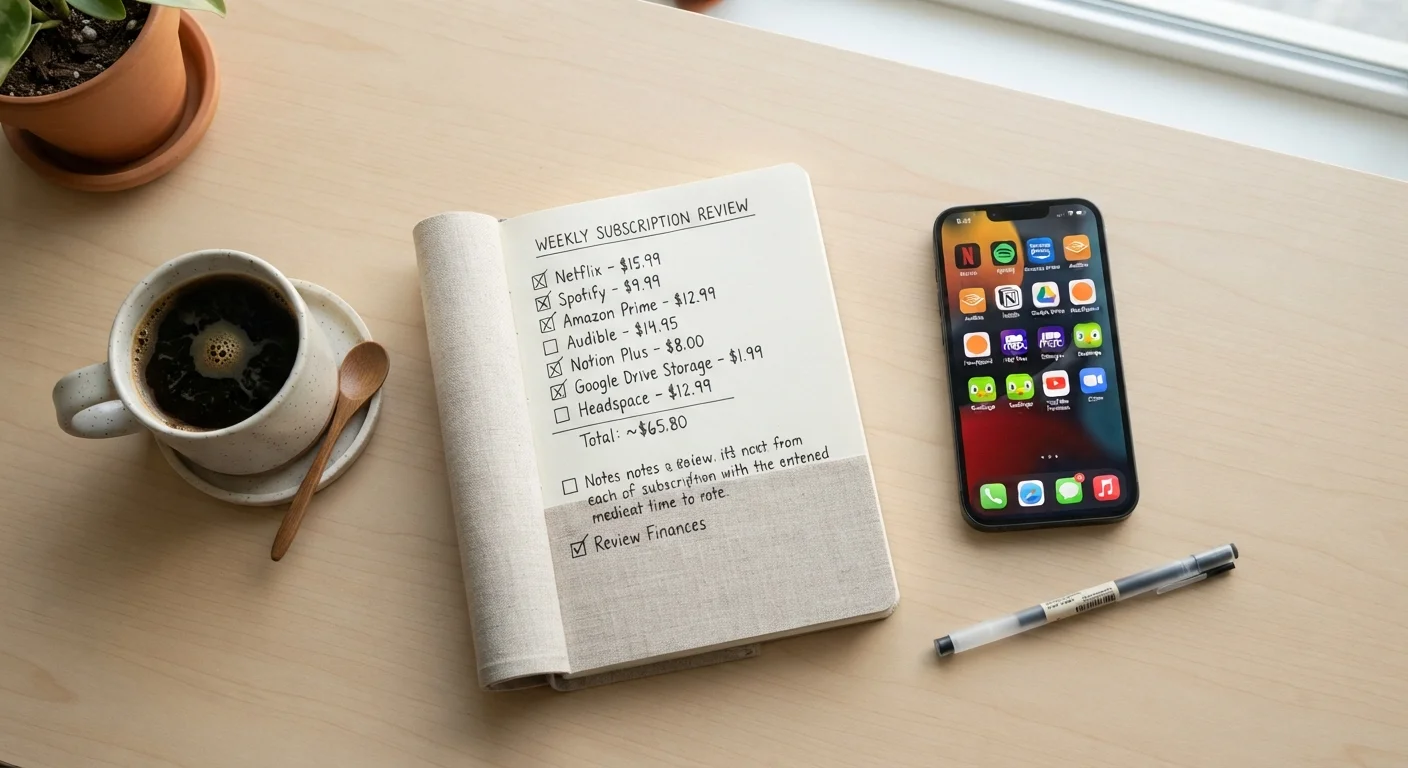
Key Takeaways
- Most households underestimate their total monthly subscription spend by a significant margin.
- Usage frequency is the single most reliable indicator of whether a subscription earns its keep.
- Pausing is often a better first move than cancelling - many services allow it without penalty.
- Overlapping services are a common source of redundant spending that's easy to eliminate.
- Setting a calendar reminder for renewal dates gives you time to decide before you're auto-charged.
Summary
18 items · 20-45 minutes
Why Subscription Audits Matter
Subscription services are designed to be easy to start and easy to forget. Streaming platforms, software tools, meal kits, fitness apps, news sites - each individual cost feels modest, but they compound quickly. Consumer behavior research consistently shows that people underestimate how many active subscriptions they carry and what those services collectively cost per month.
This checklist gives you a structured way to cut through that fog. The goal isn't to eliminate every subscription - it's to ensure each one is pulling its weight. If you also manage entertainment costs across multiple platforms, see our guide to managing multiple streaming subscriptions for complementary strategies.
Auto-Renewals Don't Pause While You Decide
Many subscriptions renew automatically with little or no advance notice. If you identify a service you want to cancel, act before the next billing date - most services do not offer refunds for charges that have already processed. Check each service's cancellation and refund policy individually, as terms vary widely.
Free Trials Can Become Paid Subscriptions
Free trials typically require payment details upfront and convert to full-price plans automatically at the trial end. When signing up for any trial, note the exact conversion date and add a reminder to cancel if you don't intend to continue.
What You'll Need Before You Start
This audit works best when you have your materials ready before you begin, rather than hunting for information mid-process. Gathering everything upfront also prevents the common mistake of only reviewing the subscriptions you remember - which tends to miss the ones that have been quietly auto-renewing for months.
Bank or credit card statements
Primary source for identifying all recurring charges across your accounts.
Spreadsheet or notes app
Centralizes your subscription list with costs, usage counts, and renewal dates in one place.
Email search
Surfaces renewal receipts and confirmation emails that help fill gaps in your statement review.
Calendar app
Used to set renewal-date reminders so you're never surprised by an auto-charge.
Depending on how many accounts you manage, plan for 20 to 45 minutes total. The more accounts spread across different payment methods, the longer the inventory phase typically takes.
Working Through the Checklist
The checklist below is organized in the order that makes the process most efficient. Start with discovery - you can't evaluate what you haven't found yet. From there, usage assessment does most of the heavy lifting: actual behavior is a more reliable signal than your intentions when you signed up.
The overlap check frequently surfaces the most actionable savings, since many households end up paying for functionally similar services across different categories. Finally, the decision and action group is where the audit produces results - a list without follow-through doesn't save money.
Inventory & Discovery
Usage Assessment
Overlap & Redundancy Check
Value & Alternatives
Decision & Action
Unrecognized Charges Deserve Immediate Attention
If you find a recurring charge you genuinely don't recognize after research, contact your card issuer to dispute it rather than simply ignoring it. Unauthorized recurring charges can indicate account compromise and should be treated as a potential fraud matter, not just budget noise.
For context on broader value-finding strategies, the Deals hub covers how to evaluate purchasing decisions across a range of spending categories.