

Key Takeaways
- The secondhand market has grown significantly faster than traditional retail in recent years.
- Both environmental motivations and value-seeking behavior are driving resale adoption.
- Major retailers and dedicated platforms have professionalized what was once an informal market.
- Younger consumers - particularly Millennials and Gen Z - are disproportionately active resale participants.
- Resale is not limited to clothing; electronics, home goods, and luxury items are also major categories.
The Resale Economy
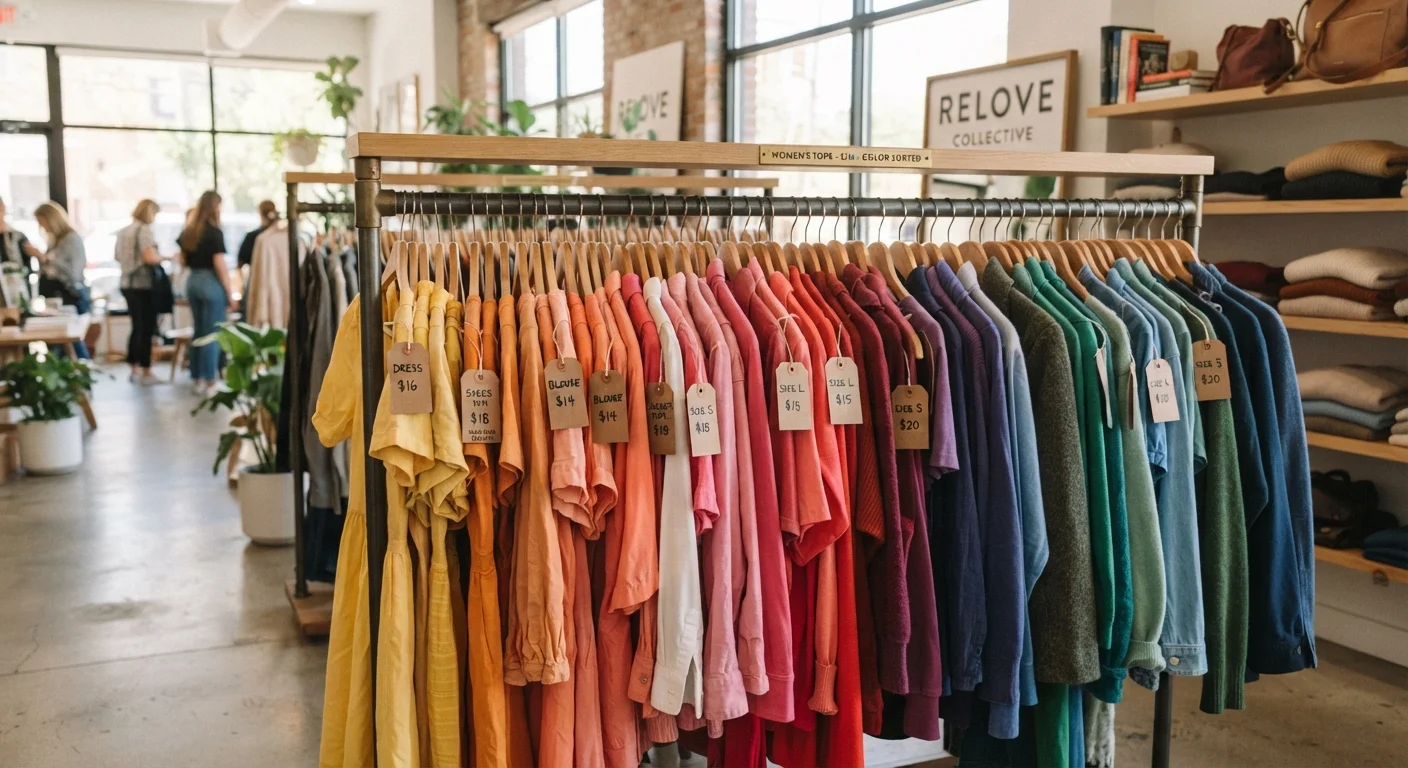
The resale economy refers to the organized buying and selling of previously owned goods - clothing, electronics, furniture, and more - through physical stores, online platforms, and peer-to-peer marketplaces. Unlike traditional retail, the value flows between individual sellers and buyers, often bypassing manufacturers entirely. What was once a niche, informal activity has grown into a major segment of consumer spending.
Economists sometimes call this a 'secondary market' or 'circular economy' activity, distinguishing it from primary retail where goods move directly from producer to first-time buyer.
From Garage Sales to a Global Market
Secondhand shopping is nothing new - swap meets, estate sales, and charity shops have existed for generations. What changed is the infrastructure around them. The emergence of online peer-to-peer platforms in the early 2000s gave sellers a national audience and gave buyers a searchable inventory that no physical store could match. That shift laid the foundation for what is now a structured, increasingly professionalized resale economy.
Today, resale operates across several distinct channels: traditional thrift stores run by nonprofits, for-profit consignment shops, dedicated online resale platforms, and brand-operated take-back or resale programs. Each serves slightly different buyers and price points, but together they form a market that research firms have tracked growing at a rate outpacing conventional retail.
Distinguishing durable retail shifts from short-lived trends is worth doing here - resale shows several hallmarks of structural change rather than a passing moment: sustained investment, broadening demographics, and retail incumbents adapting their models in response.
~$200B+
Estimated global secondhand apparel market value
According to industry research reports tracking the global resale clothing sector, the market has grown substantially over the past decade and is projected to continue expanding.
3x
Faster growth than traditional retail (apparel segment)
Multiple industry analyses have noted that secondhand apparel has grown at a rate several times faster than the broader clothing retail market in recent years.
52%
US consumers who have bought or sold secondhand
Consumer surveys conducted by resale platform research teams suggest more than half of US adults have participated in the secondhand market in some form.
Who's Participating and Why
Resale's growth is driven by a mix of motivations that vary considerably by buyer. For some, it's purely economic - secondhand goods frequently offer meaningful price differences versus new retail. For others, environmental reasoning plays a central role: extending the life of existing products reduces demand for new manufacturing. A third group is motivated by access to products that are no longer available at retail, particularly in categories like vintage clothing or discontinued electronics.
Younger consumers have received the most attention in resale coverage, and the data broadly supports their outsized participation. Millennials and Gen Z report higher rates of both buying and selling secondhand goods compared with older cohorts. But characterizing resale as exclusively a youth phenomenon misses a more complete picture - economic pressures and value-consciousness cut across age groups, and older consumers represent a significant share of thrift and consignment activity.
Sellers are equally varied. Individuals resell to declutter, generate supplemental income, or fund new purchases. Small resale businesses operate as curators, sourcing and reselling at a premium. Platforms have also enabled a new category of full-time resale entrepreneurs who operate at meaningful scale.
How Retail Has Responded
Traditional retailers initially treated resale as a competitor eating into new-product sales. That framing has shifted considerably. A growing number of brands have launched their own certified pre-owned or trade-in programs, positioning resale as a brand extension rather than a threat. This lets them maintain visibility over how their products circulate in the secondary market while appealing to cost-sensitive consumers who might not otherwise engage with the brand at full retail prices.
The rise of resale also intersects with broader changes in how shopping happens. Social platforms are increasingly central to how resale listings reach buyers, with peer recommendations and visual discovery driving transactions in ways that traditional search does not. Meanwhile, the question of whether to buy new or secondhand has become part of the broader ongoing shift in how consumers balance shopping channels.
Look for Platform Buyer Protections
When shopping on resale marketplaces, check whether the platform offers buyer protection policies, return windows, or authentication services - especially for higher-value purchases. These vary significantly between platforms and can meaningfully affect your risk exposure if an item arrives misrepresented.
Platform competition has also intensified. Dedicated resale marketplaces have invested heavily in authentication services for luxury goods, grading standards for electronics, and buyer protection programs - infrastructure that makes the secondhand transaction feel more like buying from a conventional retailer.
What the Resale Economy Signals About Consumption
At a broader level, the mainstreaming of resale reflects a shift in how a segment of consumers thinks about ownership. Goods are increasingly understood as having multiple owners across their useful life, not just one. That perspective has practical implications for the decisions consumers make when buying - including an awareness that resale value is itself a factor worth considering at the point of first purchase.
It also creates friction with traditional retail business models built around continuous first-sale growth. When consumers can reliably access quality secondhand options, some purchases that would have gone to primary retail migrate to the secondary market. Retailers are still working out how to respond, and the models that emerge over the next several years will likely look quite different from today's.
Whether the resale economy continues expanding at its recent pace or settles into a more stable growth pattern, it has already redefined what "shopping" means for a meaningful share of the US consumer market. The infrastructure, the habit, and the expectation that secondhand is a legitimate first choice are firmly established.
This article is for general informational purposes only and does not constitute financial or investment advice. Retail market trends and statistics can shift; readers should consult current sources when making purchasing or business decisions.