

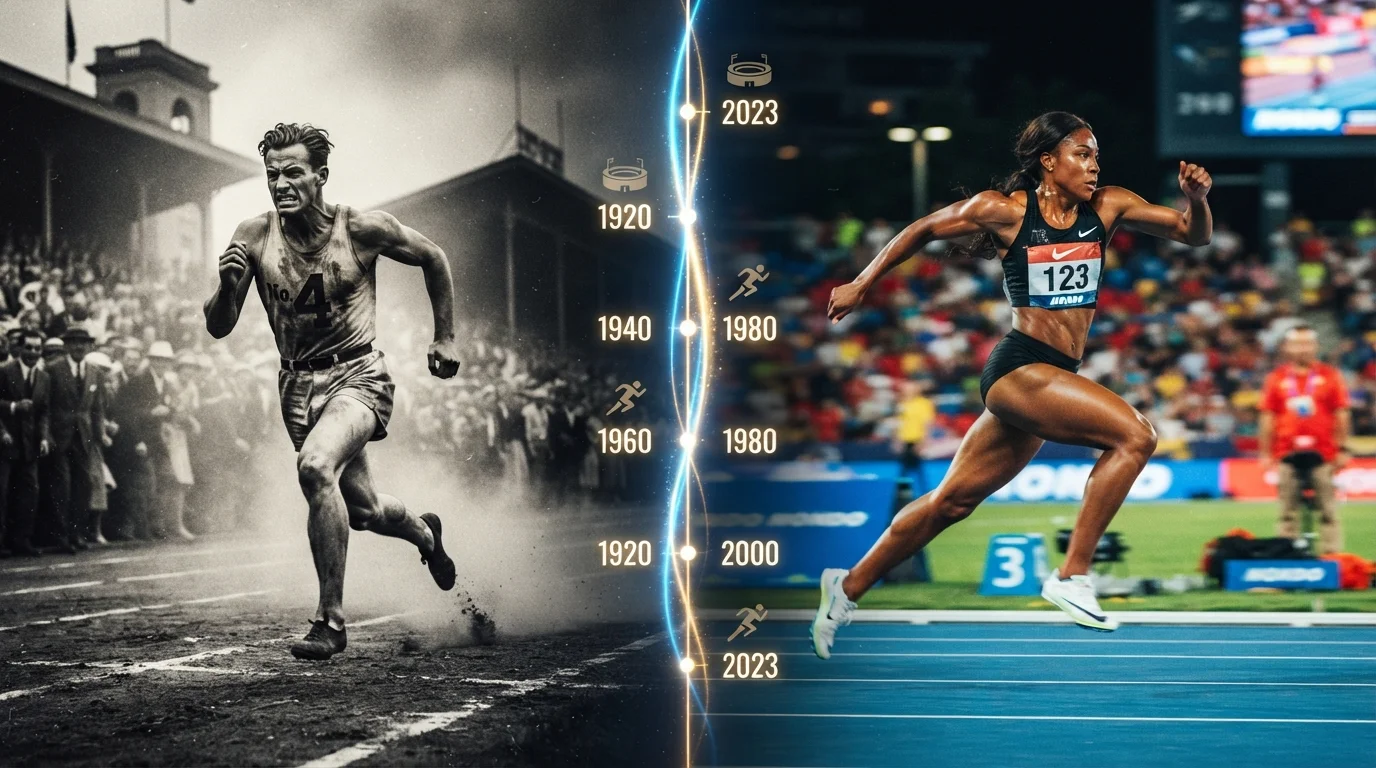
Key Takeaways
- Cross-generational comparisons require accounting for rule changes, technology, and competition depth.
- Raw statistics alone can mislead - context and era-adjusted metrics tell a richer story.
- Dominance within one's own era is a meaningful and defensible benchmark for greatness.
- Training science, nutrition, and sports medicine have dramatically raised the baseline for modern athletes.
- Championships, records, and cultural impact each measure greatness differently and incompletely.
Our Verdict
There is no universal formula for crowning the greatest athlete of all time - and that's the point. Each era of dominance reflects its own context, competition, and constraints. The most intellectually honest approach is to celebrate what athletes achieved relative to their peers while acknowledging that modern advantages make direct stat-for-stat comparisons inherently limited.
| Best for | Recommended |
|---|---|
| Fans who value statistical dominance | Era-adjusted metrics framework |
| Those drawn to cultural impact and legacy | Historical influence framework |
| Purists focused on head-to-head competition | Within-era dominance framework |
| Analysts seeking a complete picture | Multi-factor composite framework |
Why Cross-Generational Comparisons Are So Complicated
Ask ten sports fans who the greatest basketball player of all time is and you'll get a passionate, deeply divided room. The same is true in football, baseball, tennis, and virtually every other sport. The debate is irresistible - but it's also genuinely hard to settle, and for good reason.
Athletes from different decades didn't just play in different uniforms. They played under different rules, with different equipment, against fields of competition shaped by vastly different global talent pools, and with access to wildly different training technology and sports medicine. A pitcher from the 1960s was working on a mound that was literally higher than today's. A basketball player from the 1980s navigated hand-check defense that modern rules have largely eliminated.
Treating raw career numbers as equivalent across these shifting conditions isn't analysis - it's apples-to-oranges arithmetic. To compare fairly, we need frameworks rather than scorecards. See also how team dynasties shaped individual legacies for additional context on how era affects perception.
3x
Growth in global athlete talent pool since 1970
Expanded international participation across major sports has dramatically deepened competitive fields in recent decades.
40%
Reduction in major sports injuries attributed to modern recovery science
Sports medicine and load-management techniques have measurably extended careers and reduced serious injury rates in elite sports.
Four Frameworks for Measuring Greatness Across Eras
Rather than one definitive ruler, analysts and historians tend to apply several overlapping lenses when comparing athletes across generations.
1. Within-Era Dominance
How dominant was the athlete relative to their own contemporaries? Winning multiple titles, setting records, and consistently outperforming peers in one's own era is a strong and defensible signal of greatness - regardless of whether those numbers would translate forward or backward in time. Rivalries within an era often sharpen this picture considerably.
2. Era-Adjusted Statistics
Statisticians have developed metrics designed to normalize performance across different run-scoring environments, pace-of-play eras, or competitive depths. These adjustments don't change what happened, but they place it in proportion.
3. Historical Influence
Did the athlete expand the sport's popularity, change how the game is played, or open doors for future generations? Cultural and structural legacy can be as meaningful as any trophy.
4. Longevity and Consistency
Sustained excellence over many seasons adds a dimension that peak performance alone can't capture. Our guide to athletic longevity explores what separates a five-year career from a fifteen-year one.
| Within-Era Dominance | Era-Adjusted Stats | Historical Influence | Multi-Factor Composite | |
|---|---|---|---|---|
| Accounts for rule changes | Partially | Yes | No | Yes |
| Reflects cultural legacy | No | No | Yes | Yes |
| Rewards longevity | Partially | Yes | Partially | Yes |
| Ease of understanding | High | Moderate | High | Low |
| Vulnerable to bias | Moderate | Low | High | Moderate |
| Widely used by analysts | Yes | Growing | Yes | Emerging |
The Modern Athlete Advantage - and Its Limits
It would be intellectually dishonest to ignore the structural advantages today's athletes have over predecessors. Modern sports science has transformed training, recovery, nutrition, and injury prevention in ways that allow athletes to compete at elite levels deeper into their careers and at higher physical intensities than ever before.
However, past athletes also faced challenges that modern competitors don't. Shorter seasons, longer travel under more difficult conditions, lower salaries requiring off-season work, and thinner medical support all created different kinds of pressure and attrition.
Use Multiple Frameworks Together
No single metric captures athletic greatness completely. Analysts and historians consistently find more satisfying answers when they layer within-era dominance, adjusted statistics, and cultural impact together rather than relying on any one measure. Think of it as triangulation - the more frameworks that point to the same conclusion, the stronger the case.
It's also worth noting that competition depth has grown significantly. A global talent pool in virtually every major sport means that the average opponent today is more capable than at almost any prior point in history. Performing at the top of a deeper field is its own credential. Still, as this exploration of generational talents without titles illustrates, raw ability has never guaranteed ultimate success - context and circumstance always play a role.
Celebrating Eras, Not Just Ranks
The healthiest approach to cross-generational debate isn't declaring a universal winner - it's appreciating what each era produced on its own terms. The sustained excellence of true dynasties reminds us that organizational and contextual factors shape outcomes just as individual talent does.
Ultimately, greatness is plural. Different eras surface different expressions of athletic genius - and the debate itself, conducted with intellectual honesty and genuine appreciation for the game's history, is one of sport's enduring pleasures.