

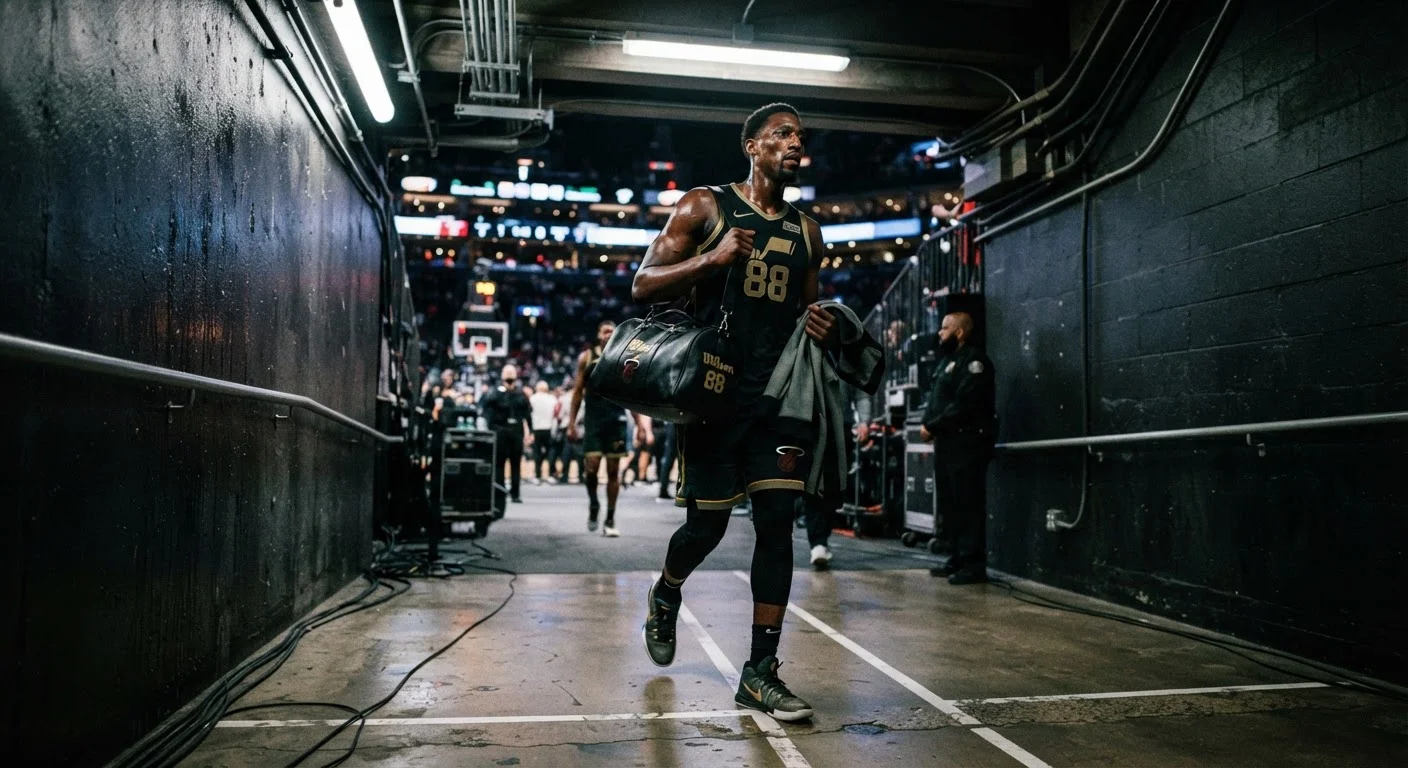
Key Takeaways
- Mid-season trades can happen within hours, leaving players almost no time to prepare for the transition.
- Athletes must quickly absorb new playbooks, systems, and teammate dynamics under live-game pressure.
- The trading team often receives draft picks or other players in return, reshaping its long-term roster.
- Players' families and personal lives are significantly disrupted by sudden relocations mid-year.
- Performance after a trade varies widely - some players thrive in a new environment, others take weeks to find their footing.
Mid-Season Trade
A mid-season trade occurs when a professional sports team exchanges a player - along with draft picks, cash, or other players - to another team while games are actively being played. Unlike off-season moves, mid-season trades require athletes to immediately join a new roster, learn a new system, and relocate their lives, often with very little notice. These deals are typically driven by one team's desire to contend now and another's decision to rebuild for the future.
Each major league (NBA, NFL, MLB, NHL) has its own trade deadline - a date after which trades are frozen until the off-season. Rules around salary caps, contract conditions, and roster limits also govern whether a trade can be executed.
The Moment the Call Comes In
For most athletes, a mid-season trade begins the same way: a call or visit from the team's general manager, often with little warning. The timeline from notification to new-team arrival can be as short as 24 to 48 hours. That's barely enough time to pack a bag, let alone mentally process leaving teammates and a city you've called home.
In practical terms, the athlete's locker gets cleared, credentials are deactivated, and their name is removed from the depth chart - sometimes before the news is public. Teams handle the logistics of contract transfer, medical record sharing, and travel arrangements, but the emotional weight lands squarely on the player.
Unlike off-season moves, which allow weeks or months to transition, mid-season trades drop athletes directly into active competition with minimal ramp-up time.
“Being traded mid-season is one of the hardest things in professional sports. You're going full speed and then suddenly everything changes - your city, your teammates, your role. The great ones find a way to reset quickly.”
— A veteran NBA front office executive, Long-tenured NBA front office executive, speaking generally on player transitions
What the New Team Is Actually Getting
Acquiring teams are rarely trading for a finished product - they're betting on what a player can contribute in their specific system. Coaches and coordinators immediately begin working with the new arrival on terminology, assignments, and role expectations.
In the NBA, a wing player might spend their first two days running through half-court sets they've never seen. In MLB, a pitcher gets a crash course on how the new catcher calls games and how the coaching staff manages pitch counts. There's an adjustment curve in every sport, and front offices typically factor in a two-to-four week window before expecting peak performance.
~50%
NBA players traded at least once mid-career
Industry analysts estimate roughly half of all NBA players experience at least one mid-season trade during their career, reflecting how common roster movement has become.
2-4 weeks
Typical adjustment window after a trade
Team performance analysts and coaches commonly cite a two-to-four week integration period before a newly acquired player reaches expected productivity in their new system.
July 30
MLB trade deadline (annual)
Major League Baseball sets its trade deadline at July 30 each year, making late July the most active and scrutinized trading period in the sport.
Understanding these dynamics is part of how coaches think about roster construction - especially when the postseason is approaching. Teams shift their strategies significantly between the regular season and playoffs, and a newly acquired player must adapt to both timelines simultaneously.
The Human Side: Families, Friendships, and Upheaval
Beyond the locker room, mid-season trades upend real lives. Spouses or partners must consider pulling children from school mid-year, managing lease breaks or home sales, and establishing new routines in a new city - fast. Many athletes initially travel alone and maintain a temporary apartment near the new team's facility while the family situation gets sorted.
The friendships built over a season are also severed abruptly. Teammates who've been through a training camp, preseason, and dozens of games together form tight bonds. A trade severs that connection overnight.
Supporting Traded Athletes Matters
Fan communities have a real impact on how welcomed a traded player feels in their new city. Showing genuine enthusiasm and patience during the adjustment period - rather than immediate criticism - can accelerate a player's sense of belonging and performance. Great team cultures extend into the stands.
It's worth noting that mid-season trades are a fundamentally different experience from free agency, where a player chooses their destination and has time to prepare. A trade offers no such agency for most athletes.
What It Means for Both Teams' Futures
For the team trading the player away - often called the seller - the deal typically returns draft capital or younger players as part of a rebuild. That transaction shapes the franchise's trajectory for years. For the buyer, adding an established contributor mid-season is a calculated gamble that the roster upgrade is worth the assets surrendered.
Teams holding valuable veterans who won't re-sign also have strategic decisions to make. The franchise tag exists partly to prevent exactly this kind of leverage loss, though it doesn't apply universally across all sports or situations.
Mid-season trades are ultimately a reflection of professional sports' core tension: the game is deeply human, but roster decisions are driven by organizational strategy. Understanding what happens on both sides of a trade adds layers of appreciation to every player movement - and to the athletes who navigate these transitions with professionalism, resilience, and no small amount of grit.