

| Weekly aerobic target (adults) | 150-300 min moderate or 75-150 min vigorous activity (U.S. Department of Health and Human Services Physical Activity Guidelines) |
| Muscle mass loss begins | Around age 30, accelerating after 60 (General consensus in exercise physiology literature) |
| Strength training frequency (older adults) | 2+ days per week recommended (U.S. Physical Activity Guidelines for Americans) |
| Balance training benefit | Reduces fall risk in adults 65+ (CDC, Older Adult Fall Prevention resources) |
| VO2 max decline rate | Approximately 1% per year after age 25 without training (General exercise physiology research consensus) |
Why Fitness Needs Change With Age
One of the most empowering things to understand about exercise is that it's not one-size-fits-all - and it was never meant to be. The physical demands placed on a 20-year-old recovering from a sprint workout differ enormously from those faced by a 60-year-old managing joint health and bone density. As we age, hormonal output, muscle fiber composition, cardiovascular capacity, and recovery speed all shift in meaningful ways.
That doesn't mean fitness becomes less important later in life. In fact, the research consistently points the other direction: staying physically active becomes more critical, not less, as the decades accumulate. The key is adjusting how you move rather than whether you move. Public health guidelines for physical activity outline minimum weekly targets, but understanding why those targets exist at each stage helps readers make smarter, more sustainable choices.
| Weekly aerobic target (adults) | 150-300 min moderate or 75-150 min vigorous activity (U.S. Department of Health and Human Services Physical Activity Guidelines) |
| Muscle mass loss begins | Around age 30, accelerating after 60 (General consensus in exercise physiology literature) |
| Strength training frequency (older adults) | 2+ days per week recommended (U.S. Physical Activity Guidelines for Americans) |
| Balance training benefit | Reduces fall risk in adults 65+ (CDC, Older Adult Fall Prevention resources) |
| VO2 max decline rate | Approximately 1% per year after age 25 without training (General exercise physiology research consensus) |
The Major Life Stages and What They Mean for Exercise
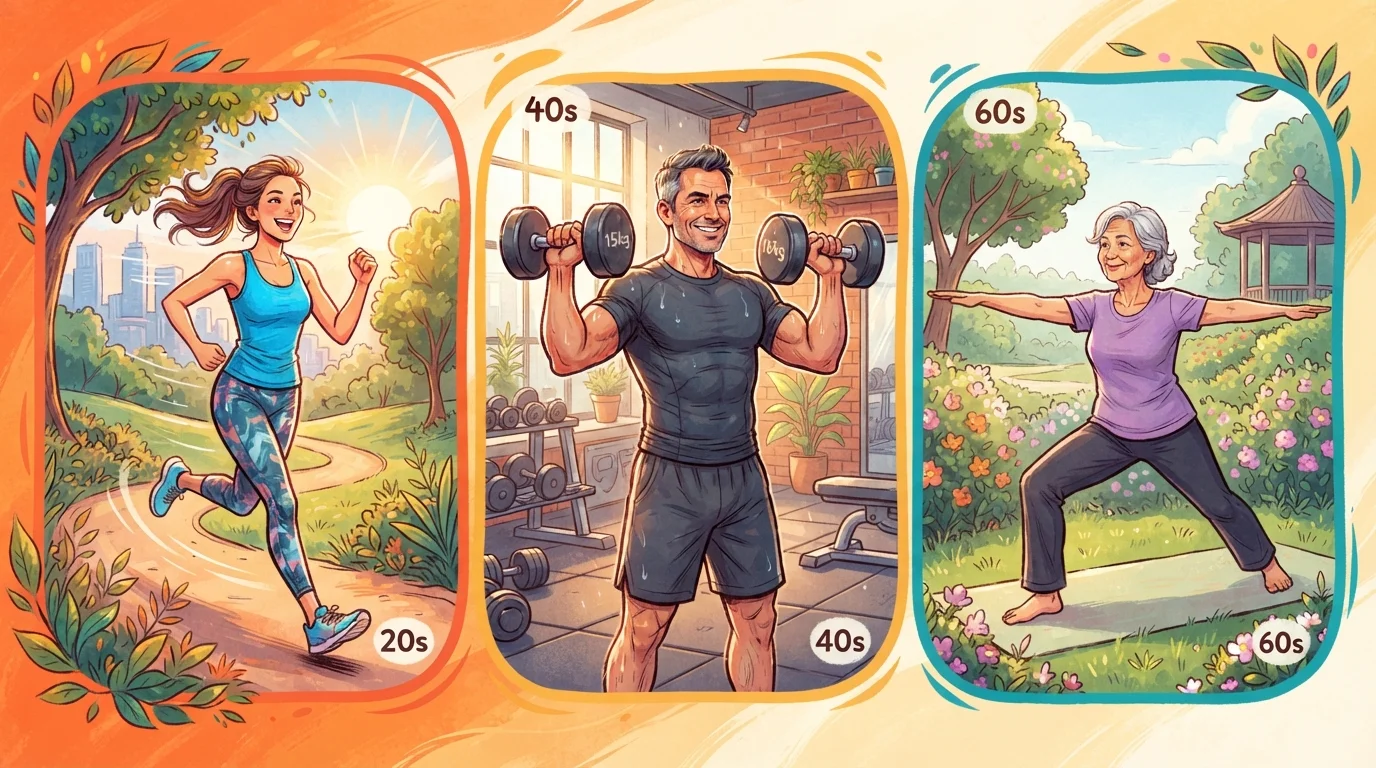
Young adults (roughly 18-35) tend to enjoy peak aerobic capacity, faster muscle repair, and higher tolerance for training volume. This is often when building foundational strength, cardiovascular fitness, and movement skills pays the biggest long-term dividends. Overtraining risk is real here - enthusiasm can outpace recovery - but the body generally bounces back quickly.
Middle adulthood (36-55) brings gradual shifts: testosterone and estrogen levels begin to decline, muscle mass starts to decrease at a slow but measurable rate (a process called sarcopenia), and recovery windows lengthen. Resistance training becomes especially valuable during this period to preserve lean muscle. Functional fitness approaches that reinforce everyday movement patterns - squatting, hinging, carrying - hold particular appeal here. Cardiovascular work remains important; intensity and rest days simply need more careful calibration.
Older adults (56+) face the steepest physiological changes: continued muscle loss, reduced bone density, declining balance, and slower nerve conduction. Yet exercise remains one of the most effective tools for preserving independence and quality of life. Low-impact aerobic activity, resistance training, and dedicated balance work (such as tai chi or single-leg exercises) are widely recommended in this group. Wellness priorities shift significantly after 60, and physical activity sits at the center of most of those shifts.
Sarcopenia
The gradual, age-related loss of skeletal muscle mass and strength. It typically begins in a person's 30s and accelerates after 60, but resistance training is one of the most effective ways to slow its progression.
Aerobic capacity (VO2 max)
The maximum rate at which the body can use oxygen during sustained exercise. It generally peaks in young adulthood and declines with age, though regular cardio training can meaningfully preserve it.
Functional fitness
Training focused on movements that mirror real-life tasks - lifting, bending, carrying, climbing stairs. It emphasizes practical strength and mobility over purely aesthetic or athletic goals.
Recovery window
The amount of time the body needs to repair and adapt after a workout. Recovery windows tend to lengthen with age, meaning older adults typically need more rest between intense sessions.
Bone density
A measure of mineral content within bones, indicating their strength and resistance to fracture. It peaks in early adulthood and gradually declines - weight-bearing exercise helps slow that decline.
Resistance training
Exercise that works muscles against an external force - free weights, machines, resistance bands, or bodyweight. It is a primary tool for maintaining muscle mass and bone density across all life stages.
Practical Principles That Apply at Every Stage
Regardless of age, a few fundamental principles hold steady:
- Consistency beats intensity. Regular moderate activity outperforms sporadic bursts of hard training for long-term health markers.
- Recovery is training. Sleep, hydration, and rest days aren't optional extras - they're when adaptation actually happens. Extended breaks affect fitness differently depending on age and training history.
- Nutrition and movement are linked. See how activity level shapes nutritional needs for a plain-language breakdown of that relationship. Older adults especially benefit from reading about nutritional shifts after 50.
- Mind and body reinforce each other. Exercise has well-documented effects on mood and cognitive function across every age group - a point explored further in mental health needs across the lifespan.
~1% / year
Average aerobic capacity decline after age 25
Regular endurance training can substantially slow this rate, according to exercise physiology research.
3-8%
Muscle mass lost per decade from age 30
Research published in journals such as the Journal of Strength and Conditioning Research cites this as a general range without resistance training.
2x+
Fall-injury risk reduction linked to balance training
The CDC notes that evidence-based fall prevention programs, which often include balance exercises, significantly reduce fall rates in older adults.
This article provides general health and fitness information for educational purposes only. It is not medical advice. Always consult a qualified healthcare professional before beginning or significantly changing an exercise program, particularly if you have existing health conditions.