

Key Takeaways
- Suction power ratings don't reflect how a robot vacuum performs on rugs versus hard floors.
- Navigation technology - not battery life - is the strongest predictor of cleaning thoroughness.
- Homes with pets, furniture legs, and varied floor types require different features than open-plan spaces.
- Maintenance demands like emptying bins and cleaning brushes are often underestimated before purchase.
- Mapping and scheduling capabilities vary widely and directly affect daily convenience.
Maintains floor cleanliness automatically between deep cleans
Daily or scheduled runs keep dust, crumbs, and pet hair from accumulating, reducing the frequency of full manual vacuuming sessions.
Handles routine cleaning without user involvement
Once configured, most models operate entirely on schedule - cleaning while you're at work or asleep without requiring any manual activation.
Reaches under furniture that's awkward to vacuum manually
The low-profile design allows most robot vacuums to clean beneath beds, sofas, and cabinets that are difficult to reach with traditional equipment.
Effective at managing light, consistent debris
For everyday debris like pet hair, dust, and food crumbs on smooth floors, robot vacuums perform reliably and with minimal intervention.
Mapping features enable targeted and zone-based cleaning
Higher-end models can clean specific rooms on demand, avoid designated areas, and adapt to changes in the floor plan over time.
Struggles with high-pile rugs and thick carpet
Many models lose suction efficiency on plush surfaces or get stuck at the transition edge between flooring types, particularly in older homes with varied layouts.
Requires regular maintenance to stay functional
Brush rolls, filters, and sensors need routine cleaning - neglecting this quickly degrades performance, especially in pet-heavy households.
Cannot replace manual vacuuming for thorough cleaning
Corners, stairs, upholstery, and edges near walls are consistently missed or inadequately cleaned, making periodic manual sessions still necessary.
Obstacles and clutter cause navigation failures
Loose cables, small toys, and certain chair leg configurations can trap or confuse robots, sometimes mid-clean and far from the dock.
Noise levels are often higher than expected
Most robot vacuums operate at noise levels comparable to a conventional vacuum, making scheduled quiet-hour cleaning an important - but often overlooked - consideration.
Entry-level navigation means uneven coverage
Random-path models frequently miss sections of a room or over-clean others, delivering less consistent results than their runtime specs would suggest.
Our Verdict
Robot vacuums are genuinely useful tools for maintaining floor cleanliness between deep cleans, particularly in homes with consistent layouts and moderate debris. They work best as a complement to occasional manual vacuuming, not a wholesale replacement. Consumers who set realistic expectations and prioritize navigation quality over raw specs tend to find the most lasting satisfaction.
Ideal for households where daily sweeping is a burden - especially those with pets or open floor plans - and where someone is willing to invest a few minutes each week in routine maintenance.
Why Specs Alone Don't Tell the Full Story
Manufacturers advertise suction power in Pascals, battery capacity in milliamp-hours, and runtime in minutes. These numbers are measurable and comparable - but they don't answer the question most consumers actually need answered: Will this thing reliably clean my home?
Real-world performance is shaped by factors that rarely appear on a product page. The layout of your furniture, the height of your rugs, whether you have pets, and even the shape of your baseboards all influence how effective a robot vacuum will be day to day. Understanding these hidden variables is what separates a useful purchase from a frustrating one. Before any gadget decision, it also helps to ask yourself a structured set of questions about how the device actually fits your life.
Robot Vacuums as a Complement, Not a Replacement
Consumer testing consistently shows that robot vacuums perform best when used alongside - not instead of - periodic manual vacuuming. They excel at maintenance cleaning but are not designed to deep-clean carpet pile, remove embedded debris, or handle stairs and upholstered surfaces. Setting this expectation from the start helps avoid disappointment.
What Robot Vacuums Actually Do Well
When matched to the right environment, robot vacuums offer real, tangible benefits that justify serious consideration.
Maintains floor cleanliness automatically between deep cleans
Daily or scheduled runs keep dust, crumbs, and pet hair from accumulating, reducing the frequency of full manual vacuuming sessions.
Handles routine cleaning without user involvement
Once configured, most models operate entirely on schedule - cleaning while you're at work or asleep without requiring any manual activation.
Reaches under furniture that's awkward to vacuum manually
The low-profile design allows most robot vacuums to clean beneath beds, sofas, and cabinets that are difficult to reach with traditional equipment.
Effective at managing light, consistent debris
For everyday debris like pet hair, dust, and food crumbs on smooth floors, robot vacuums perform reliably and with minimal intervention.
Mapping features enable targeted and zone-based cleaning
Higher-end models can clean specific rooms on demand, avoid designated areas, and adapt to changes in the floor plan over time.
The most underrated advantage is behavioral: because the cleaning happens automatically, floors stay cleaner more consistently than when cleaning depends on finding time to vacuum manually. Consistency compounds - light daily passes prevent debris from being ground into carpet or tracked through rooms.
The Limitations Most Buyers Discover After Purchase
Robot vacuums underperform in ways that specs never warn you about. Understanding these limitations upfront prevents the common experience of an expensive device collecting dust in a closet.
Struggles with high-pile rugs and thick carpet
Many models lose suction efficiency on plush surfaces or get stuck at the transition edge between flooring types, particularly in older homes with varied layouts.
Requires regular maintenance to stay functional
Brush rolls, filters, and sensors need routine cleaning - neglecting this quickly degrades performance, especially in pet-heavy households.
Cannot replace manual vacuuming for thorough cleaning
Corners, stairs, upholstery, and edges near walls are consistently missed or inadequately cleaned, making periodic manual sessions still necessary.
Obstacles and clutter cause navigation failures
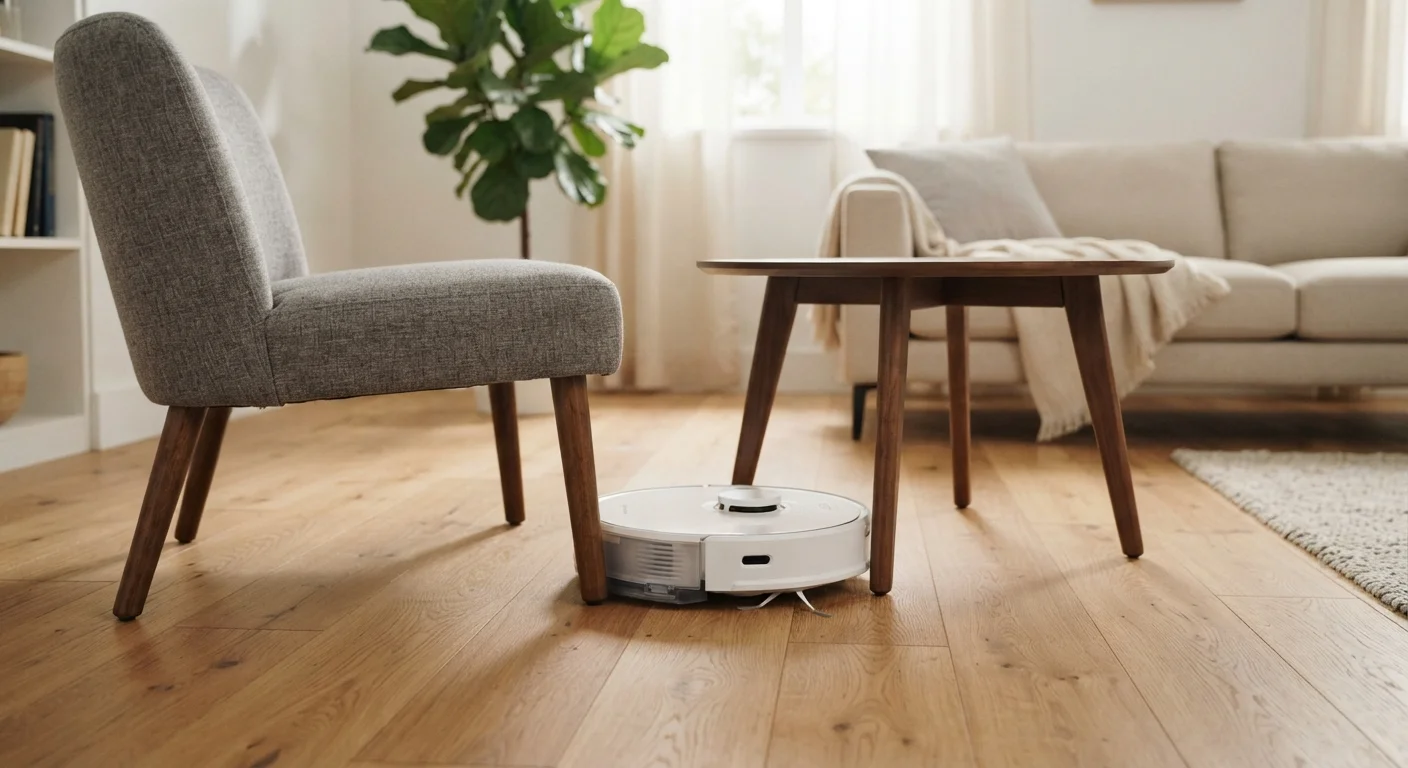
Loose cables, small toys, and certain chair leg configurations can trap or confuse robots, sometimes mid-clean and far from the dock.
Noise levels are often higher than expected
Most robot vacuums operate at noise levels comparable to a conventional vacuum, making scheduled quiet-hour cleaning an important - but often overlooked - consideration.
Entry-level navigation means uneven coverage
Random-path models frequently miss sections of a room or over-clean others, delivering less consistent results than their runtime specs would suggest.
One of the most important things to evaluate is how much maintenance the device itself requires. Brush rolls tangle with pet hair, sensors need periodic wiping, and self-empty bases - while convenient - still need to be serviced. For a realistic picture of what low upfront prices can obscure in terms of ongoing costs and missing features, see why the cheapest option isn't always the most economical.
Navigation Technology: The Spec That Actually Matters
If there is one area where spending more tends to deliver proportional value, it is navigation. Entry-level robot vacuums use bump-and-redirect logic - they bounce around randomly until they've covered a space by chance. Higher-end models use LiDAR or camera-based mapping to build a floor plan and clean methodically in rows.
~30%
Coverage gap with random-path navigation
Consumer testing organizations have noted that bump-and-redirect robot vacuums can leave up to 30% of floor area uncleaned in a single pass compared to methodical mapping models.
2-4x
Price premium for LiDAR-based mapping
Robots with LiDAR or structured-light mapping typically cost two to four times more than entry-level random-navigation models at comparable suction ratings.
Methodical navigation means fewer missed spots, better performance around furniture legs, and the ability to create cleaning zones or avoid areas entirely - like a pet's water bowl. It also enables multi-room scheduling, which changes the device from a novelty into a genuine household tool.
When evaluating any product's technical claims, it's worth knowing how to read spec sheets without getting lost in the numbers - the same principle applies here: focus on the metrics that reflect real-world use, not lab-condition maximums.
Matching the Device to Your Home
A robot vacuum that excels in a studio apartment with hardwood floors may struggle in a multilevel home filled with area rugs, chair legs, and a shedding dog. The right question isn't "Is this a good robot vacuum?" but "Is this the right robot vacuum for how my home is actually laid out?"
Consider these practical factors before deciding:
- Floor transitions: Models vary significantly in their ability to cross thresholds between hard floors and carpet without getting stuck.
- Furniture clearance: Low-profile sofas and decorative legs can trap or confuse robots that lack precise obstacle detection.
- Pet hair volume: High-shedding households benefit from tangle-resistant brush rolls - a feature not always listed prominently in specifications.
- Home footprint: Larger homes may require models that can resume cleaning after recharging, rather than starting over from the dock.
A robot vacuum is ultimately a tool, not a guarantee. Setting realistic expectations about what it will and won't handle is the most useful thing a buyer can do before purchasing.