

Key Takeaways
- Low-code and no-code tools let non-developers build functional apps using visual, template-driven interfaces.
- They are genuinely useful for internal business tools, simple automations, and workflow management.
- These platforms have real limitations - complex, high-traffic, or security-sensitive applications still typically require professional developers.
- The rise of these tools has shifted how companies staff and resource software projects.
- Understanding what these platforms can and can't do helps you avoid costly mismatches between tool and task.
Low-Code / No-Code Platforms
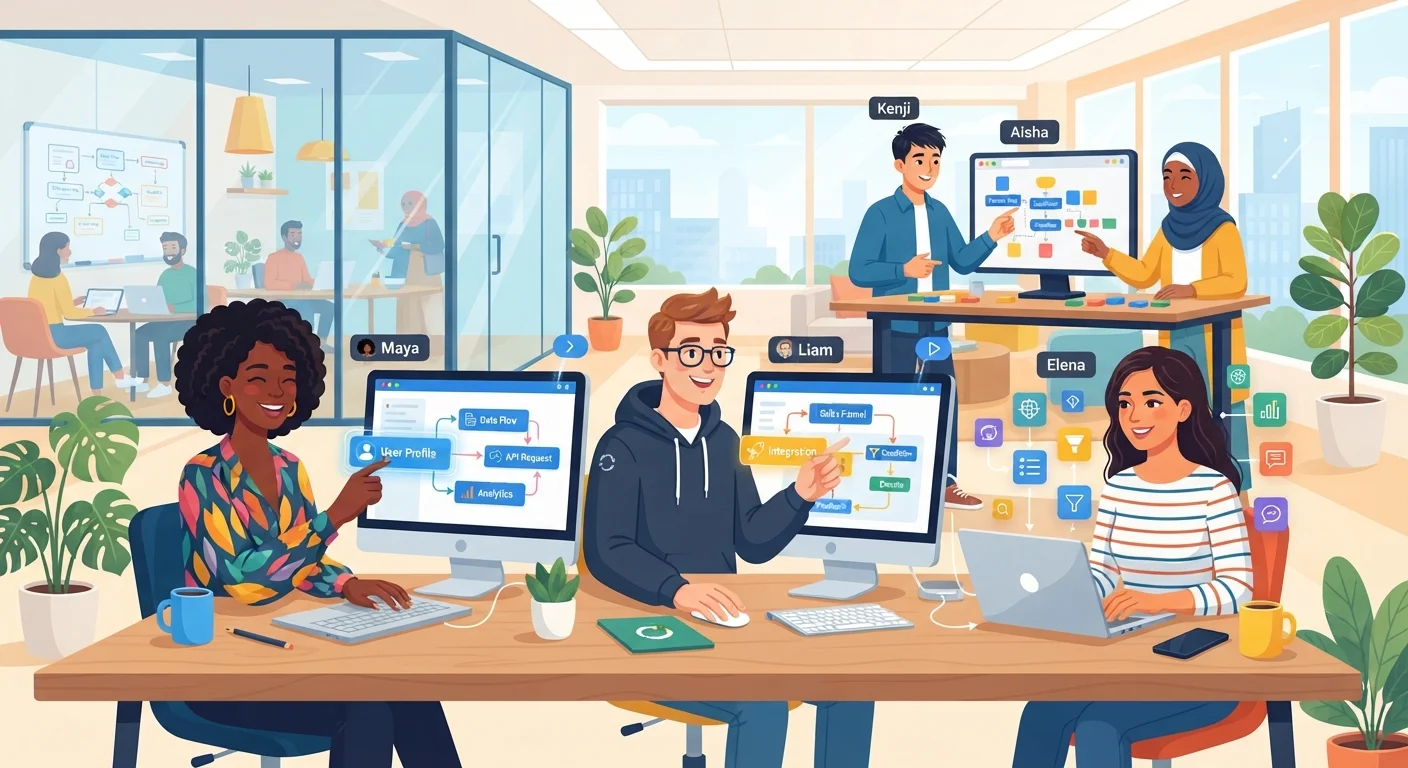
Low-code and no-code platforms are software tools that let people build applications using visual interfaces - think drag-and-drop blocks, menus, and templates - rather than writing traditional programming code. No-code tools require zero coding knowledge, while low-code tools may need occasional scripting for more complex features. Both approaches are designed to make software creation accessible to people who aren't professional developers.
These platforms typically generate underlying code automatically, abstracting away languages like JavaScript or Python. They connect to databases and APIs through pre-built connectors, though customization options are more constrained than hand-coded solutions.
The Idea Behind Building Without Code
Traditional software development has always required a specific skill set - knowing how to write instructions that a computer can execute, in languages most people never learn. Low-code and no-code platforms challenge that assumption by replacing written code with visual building blocks: drag-and-drop components, pre-built templates, and point-and-click logic flows.
The concept isn't entirely new. Spreadsheet tools like Excel gave non-programmers computational power decades ago. What's changed is the scope. Today's platforms can produce web apps, mobile apps, automated workflows, and integrated data dashboards - all without the builder writing a single line of code. As cloud infrastructure became widely available, the backend plumbing that once required specialist knowledge became something platforms could handle automatically, making the no-code approach far more practical.
Low-Code Is Not the Same as Low-Quality
The term 'no-code' can create an impression that these tools produce inferior products. In practice, many business-critical internal applications built on these platforms are highly reliable and well-maintained. Quality depends on how thoughtfully the tool is chosen and configured, not on whether code was written by hand. The same principle applies to any software development approach.
What These Platforms Actually Do Well
The strongest use cases for low-code and no-code tools tend to share a common trait: they solve clearly defined, bounded problems within an organization.
- Internal tools: Employee request forms, approval workflows, inventory trackers, and HR onboarding portals are practical fits. The logic is manageable, the audience is internal, and failure carries limited external risk.
- Process automation: Connecting two or more software systems - say, automatically copying data from a form into a spreadsheet and sending a notification - is something many no-code automation tools handle extremely well.
- Prototyping: Professional developers often use low-code tools to build a working mockup quickly, gather feedback, and then decide whether to build something custom or stick with the platform.
- Small business operations: A small business managing appointments, customer inquiries, or basic e-commerce functions may find a no-code solution genuinely sufficient - without the cost of a dedicated development team.
70%
Share of new apps using low-code by 2025
Analyst firm Gartner has projected that a large majority of new enterprise applications will incorporate low-code development technologies.
~4M
Estimated global citizen developers
Research firms have estimated that the population of citizen developers - non-IT staff building business applications - numbers in the millions and continues to grow.
10x
Citizen developers vs. professional developers
Some industry analyses suggest citizen developers could outnumber professional developers significantly as platforms lower the barrier to entry further.
Where the Limitations Show Up
The phrase 'anyone can build an app' is a useful simplification, but it obscures real constraints that matter when a project grows.
Scalability: Platforms built for accessibility aren't always optimized for performance under high traffic. An app serving dozens of internal users may work flawlessly, while the same design breaks down when handling thousands of simultaneous external users.
Customization ceilings: Every no-code platform sets boundaries on what can be built. When a business requirement falls outside those boundaries, the only options are workarounds, switching platforms, or bringing in a developer - often at greater total cost than building custom from the start.
Vendor dependency: Applications built on a proprietary platform depend entirely on that platform continuing to exist and remain affordable. If pricing changes or the company is acquired, migrating can be difficult.
Security and compliance: For applications handling sensitive personal data, financial records, or health information, the platform's compliance posture must be carefully vetted. General-purpose no-code tools may not meet the specific regulatory requirements of some industries.
Match the Tool to the Task
Before committing to a no-code or low-code platform, map out what your application actually needs to do in 12-18 months, not just today. If there's a realistic chance the scope will grow substantially or involve sensitive data, factor in whether the platform can scale with those requirements - or whether a custom-built foundation makes more sense from the start.
How This Is Reshaping Software Development Teams
Perhaps the most significant shift isn't technical - it's organizational. As low-code tools give business users more direct control over building the tools they need, software development teams are being restructured around that reality.
Some companies now distinguish between 'citizen developers' - employees in non-technical roles who build and maintain tools for their own teams - and professional developers who own complex, high-stakes systems. This creates a tiered model where not every software need routes through an engineering backlog.
For professional developers, the effect is generally additive rather than threatening. Routine development tasks get absorbed by platforms, freeing engineers to focus on problems that genuinely require deep expertise: system architecture, security, performance at scale, and novel functionality. The overall demand for software - and therefore for people who understand it - continues to grow.
“The future of software development isn't just about professional programmers - it's about empowering domain experts to contribute directly to the tools they use every day.”
— Forrester Research, Technology research and advisory firm
What's clear is that the line between 'technical' and 'non-technical' work is becoming less fixed. Understanding what these tools can and can't do is increasingly useful knowledge for anyone working in or alongside technology.