

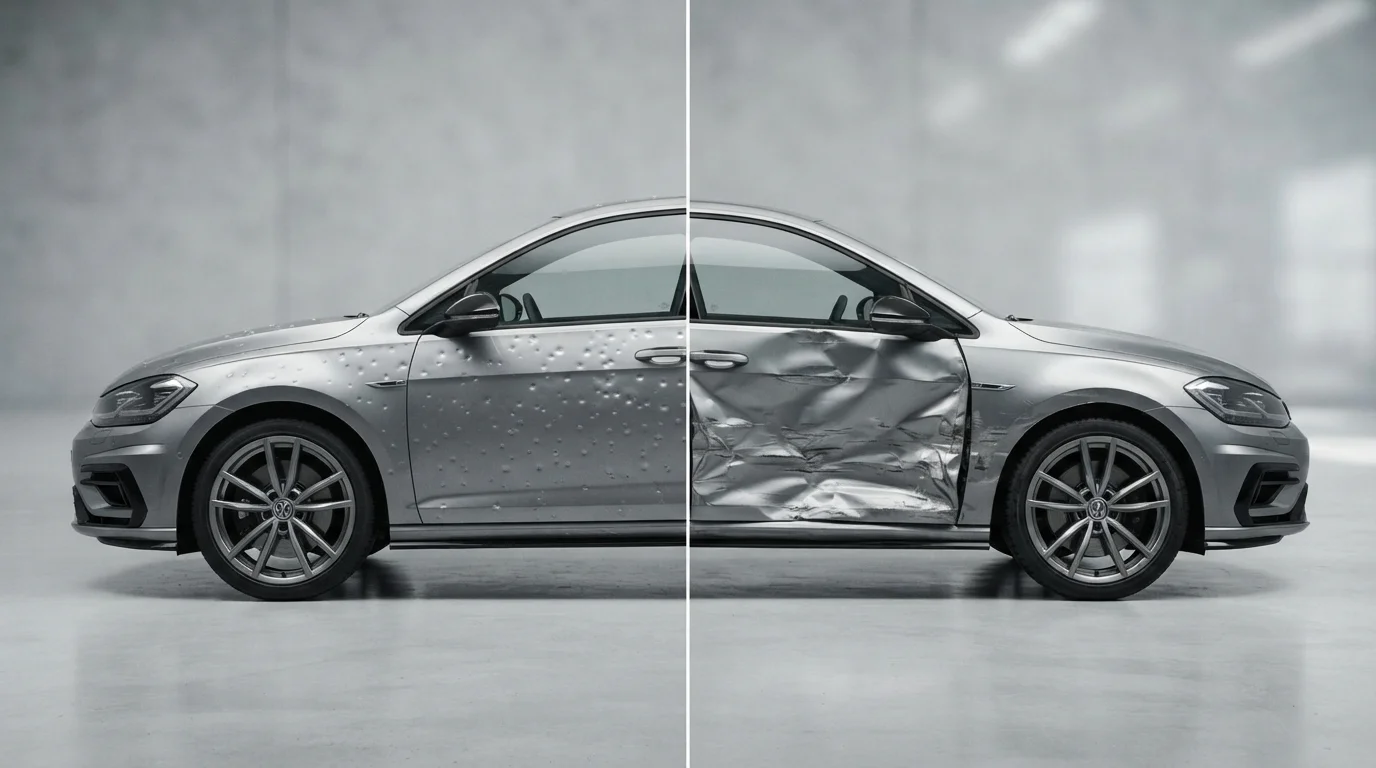
Key Takeaways
- Comprehensive covers non-collision events like theft, hail, floods, and animal strikes.
- Collision covers damage from your vehicle striking another object, regardless of fault.
- Neither coverage is required by law, but lenders typically mandate both on financed vehicles.
- Deductibles and your car's actual cash value are key factors in deciding whether each is worth carrying.
- Carrying both together gives the broadest protection for the physical condition of your vehicle.
Option A
Comprehensive Coverage
The protection against events outside your control.
Best for: Drivers concerned about theft, weather damage, animal strikes, or other non-collision hazards.
Option B
Collision Coverage
The coverage that responds when your car hits something.
Best for: Drivers who want repair or replacement protection regardless of fault in an accident.
If you have a financed or leased vehicle
Both Comprehensive and Collision Coverage
Lenders and lessors almost always require both coverages as a loan or lease condition to protect their financial interest in the vehicle.
If you own an older vehicle outright with a low market value
Evaluate whether either is cost-effective
When the annual premium plus deductible approaches or exceeds the vehicle's actual cash value, dropping one or both coverages may make financial sense - though that decision is personal.
If you live in an area prone to severe weather, wildfires, or high vehicle theft rates
Comprehensive Coverage
Environmental and crime-related risks are precisely what comprehensive is designed to address, making it particularly valuable in high-risk regions.
If you drive frequently in heavy traffic or have a long daily commute
Collision Coverage
More time on the road statistically increases exposure to at-fault or ambiguous-fault accidents, making collision coverage more likely to pay out over time.
What Each Coverage Actually Does
Auto insurance policies bundle several distinct protections, and two of the most commonly misunderstood are comprehensive and collision coverage. Both protect the physical structure of your own vehicle - but they respond to entirely different triggering events.
Comprehensive coverage pays for damage to your car caused by events that don't involve a collision with another vehicle or object. Common examples include theft, vandalism, hail, flooding, fire, falling trees or debris, and striking an animal. The defining characteristic is that the damage originates from something largely outside the driver's control.
Collision coverage responds when your vehicle makes physical contact with another vehicle, a guardrail, a fence, a parking structure, or any other object. It applies regardless of who caused the accident. If you rear-end another car or roll into a pole in a parking lot, collision is the coverage that handles your vehicle's repair costs.
For a plain-language breakdown of how these fit into a full policy, see the auto insurance basics guide.
| Criterion | Comprehensive Coverage | Collision Coverage |
|---|---|---|
| What triggers a claim | Non-collision events (theft, weather, animals) | Contact with another vehicle or object |
| Fault relevance | Not applicable - no driver fault involved | Pays regardless of fault |
| Legally required | No state mandates it | No state mandates it |
| Lender/lessor requirement | Typically required on financed/leased vehicles | Typically required on financed/leased vehicles |
| Payout basis | Actual cash value minus deductible | Actual cash value minus deductible |
| Covers theft | Yes | No |
| Covers at-fault accident damage | No | Yes |
| Typical relative premium cost | Generally lower than collision | Generally higher than comprehensive |
How Deductibles and Vehicle Value Factor In
Both coverages require you to pay a deductible - the amount you absorb before the insurer pays the remainder - when you file a claim. Common deductible levels range from $250 to $1,500. Choosing a higher deductible lowers your premium but increases your out-of-pocket exposure after a loss.
Critically, insurers pay out based on a vehicle's actual cash value (ACV) at the time of the loss, not its original purchase price or replacement cost. ACV accounts for depreciation. On an older vehicle with a low market value, the math can work against carrying these coverages: if your car is worth $4,000 and your deductible is $1,000, the maximum the insurer would pay is $3,000 - and you'd also be paying an annual premium for that potential payout.
~6%
U.S. drivers who file a comprehensive claim annually
According to the Insurance Information Institute, comprehensive claims are filed at a lower rate than collision, but individual risk varies significantly by region and environment.
~20%
Average share of auto premium attributed to collision
The Insurance Information Institute has noted that collision coverage typically represents the largest single component of a personal auto insurance premium.
Owners of financed or leased vehicles generally don't have a choice - lenders require both coverages to protect their interest. Once a loan is paid off, you can reassess. If your vehicle's value has declined significantly, it's worth calculating whether the coverage still makes financial sense for your situation.
Gaps These Coverages Don't Fill
Understanding what comprehensive and collision don't cover is just as important as knowing what they do. Neither coverage addresses:
- Damage you cause to another person's vehicle or property - that's what liability insurance handles
- Your medical expenses or those of passengers after a crash
- Mechanical failures or wear-and-tear unrelated to a covered event
- The "gap" between what your insurer pays and what you still owe on a loan if your car is totaled
That last point is worth examining separately. If you owe more on your loan than your car's ACV, you could face an out-of-pocket balance even after a full comprehensive or collision payout. GAP insurance is specifically designed to address that scenario.
Similarly, if another driver causes damage to your vehicle but lacks adequate insurance, neither comprehensive nor collision automatically steps in - though collision coverage can sometimes be used in that situation depending on your policy. The uninsured and underinsured motorist coverage guide explains how that protection works.
EV Owners: Coverage Considerations May Differ
Electric vehicles can present unique valuation challenges for both comprehensive and collision claims. Battery pack replacement costs are substantial, and not all repair shops have the equipment or certification to handle EV-specific damage. If you own an EV, review how your policy values the battery and what repair networks are covered. The EV insurance basics guide covers these distinctions in more detail.