

Key Takeaways
- A vehicle history report is only useful if you know which sections carry the most weight.
- Title status, accident history, and odometer readings are the three highest-priority areas to review.
- A report showing no accidents does not guarantee a vehicle is damage-free - physical inspection still matters.
- Salvage and rebuilt titles significantly affect insurability and resale value.
- You need the vehicle's VIN to pull any history report from a provider.
What you will need
What a Vehicle History Report Actually Contains
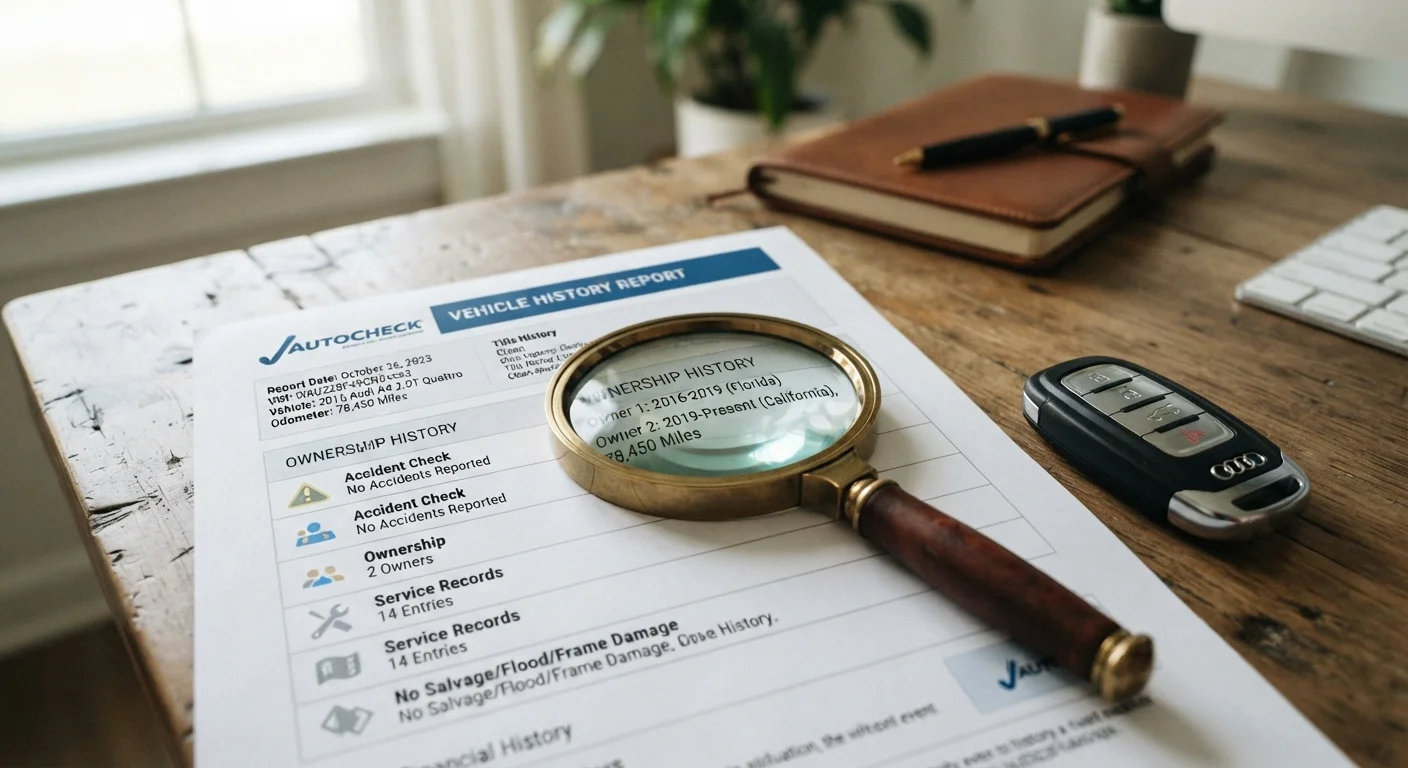
A vehicle history report aggregates data from multiple sources - state DMV records, insurance companies, auto auctions, inspection stations, and repair shops - into a single document tied to a specific VIN. It is a snapshot of a vehicle's documented life, not a comprehensive physical assessment.
The most common data categories include title and ownership history, accident and insurance claims, odometer readings recorded at key events, service and maintenance records, and any use as a commercial or fleet vehicle. Some reports also flag open manufacturer recalls.
What you will need
Understanding how this data flows into the report helps set realistic expectations. A private-party cash repair after a minor fender-bender will typically leave no trace in any database. Flood damage sustained in a region that doesn't systematically report water damage events may also go unrecorded. The report is a powerful tool with genuine blind spots. For context on the full scope of vehicle ownership documentation, see our comprehensive car ownership guide.
Vehicle Identification Number (VIN)
Used to pull the vehicle's history from any report provider - found on the dashboard, door jamb sticker, or existing title documents.
Vehicle History Report
The core document that aggregates title records, accident reports, odometer readings, and service history tied to that VIN.
Pre-Purchase Inspection from a Mechanic
A physical inspection by a qualified mechanic to verify mechanical condition that the report cannot capture.
How to Work Through the Report Step by Step
Understand the VIN Before You Start
Every history report is tied to the 17-character Vehicle Identification Number stamped on the vehicle. Confirm the VIN on the report matches the VIN physically on the car - on the dashboard, door jamb, and title. Understanding how to read a VIN helps you verify this at a glance.
Locate and Verify the VIN
Find the 17-character VIN on the lower-left corner of the windshield dashboard, the driver-side door jamb sticker, or the existing vehicle title. Write it down exactly - a single transposed character will return the wrong record or no record at all.
Once you have a report, confirm the VIN printed on the report matches the one physically on the car. A mismatch is an immediate red flag.
Check the Title History Section First
The title history section tells you how many times the vehicle has been owned, in which states it was registered, and - most critically - whether it carries a clean, salvage, rebuilt, or other branded title designation.
A salvage title means an insurer once declared the vehicle a total loss. A rebuilt title means it was subsequently repaired and reinspected. Both statuses affect financing options, insurance rates, and resale value significantly. See what each title status means for owners for a plain breakdown. You can also learn more about how titles function in our article on what a car title proves and why it matters.
Review the Accident and Damage Records
This section lists reported collisions, airbag deployments, and structural damage events. Note the severity rating attached to each incident - minor bumper contact is very different from a reported rollover or frame damage.
Pay attention to whether damage was described as affecting structural components. Frame or unibody damage can compromise safety systems and long-term reliability even after professional repair.
Audit the Odometer Readings
The report will list mileage readings recorded at inspections, service visits, and ownership transfers. Read these in chronological order. Mileage should always increase over time. Any reading that is lower than a previous entry - or a long gap with no readings at all - requires explanation from the seller.
Examine the Service and Use History
This section shows dealer and shop service records, oil changes, recalls, and any reported use as a rental, fleet, lease, or taxi vehicle. Prior fleet or rental use typically means higher-than-average wear relative to mileage. Consistent, documented service intervals, on the other hand, are a positive indicator of maintenance habits.
Look for open recall notices. If any recalls appear as unresolved, check with the manufacturer or the National Highway Traffic Safety Administration (NHTSA) database to confirm current status.
Interpret the Report in Full Context
No single data point makes or breaks an evaluation. A vehicle with one minor reported accident but full service records and consistent mileage may be a sounder choice than one with a clean accident record but unexplained mileage gaps and no service history. Weigh all sections together, and treat the report as one layer of due diligence - not the final answer.
Watch for Odometer Discrepancies
If the mileage recorded at a service visit is higher than the mileage shown at a later inspection or sale, that is a red flag for potential odometer fraud. Cross-reference every mileage entry in the report timeline. For a deeper look at how this fraud occurs, see our guide on odometer fraud.
A Clean Report Is Not a Green Light
Vehicle history reports only reflect what was officially reported to insurers, DMVs, or repair shops. A cash-repaired accident or an unreported flood event will not appear. Always pair the report with a professional pre-purchase inspection from a qualified mechanic before committing to a purchase.
Common Misreadings and What to Do Next
One of the most frequent mistakes buyers make is treating a clean report as a guarantee. As noted above, unreported damage is a real phenomenon. Treat the report as evidence, not as a warranty.
Another misreading involves confusing the number of owners with the number of title transfers. A vehicle titled in a dealership's name between two private owners will show an extra ownership record - this is normal and not a concern on its own.
After reviewing the report, your next step should be a hands-on pre-purchase inspection by a qualified mechanic who can check frame straightness, fluid condition, tire wear patterns, and other physical indicators that no database captures. The report tells you what was recorded; a mechanic tells you what is actually there.
This article is for general informational purposes only. It does not constitute legal, financial, or mechanical advice. Consult a qualified professional before making any vehicle purchase decision.