

Key Takeaways
- Your vehicle title is the legal foundation of ownership - protect it and understand what it says.
- Minimum state-required insurance rarely covers full financial exposure; review coverage annually.
- Consistent preventive maintenance is the single most effective way to reduce long-term ownership costs.
- Reviewing insurance, registration, and maintenance records once a year can surface savings opportunities.
- Clean title and service history directly improve a vehicle's resale or trade-in value.
Title, Registration, and Legal Ownership
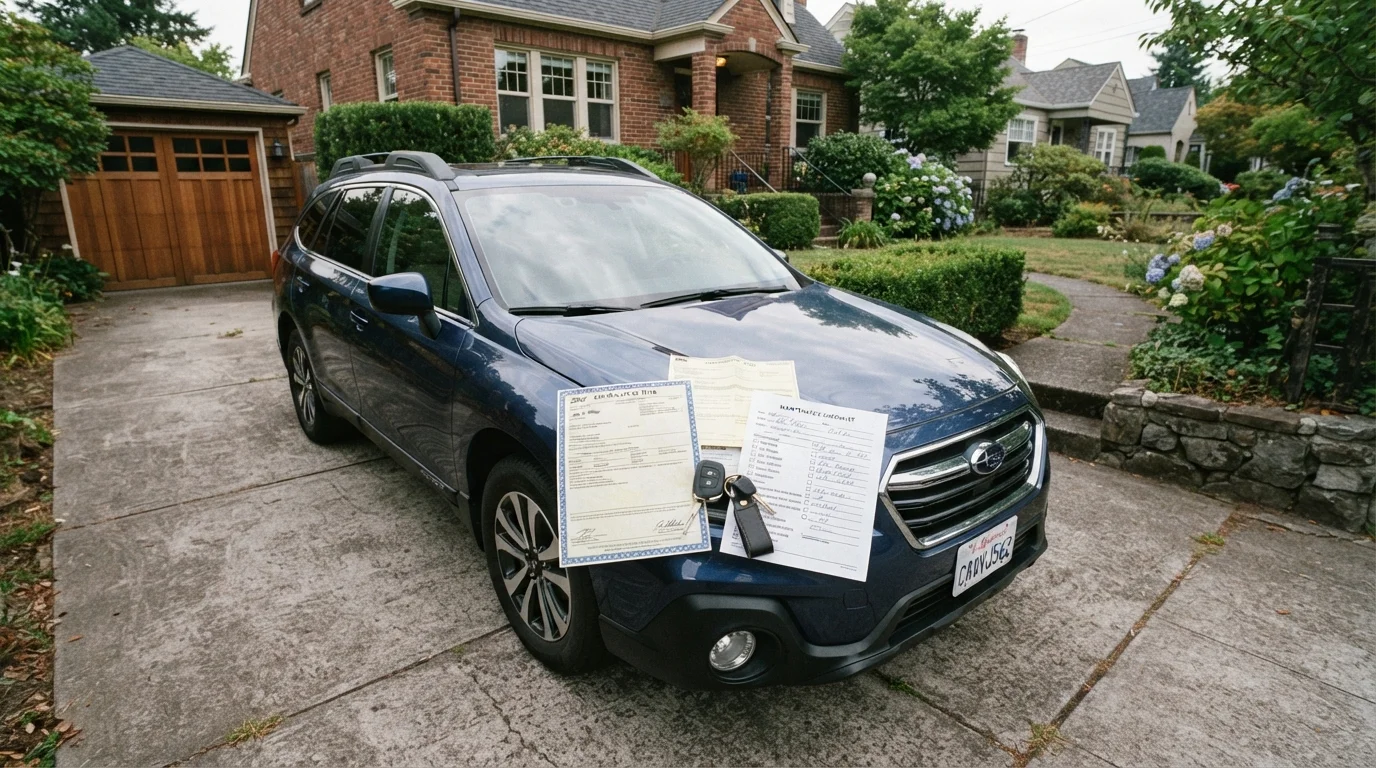
Car ownership in the United States begins with two foundational documents: the vehicle title and the registration. These are distinct - and confusing them can create real problems.
A vehicle title is the legal record that establishes who owns a car. It records the owner's name, the Vehicle Identification Number (VIN), and any lien held by a lender. Without a clear title, you cannot legally sell, donate, or in many cases insure your vehicle. Our detailed guide on what a car title is and why it matters covers the specifics of what this document proves.
Registration, by contrast, is your state's record that a specific vehicle is authorized to operate on public roads. It must be renewed periodically - most states annually - and is tied to payment of state and local fees or taxes. Failing to renew can result in fines or a vehicle being flagged during a traffic stop.
When ownership changes - through a sale, gift, or inheritance - a title transfer is required. The process varies by state but generally involves the seller signing the back of the title, the buyer submitting it to the DMV, and payment of a transfer fee. For a full walkthrough, see our article on transferring a car title when ownership changes hands.
Liens Must Be Resolved Before Transfer
If you financed your vehicle, the lender holds the title until the loan is paid off. You cannot legally transfer ownership to a buyer until the lien is released. Contact your lender to confirm the payoff process before listing a financed vehicle for sale. Failing to do so can delay or invalidate a sale.
Insurance: Coverage Basics Every Owner Should Know
Every state except New Hampshire requires some form of auto insurance to legally operate a vehicle, though minimum coverage requirements vary significantly. Understanding what those minimums cover - and what they leave exposed - is essential.
Liability coverage pays for damage or injuries you cause to others. It does not cover your own vehicle. Collision coverage pays for damage to your car from an accident regardless of fault. Comprehensive coverage addresses non-collision events like theft, vandalism, weather damage, or hitting an animal.
Before renewing your policy automatically, request quotes using the same coverage limits - insurers sometimes raise rates at renewal without announcing it.
Auto insurance premiums can increase at renewal even without claims; shopping the same coverage annually is a practical way to identify whether you're being overcharged.
Keep a simple maintenance log - even a notes app entry - recording every service date, mileage, and what was done. This documentation directly supports resale value.
Buyers and dealers evaluate risk when pricing a used vehicle; a verifiable service history reduces uncertainty and justifies a higher asking price.
Drivers with older vehicles that have depreciated significantly often find that dropping collision or comprehensive coverage - once the vehicle's value falls below a certain threshold - makes financial sense. However, this is a personal calculation that depends on your financial cushion and local risk factors. Consulting an independent insurance agent can help you evaluate your specific situation.
If you're comparing leasing versus owning, insurance obligations differ in ways worth understanding - see our comparison of leasing vs. owning for more context.
Routine Maintenance: Staying Ahead of Costly Repairs
No single habit preserves vehicle value and reliability more reliably than scheduled preventive maintenance. Skipping oil changes, ignoring tire wear, or deferring brake inspections typically transforms small expenses into large ones.
$12,182
Average annual cost to own and operate a vehicle
According to AAA's annual Your Driving Costs study, factoring in fuel, maintenance, insurance, depreciation, and financing.
77%
Owners who underestimate total ownership costs
Consumer surveys consistently show most drivers focus on purchase price and monthly payments while underestimating ongoing ownership expenses.
Key maintenance intervals to track include:
- Oil and filter changes: Interval depends on oil type and driving conditions; consult your owner's manual rather than relying on generic rules.
- Tire rotation: Generally every 5,000-7,500 miles to promote even wear and extend tire life.
- Brake inspection: At least annually or when you notice changes in stopping feel or hear unusual sounds.
- Cabin and engine air filters: Typically every 15,000-25,000 miles, though dusty environments may require more frequent changes.
- Coolant, transmission fluid, and brake fluid: Check intervals in your owner's manual; these are often overlooked until failure occurs.
For new vehicle owners still building maintenance habits, our First-Time Car Owner's Starter Guide provides a practical starting framework.
Use Your Owner's Manual - Not Rules of Thumb
Generic advice like 'change your oil every 3,000 miles' is outdated for most modern vehicles. Your owner's manual specifies intervals tuned to your engine, oil type, and driving conditions. Following it protects your warranty and avoids unnecessary service costs.
Annual Ownership Review
Once a year, every car owner benefits from pausing to reassess the full cost and condition of their vehicle. This isn't just about mechanical checks - it's a financial review too.
An annual review should cover: registration renewal deadlines, insurance policy terms (including whether coverage still matches your vehicle's current value), service records, and any outstanding recalls. The NHTSA's free recall database lets you search by VIN to verify whether your vehicle has open safety recalls that require attention.
Our Annual Car Ownership Checklist walks through exactly what to evaluate each year, from fluid checks to insurance comparisons.
Selling or Trading In Your Vehicle
When the time comes to move on from a vehicle - whether to a newer model, an electric vehicle, or a different ownership arrangement - how you exit matters financially.
Two primary paths exist: private sale and dealer trade-in. Private sales typically yield a higher price but require more effort: advertising, responding to inquiries, arranging test drives, and handling the paperwork yourself. A dealer trade-in is more convenient but generally offers less than private market value.
Regardless of path, two factors most directly affect what you'll receive: the vehicle's condition and its documented service history. A car with all maintenance records and a clean interior will consistently attract stronger offers than one without documentation, even if both are mechanically similar.
Before completing any sale, confirm the title is clear of liens. If a lender still holds the title, the payoff process must be coordinated as part of the transaction. Incomplete title transfers can expose sellers to future liability - this is a critical step, not an optional one.
If you're considering the shift to an electric vehicle as your next step, our EV resources hub covers what current owners need to know about making that transition.
This article is for general informational purposes only. Registration requirements, insurance minimums, and title transfer processes vary by state. Always consult your state DMV and a licensed insurance professional for guidance specific to your situation.