

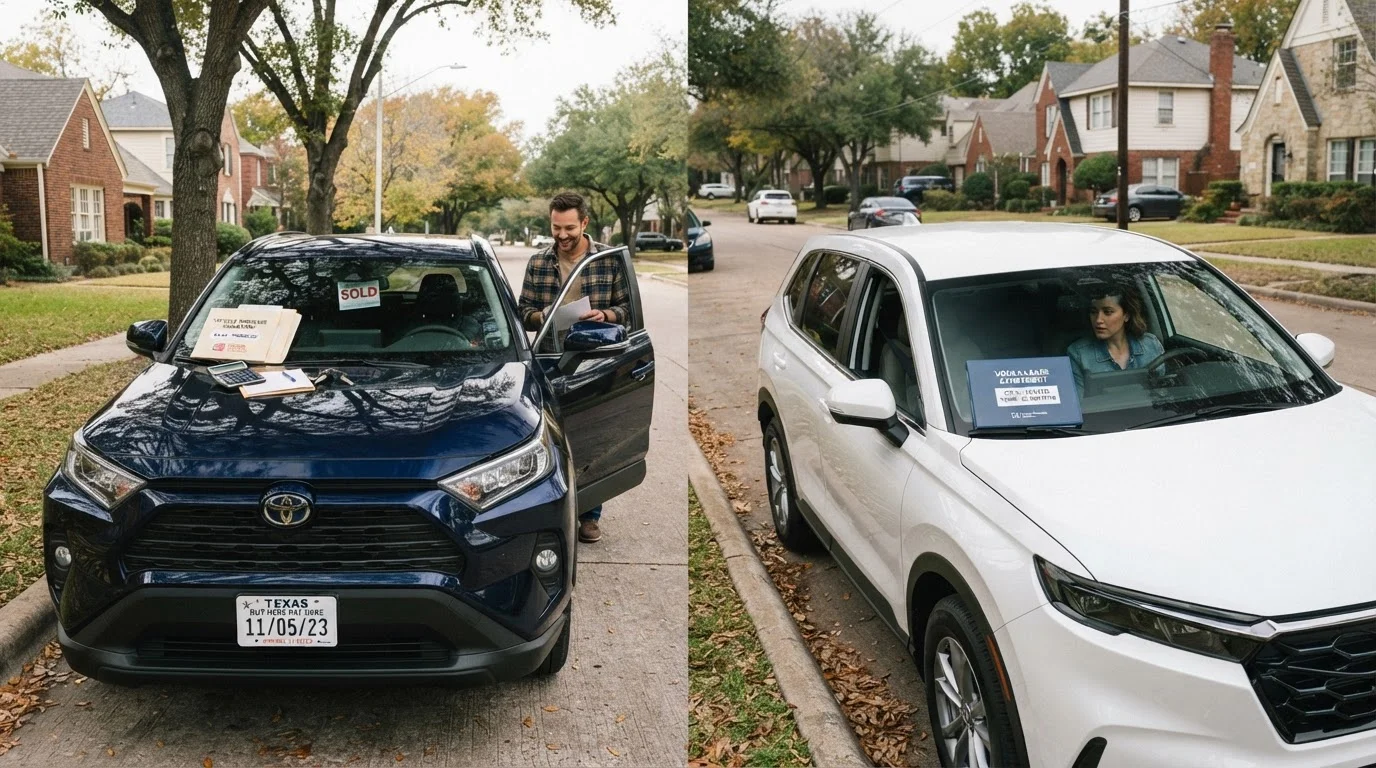
Key Takeaways
- Leasing typically offers lower monthly payments but you build no equity in the vehicle.
- Buying costs more upfront but the car becomes an asset you own outright after loan payoff.
- Lease contracts impose mileage limits and wear-and-tear fees that can add up unexpectedly.
- Owners face no such restrictions and can modify, sell, or trade their vehicle at any time.
- Neither path is universally better - the right choice depends on your driving habits and financial priorities.
Option A
Leasing
The lower-payment, shorter-commitment path.
Best for: Drivers who want a new vehicle every few years and prefer predictable, lower monthly costs.
Option B
Buying (Owning)
The long-term equity-building approach.
Best for: Drivers who log high miles, keep vehicles long-term, or want the flexibility of full ownership.
If you drive fewer than 12,000-15,000 miles per year and prefer a new vehicle regularly
Leasing
Lease terms align well with moderate mileage drivers, and you can upgrade to a newer model at the end of each term without dealing with resale.
If you drive heavily or have an unpredictable annual mileage
Buying (Owning)
Excess mileage penalties on leases can become a significant expense; owning eliminates that risk entirely.
If building long-term equity and eliminating monthly payments eventually matters to you
Buying (Owning)
Once a loan is paid off, you own an asset outright and carry no required monthly vehicle payment - a meaningful budget advantage over time.
If you want access to the latest safety or EV technology every two to three years
Leasing
Short lease cycles make it easier to upgrade to newer models with updated driver-assistance or electric powertrain technology.
What You're Actually Paying For
The fundamental difference between leasing and buying comes down to what your money purchases. When you lease, you're paying for the vehicle's depreciation during your contract term - typically two to four years - plus finance charges and fees. At the end, you return the car and have no ownership stake.
When you buy, every payment reduces the loan balance and builds equity. The vehicle's title transfers to you at payoff. That equity can be applied to a future purchase or converted to cash through a private sale - something a lease never allows.
Because lessees only finance a portion of the vehicle's value, monthly lease payments are generally lower than loan payments on the same car. However, that lower payment comes with trade-offs: mileage caps (commonly 10,000-15,000 miles per year), restrictions on modifications, and potential end-of-lease fees for excess wear.
| Criterion | Leasing | Buying (Owning) |
|---|---|---|
| Monthly Payment | Generally lower | Generally higher |
| Equity Built | None | Yes, after payoff |
| Mileage Limits | Yes - typically 10,000-15,000/yr | No limits |
| Vehicle Modifications | Generally not permitted | Permitted as owner |
| End-of-Term Options | Return, buy out, or re-lease | Keep, sell, or trade in |
| Early Exit Costs | Can be significant | Sell or refinance anytime |
| Maintenance Responsibility | Often covered under warranty | Owner's full responsibility |
The Long-Term Cost Picture
Comparing leasing and buying over a decade reveals a pattern most drivers don't anticipate. A perpetual lessee - someone who moves from one lease to the next - carries a vehicle payment indefinitely. An owner who keeps a car for eight or more years after loan payoff eventually enjoys years of payment-free driving, even while absorbing higher maintenance costs on an older vehicle.
Depreciation is often cited as the biggest cost of owning a new car, with many vehicles losing a substantial portion of their value in the first few years. Lessees sidestep that direct financial hit but also forfeit any residual value the vehicle retains. Owners absorb depreciation but capture whatever value remains when they sell or trade.
~49%
Share of new vehicle transactions that are leases
Experian's State of the Automotive Finance Market has tracked lease penetration rates fluctuating significantly, reflecting how economic conditions and interest rates shape consumer choices.
~20%
Estimated value new cars lose in year one
Industry depreciation guides commonly estimate a significant first-year value drop for new vehicles, underlining why ownership's equity argument depends heavily on how long you keep the car.
For a fuller picture of what ownership truly costs year over year - including insurance, fuel, and maintenance - see The Real Cost of Owning a Car Beyond the Monthly Payment.
Flexibility, Restrictions, and Life Changes
Ownership offers maximum flexibility. You can sell at any time, modify the vehicle, exceed any mileage without penalty, or use it as collateral. Life changes - a new job requiring a longer commute, a growing family, or relocating - are easier to navigate when you own.
Leases are structured contracts with early termination penalties that can be steep. Breaking a lease mid-term is possible but typically expensive. That said, lease-transfer services do exist, allowing some drivers to pass a lease to another qualified person - though terms and availability vary by lender.
EV Leases Have Unique Incentive Rules
Federal tax incentives for electric vehicles are structured differently depending on whether you lease or purchase. In some cases, lease structures allow the dealership - as the vehicle's owner - to claim incentives that may or may not be passed to the consumer. This makes it especially important to clarify the full cost picture before signing an EV lease. Consult a qualified financial professional for guidance specific to your situation.
Drivers curious about how these dynamics shift specifically with electric vehicles should review key questions to ask before signing an EV lease, as battery warranties, incentive eligibility, and charging infrastructure add distinct wrinkles to the decision.
For a comprehensive view of the full ownership lifecycle - from title to eventual trade-in - this guide to comprehensive car ownership walks through every stage.