

Key Takeaways
- DIY car maintenance can save money on labor, but requires the right tools and knowledge.
- Simple tasks like oil changes and air filter swaps are generally safe for beginners.
- Complex repairs - especially electrical or brake system work - carry real safety risks if done incorrectly.
- Mistakes can void warranties or lead to costlier repairs than a shop would have charged.
- Knowing your limits is as important as knowing how to use a wrench.
Significant savings on labor costs
Eliminating shop labor charges on routine tasks like oil changes or filter swaps can save drivers $50-$100 or more per service visit, depending on location.
Greater familiarity with your own vehicle
Hands-on maintenance builds practical knowledge that helps drivers spot developing problems earlier and communicate more clearly with mechanics when professional work is needed.
Flexibility to work on your own schedule
DIY work doesn't require appointments or waiting at a shop - you can complete tasks at your convenience, which matters for routine upkeep on busy schedules.
Control over parts quality
When you source your own parts, you can choose the grade and brand rather than relying on whatever a shop stocks, which can matter for older vehicles with specific requirements.
Mistakes can cause costly downstream damage
An incorrectly installed component - even something as routine as a drain plug - can result in engine damage or safety failures that far exceed what professional service would have cost.
Upfront tool investment can offset savings
Jobs beyond basic maintenance often require specialized tools - torque wrenches, floor jacks, code readers - that add cost if you don't already own them.
Potential warranty implications on newer vehicles
DIY repairs on vehicles still under manufacturer or extended warranty may affect coverage if work is not performed to specified standards; always review terms before proceeding.
Safety risks on complex or critical systems
Brake, suspension, and fuel system work requires precise execution; errors on these systems pose direct safety risks and are generally best handled by qualified professionals.
Our Verdict
DIY car maintenance is a genuine money-saver for routine, low-risk tasks - but it isn't universally practical or safe. The value depends heavily on a driver's skill level, available tools, and the complexity of the job at hand. For straightforward maintenance on older vehicles, it often makes sense; for anything involving safety-critical systems, professional service is the wiser call.
Best for mechanically inclined owners with basic tools who want to handle routine upkeep - like oil changes, air filters, and wiper blades - on vehicles no longer under warranty.
What Counts as DIY Car Maintenance?
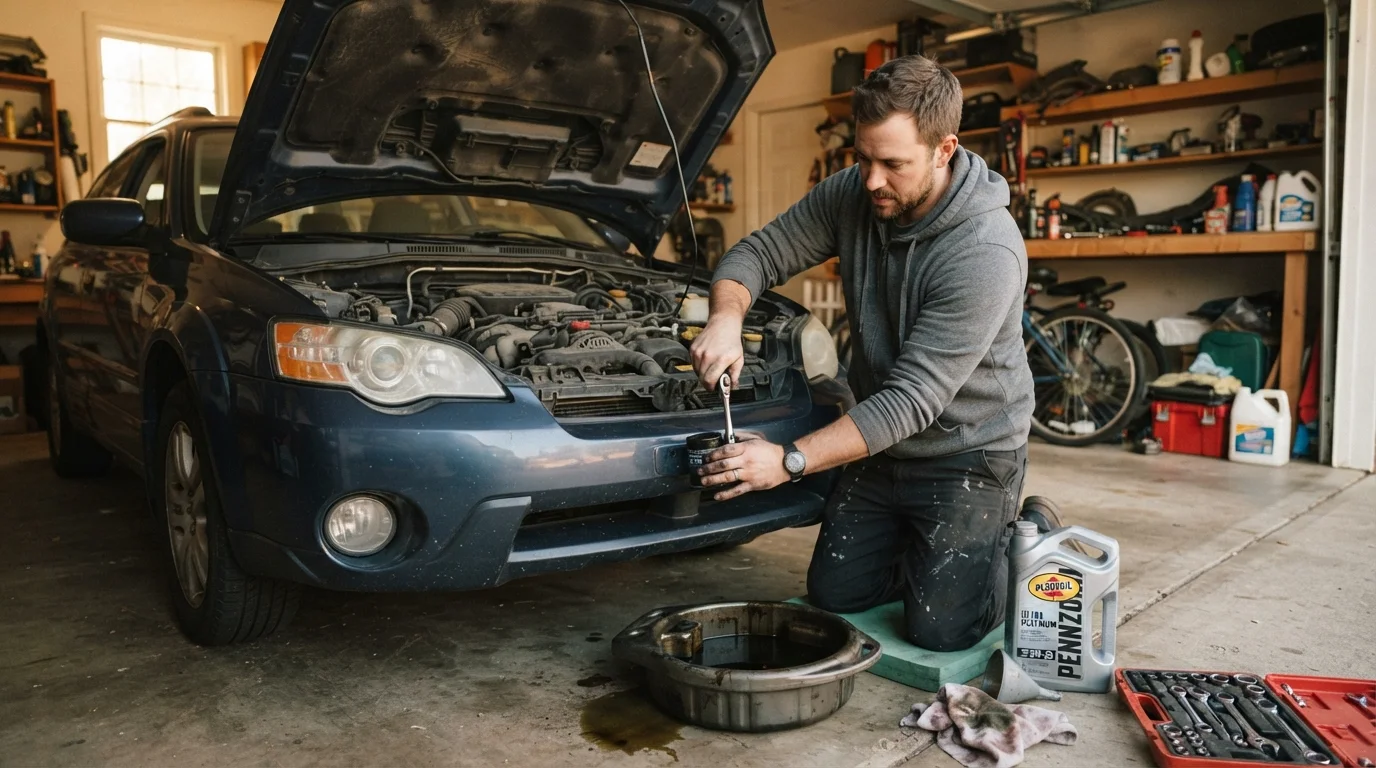
DIY car maintenance covers a wide spectrum - from swapping wiper blades in a driveway to tackling brake pad replacements in a home garage. Most drivers draw the line based on comfort level, available tools, and how much they trust online tutorials. Before deciding what to take on yourself, it helps to understand which tasks are genuinely approachable and which ones carry meaningful risk if done wrong.
Common beginner-friendly tasks include oil and filter changes, air filter replacements, cabin filters, wiper blades, and battery swaps. Intermediate tasks - like replacing spark plugs, brake pads, or belts - require more know-how and the right equipment. Advanced work involving the fuel system, transmission, or vehicle electronics is generally best left to a qualified mechanic. As a rule, if a mistake could compromise vehicle safety or require expensive disassembly to correct, professional service is worth the cost.
For context on how repair decisions fit into broader ownership strategy, see how to evaluate repair versus replace decisions for aging vehicles.
The Advantages of Doing It Yourself
The most immediate benefit is cost savings on labor. Shop labor rates in the US commonly range from $80 to $150 per hour or more depending on location and shop type. For a task that takes a professional 30 minutes, you might pay as much in labor as you do for parts. Handling routine maintenance yourself eliminates that markup entirely.
Significant savings on labor costs
Eliminating shop labor charges on routine tasks like oil changes or filter swaps can save drivers $50-$100 or more per service visit, depending on location.
Greater familiarity with your own vehicle
Hands-on maintenance builds practical knowledge that helps drivers spot developing problems earlier and communicate more clearly with mechanics when professional work is needed.
Flexibility to work on your own schedule
DIY work doesn't require appointments or waiting at a shop - you can complete tasks at your convenience, which matters for routine upkeep on busy schedules.
Control over parts quality
When you source your own parts, you can choose the grade and brand rather than relying on whatever a shop stocks, which can matter for older vehicles with specific requirements.
There's also an educational dimension. Understanding how your vehicle works - even at a basic level - makes you a better-informed consumer when something does go wrong and you need professional help. Drivers who perform their own oil changes, for instance, are more likely to notice abnormalities like fluid leaks or worn belts before they become serious problems. For guidance on how often that oil actually needs changing, the research on oil change intervals may challenge some assumptions.
The Disadvantages You Should Factor In
DIY isn't without real downsides. The most significant is the risk of doing a job incorrectly - either causing immediate damage or creating a latent problem that surfaces later. An improperly torqued drain plug, for example, can lead to oil loss and engine damage that costs far more to fix than a shop oil change ever would.
Mistakes can cause costly downstream damage
An incorrectly installed component - even something as routine as a drain plug - can result in engine damage or safety failures that far exceed what professional service would have cost.
Upfront tool investment can offset savings
Jobs beyond basic maintenance often require specialized tools - torque wrenches, floor jacks, code readers - that add cost if you don't already own them.
Potential warranty implications on newer vehicles
DIY repairs on vehicles still under manufacturer or extended warranty may affect coverage if work is not performed to specified standards; always review terms before proceeding.
Safety risks on complex or critical systems
Brake, suspension, and fuel system work requires precise execution; errors on these systems pose direct safety risks and are generally best handled by qualified professionals.
There's also the tool investment to consider. While basic hand tools are affordable, some jobs require specialized equipment - torque wrenches, jack stands, OBD-II scanners - that can offset savings if you're only performing a task once or twice. And on newer vehicles still under factory or extended warranty, certain DIY repairs may have implications for coverage. Always review your warranty terms before performing work yourself. The relationship between low upfront cost and long-term value is worth examining - why the cheapest option isn't always the most economical applies to parts choices as much as anything else.
Check Your Warranty Before You Start
Manufacturer warranties generally do not require you to use a dealership for routine maintenance - but the work must typically be performed correctly and documented. Using substandard parts or skipping required steps can create complications if a related warranty claim arises later. When in doubt, review your owner's manual or contact your manufacturer directly before proceeding with any repair covered under warranty.
Where to Draw the Line
Safety-critical systems - brakes, steering, suspension, and anything involving the fuel system - demand a higher standard of precision and verification than most home setups can reliably provide. A brake job done incorrectly isn't just a mechanical failure; it's a safety hazard for the driver and everyone else on the road. Similarly, modern vehicle electronics have become complex enough that even experienced home mechanics often lack the diagnostic tools to work on them effectively.
If you're uncertain whether a job falls within your capabilities, consult a trusted resource or get a professional opinion before starting. Choosing between a dealership and an independent mechanic can help you find the right professional for jobs that go beyond routine maintenance. For those curious about ownership decisions on newer technology, used EV ownership introduces an entirely different set of maintenance considerations worth understanding.
$80-$150+
Typical US shop labor rate per hour
Labor rates vary significantly by region and shop type, making the cost of professional service highly variable for even routine tasks.
~30%
Of new car owners who do some DIY maintenance
Industry surveys suggest a meaningful share of vehicle owners perform at least some of their own routine maintenance, particularly oil changes and filter replacements.