

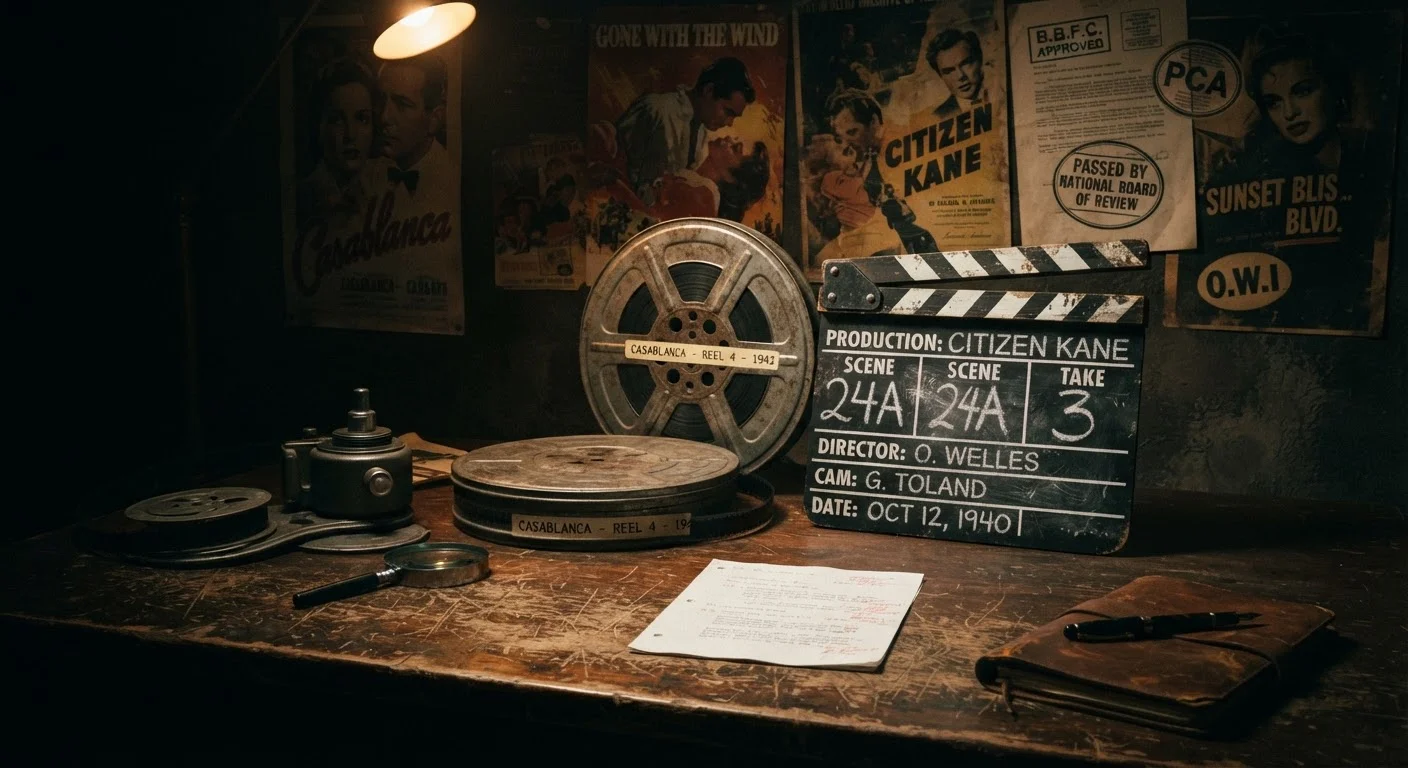
Key Takeaways
- US film censorship began at the local and state level long before any national standards existed.
- The Production Code (Hays Code), active from 1934 to 1968, was the film industry's own self-censorship system.
- The Supreme Court only extended First Amendment protections to film in 1952, decades after cinema became mainstream.
- The MPAA rating system replaced the Hays Code and remains the primary content guide for American audiences today.
- Censorship battles have often reflected broader cultural and political anxieties of their era.
- Modern streaming platforms have reignited debates about content standards and who decides what audiences can see.
Film Censorship
Film censorship refers to the suppression, editing, or outright banning of motion picture content by government bodies, industry groups, or other authorities. In the US, it has taken many forms over the decades - from local municipal boards that could ban films outright to the film industry's own self-regulatory codes. The goal has typically been to control what moral, political, or social messages reach audiences.
Unlike in some countries, the US federal government does not operate a formal national film censorship board; most historic censorship was carried out by state or local bodies, or through the film industry's own self-policing mechanisms.
Before Hollywood Policed Itself: Early Censorship Boards
Long before a single national standard existed, American cities and states were independently deciding what their residents could watch. Chicago established one of the first municipal film censorship boards in 1907, just over a decade after cinema itself was invented. By the 1920s, more than a dozen states had their own censorship boards with genuine legal authority to cut or ban films outright.
The Supreme Court's 1915 Mutual Film Corporation v. Industrial Commission of Ohio ruling made this patchwork system worse by declaring that movies were a business, not protected speech - meaning states had wide latitude to censor them. A film might pass muster in New York but be banned entirely in Ohio or Pennsylvania. Studios had to navigate a chaotic web of local standards that varied enormously by geography and local politics.
The content that attracted the most scrutiny? Anything that seemed to glamorize crime, portray sexuality, or challenge conservative religious values - anxieties that would continue to shape censorship debates for decades. Understanding this era is essential context for how the Hollywood studio system evolved its relationship with content control.
1915
Year films were denied First Amendment protection
The US Supreme Court's Mutual Film Corporation ruling held that cinema was a business, not speech, leaving films vulnerable to state and local censorship for nearly four decades.
1934
Year the Hays Code was strictly enforced
After years of loose voluntary compliance, the Production Code gained real enforcement power in 1934 under Joseph Breen, reshaping Hollywood output for over three decades.
34 years
Duration of the Hays Code's strict enforcement
The Production Code governed Hollywood content from 1934 until the MPAA rating system replaced it in 1968, a span covering some of cinema's most celebrated films.
The Hays Code Era: Hollywood Censors Itself
Facing the threat of federal regulation and public pressure from religious groups, Hollywood studios chose to self-regulate. The Motion Picture Producers and Distributors of America hired Will H. Hays in 1922 to lead a public relations effort, but the real teeth came in 1934 when studios agreed to enforce the Production Code - commonly called the Hays Code - with genuine rigor under Catholic activist Joseph Breen.
The Code prohibited a striking range of content: depictions of interracial relationships, any positive portrayal of crime or adultery, nudity, profanity, and mockery of religion. Scripts were reviewed before filming, and no film could receive a seal of approval - essential for distribution - without compliance. The effect was sweeping. Filmmakers worked around the rules with innuendo and implication, creating a distinct visual language that some film scholars argue produced unexpectedly creative results.
“No picture shall be produced which will lower the moral standards of those who see it. The sympathy of the audience shall never be thrown to the side of crime, wrongdoing, evil, or sin.”
— Motion Picture Production Code, Hollywood's self-regulatory code, adopted 1930, strictly enforced from 1934
But the Code's grip loosened through the 1950s and 1960s. Foreign films arriving without Code approval - like Federico Fellini's work or the French New Wave - competed successfully in art-house markets and showed American audiences something different. The Supreme Court's landmark 1952 Burstyn v. Wilson ruling finally extended First Amendment protection to film, eroding the legal foundation that made the Code powerful. By 1968, the studios officially replaced the Hays Code with a ratings system - a transition that reshaped what American audiences would see on screen. That shift is part of the broader story of how modern Hollywood took shape.
Ratings, Not Bans: The Modern Approach
The MPAA rating system - G, PG, PG-13, R, and NC-17 - replaced outright prohibition with a classification model. Rather than banning content, it labels it, leaving the decision to parents and exhibitors. The PG-13 rating was itself a product of public pressure, introduced in 1984 after films like Indiana Jones and the Temple of Doom generated complaints about intense content sitting just under an R.
The NC-17 rating, introduced in 1990 to replace the stigmatized X rating, was intended to carve out space for serious adult cinema without the pornographic connotation - but most major theater chains and retailers still refuse to carry NC-17 titles, creating an effective soft ban through commercial pressure rather than law. Studios routinely re-edit films to secure an R rating rather than face that distribution wall.
Check What a Rating Actually Covers
MPAA ratings describe the general content category of a film, but they don't tell you much about specific scenes or themes. Many streaming services now provide detailed content descriptors - such as 'brief nudity' or 'strong language' - that go further than the letter rating alone. Taking a moment to read those descriptors gives a more accurate picture of what you're about to watch.
The rating system is widely used but often misunderstood. What a film rating actually signals about content - and what it doesn't - is a question more viewers are starting to ask, especially as streaming platforms like Netflix and HBO Max deliver unrated content directly to households bypassing theater-based rating conventions entirely.
Censorship as a Mirror of Culture
Looking back, American film censorship has consistently reflected the dominant anxieties of each era more than any neutral standard of harm. The early boards worried about immigrant working-class audiences being corrupted. The Hays Code era policed interracial romance and communist sympathies alongside sexual content. The 1980s ratings battles centered heavily on violence in horror films and the emerging video market. Each chapter tells us as much about American society as it does about the films themselves.
Today, debates have shifted to streaming, social media distribution, and whether global platforms face consistent content standards. Films from other countries navigating US distribution sometimes discover that cultural norms around violence, sexuality, or political content differ sharply - a dynamic explored further in how foreign language films have found US audiences. The question of who decides what Americans watch - and by what authority - remains as live as it ever was.