

Key Takeaways
- The modern blockbuster era is widely traced to 'Jaws' (1975) and 'Star Wars' (1977), which pioneered wide releases and franchise thinking.
- Before the mid-1970s, Hollywood relied on prestige dramas and roadshow releases rather than mass-market event films.
- Blockbusters reshaped studio economics by shifting focus to high-budget tentpoles with global franchise potential.
- Merchandise, sequels, and theme park tie-ins became as financially important as ticket sales themselves.
- The rise of streaming has raised fresh questions about whether the theatrical blockbuster model can sustain its dominance.
The American Blockbuster
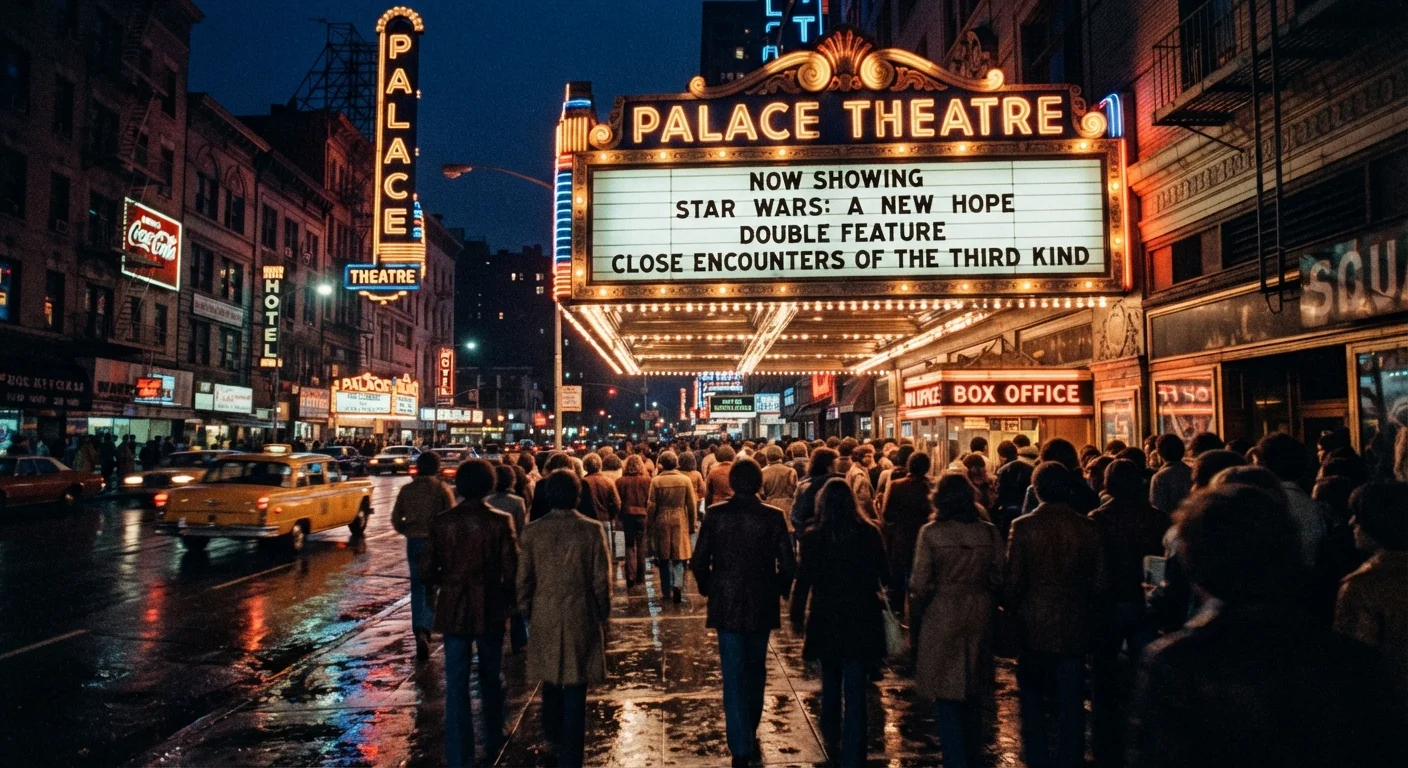
A blockbuster is a major motion picture designed for mass-audience appeal, typically backed by a large production budget and released simultaneously across thousands of theaters. The term originally described films that drew lines around city blocks - and later came to define a Hollywood strategy built on spectacle, franchises, and massive opening weekends. Today it represents not just a type of film, but a complete commercial model that shapes how movies are financed, marketed, and distributed.
In industry terms, a true blockbuster is often defined by its wide release pattern (2,000+ screens) and its reliance on ancillary revenue streams - home video, licensing, and merchandise - to reach overall profitability.
Before the Blockbuster: Hollywood in the Early 1970s
To understand what the blockbuster revolution changed, it helps to picture what came before it. In the late 1960s and early 1970s, Hollywood was in genuine creative and financial turmoil. The old studio system had crumbled, major roadshow spectaculars were flopping at the box office, and a new generation of directors - Francis Ford Coppola, Martin Scorsese, Robert Altman - was producing bold, character-driven films that reflected the anxieties of the era.
Studios were essentially taking bets on a diverse slate of films across many genres and budgets, hoping enough would connect. The idea of engineering a single film to dominate an entire season - let alone spawn a decades-long franchise - barely existed as a strategy. That was about to change dramatically, and the shift would come from an unlikely source: a story about a shark.
The Term 'Blockbuster' Has Older Roots
The word 'blockbuster' originally referred to powerful bombs used during World War II, capable of destroying an entire city block. By the 1950s, it had migrated into entertainment as slang for a theatrical production drawing lines around the block. Hollywood adopted it to describe films of extraordinary commercial scale - though the precise moment it entered standard industry vocabulary is difficult to pin down.
Jaws, Star Wars, and the Birth of the Event Film
Steven Spielberg's Jaws opened in the summer of 1975 and became a cultural phenomenon. Universal Pictures released it simultaneously across roughly 400 theaters - a far wider launch than was common at the time - paired with a saturation television advertising campaign. Audiences lined up around the block. The film earned more than $100 million domestically, a milestone that made Hollywood executives pay very close attention.
Two years later, George Lucas released Star Wars, and the template was fully formed. The film didn't just perform spectacularly at the box office; it demonstrated the enormous commercial potential of merchandise, sequels, and a deeply engaged fan base. Suddenly, studios were thinking in terms of franchises, licensing deals, and intellectual property rather than standalone pictures. The franchise economy beyond the screen - toys, games, theme parks - became inseparable from the blockbuster model itself.
$100M+
Domestic gross of 'Jaws' (1975)
At the time, this was an unprecedented domestic theatrical performance that redefined what commercial success could look like for a single film.
4,000+
Screens for wide-release blockbusters today
Modern tentpole releases routinely open on more than 4,000 screens in the US alone, compared to the few hundred that made 'Jaws' a wide release by 1970s standards.
~50%
Share of box office from franchise films
Industry analysts have estimated that franchise sequels and established IP adaptations have consistently accounted for roughly half or more of annual North American box office in recent years.
How the Blockbuster Model Reshaped Studio Strategy
The commercial success of these event films pushed studios toward what industry insiders call the "tentpole" model: concentrate resources on a small number of enormous productions expected to carry the entire studio's financial year. Mid-budget films - the dramas and comedies that had populated Hollywood's output for decades - gradually lost their place at the multiplex as screens filled with sequels, prequels, and franchise extensions.
Marketing became as critical as production. Opening-weekend performance evolved into the defining measure of a film's success, reinforcing the need for massive promotional campaigns designed to drive immediate ticket sales. To understand how those ticket sales translate into actual studio revenue, the box office mechanics involve a complex split between theaters and distributors that most viewers never see. And when films failed to meet sky-high expectations despite large grosses, the reasons were often rooted in that same economics - as explored in the story of box office bombs.
The Blockbuster Era Today - and What Comes Next
Superhero franchises, particularly those produced by Marvel Studios, represent the blockbuster model at its most refined and most debated. Films in interconnected universes now arrive pre-sold to global audiences, their release dates announced years in advance. But even this dominant model faces real pressure. The COVID-19 pandemic accelerated studio experimentation with simultaneous streaming releases, fundamentally challenging theatrical exclusivity windows.
Today, questions about what blockbuster filmmaking means - and who it serves - are genuinely open. The shift between streaming and theatrical release is rewriting audience expectations in real time, and streaming-exclusive films are carving out their own cultural space. The blockbuster didn't just reshape cinema once - it continues to reshape it, even now.
“The movies that really matter to audiences are the ones that give them an experience they can't get anywhere else. The blockbuster, at its best, promised exactly that - and audiences kept showing up.”
— Roger Ebert, Pulitzer Prize-winning film critic