

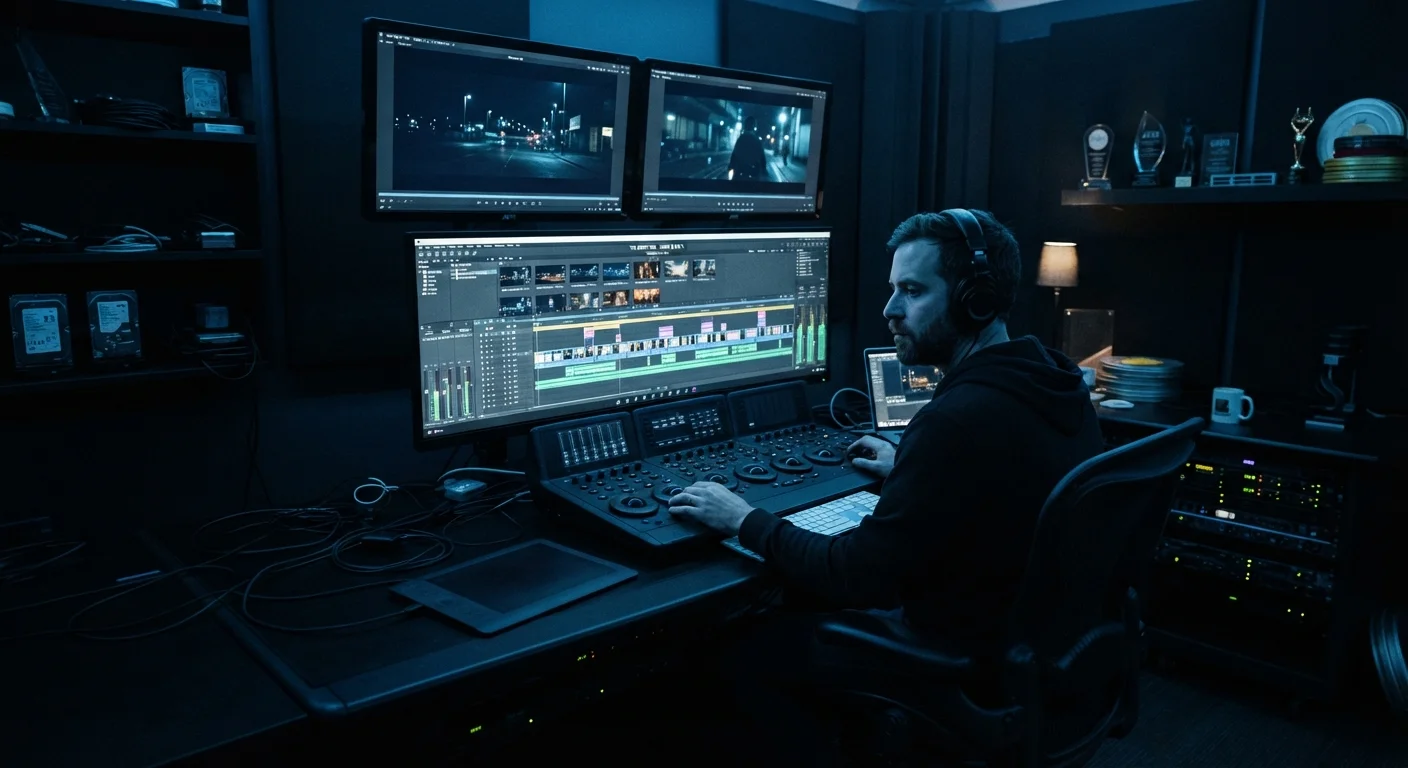
Key Takeaways
- Trailers are made by specialist marketing companies, not the film's own creative team.
- Studios often supply trailer editors with footage before the final film is even locked.
- Music, tone, and even genre can be deliberately reframed to target a broader audience.
- Some footage shown in trailers is shot exclusively for promotional purposes and never appears in the film.
- Understanding the trailer-making process helps viewers watch films with more calibrated expectations.
Movie Trailer
A movie trailer is a short promotional video designed to generate audience interest in an upcoming film. Unlike the film itself, trailers are typically assembled by specialist marketing editors hired by a studio's distribution arm, not by the movie's director. Their primary purpose is advertising, which means every cut, music choice, and moment of dialogue is chosen to maximize excitement - not to accurately represent the finished film.
In industry parlance, trailers are produced by dedicated 'trailer houses' - boutique post-production companies that specialize exclusively in promotional content and work from rough cuts or selects provided by the studio.
The People Who Actually Make Trailers
When a film wraps principal photography, the director hands the footage to an editor - but a separate, parallel process has often already begun. Studio marketing departments commission dedicated trailer houses months before a film is complete, sometimes while it's still being shot. These boutique post-production companies receive a selection of footage, called 'selects,' from the studio and build the promotional campaign almost entirely independently of the filmmakers.
This separation is by design. Trailers serve the studio's commercial interests, and those interests don't always align with the director's artistic vision. As the studio system shapes distribution decisions at every level, trailer production is simply one more area where creative control rests with the business side of the house.
“The trailer is not the film. It's an argument for why you should see the film. Those are very different things, and conflating them is what leads to disappointment.”
— Mark Woollen, Veteran trailer director and founder of Mark Woollen & Associates
The Craft of the Cut: How Trailers Are Built
Trailer editors work like composers assembling a symphony from someone else's sheet music. They identify the most visually striking or emotionally potent moments in the available footage, then build a three-act emotional arc - typically setup, escalation, and a punchy final beat - compressed into 90 seconds to two-and-a-half minutes.
Music choice is arguably the single most powerful lever. A sweeping orchestral arrangement can make a modest drama feel epic; a pulsing electronic score can disguise a quiet film as a thriller. Trailer music licensing is its own industry, with composers creating 'trailer tracks' designed specifically to manipulate emotional response in the shortest possible time.
Voiceover narration, once a staple ('In a world where…'), has largely given way to dialogue-driven trailers, where carefully selected lines are reordered or stripped of context to imply a story the film may not actually tell. Understanding how film editing works can sharpen your eye for exactly these sleights of hand.
~$150M
Typical marketing spend for a major studio tentpole
Industry analysts have estimated that major studio blockbusters routinely spend $100-$150 million on marketing alone, with trailers serving as the centerpiece of that campaign.
2-6 months
Lead time before trailer houses receive footage
Trailer production companies often begin work on promotional materials months before a film finishes post-production, according to interviews with industry professionals.
3
Average number of trailers per major release
Most studio films receive a teaser, a full theatrical trailer, and at least one additional TV spot or social cut, each targeting different audience segments and platforms.
Why Trailers Mislead - and How
Misleading trailers aren't usually the result of dishonesty - they're the result of incentives. A studio needs to sell the broadest possible opening weekend, and that means pitching a film to audiences who might not otherwise show up. A somber war drama gets recut as an action movie. A quiet character study gets a pop soundtrack and fast cuts to read as a romantic comedy.
Some footage in trailers was never meant to be in the finished film. Scenes from early cuts are often included before the director has locked the picture; when those scenes are trimmed in final editing, the trailer still lives in the world. Occasionally, studios shoot footage exclusively for promotional purposes - material that looks like the film but was never intended for it. This practice, while legal, can feel like a bait-and-switch to audiences.
The dynamic has a parallel in other industries. Much like curated in-store product demonstrations, trailers present a controlled, optimized experience that may not reflect what you actually get. The difference is that movie tickets are non-refundable and the 'product reveal' happens two hours into the experience.
How to Read a Trailer More Critically
Before forming strong expectations, watch a trailer twice: once for emotional response, once analytically. Ask yourself whether the music is doing most of the emotional work, whether dialogue lines feel contextually complete, and whether the tone is consistent throughout. Inconsistencies are often a sign of deliberate reframing.
Watching Trailers More Critically
None of this means trailers are without value - they're often genuinely impressive short-form filmmaking in their own right. But approaching them as marketing artifacts rather than accurate previews changes the viewing experience in useful ways.
Pay attention to what a trailer withholds as much as what it shows. If the tone seems inconsistent or the dialogue feels oddly disconnected, you may be watching a reframed cut. Note the music - if it feels bigger or more urgent than the imagery warrants, the emotional register is probably being pushed upward deliberately.
The rise of streaming has complicated the picture further. Platforms now test multiple versions of the same trailer on different audience segments, optimizing for click-through rather than honest representation. How films reach audiences through streaming versus theaters continues to evolve, and the trailer's role as gatekeeper is evolving with it. Being a more informed viewer starts with understanding the machinery behind what you see before the movie even begins.