

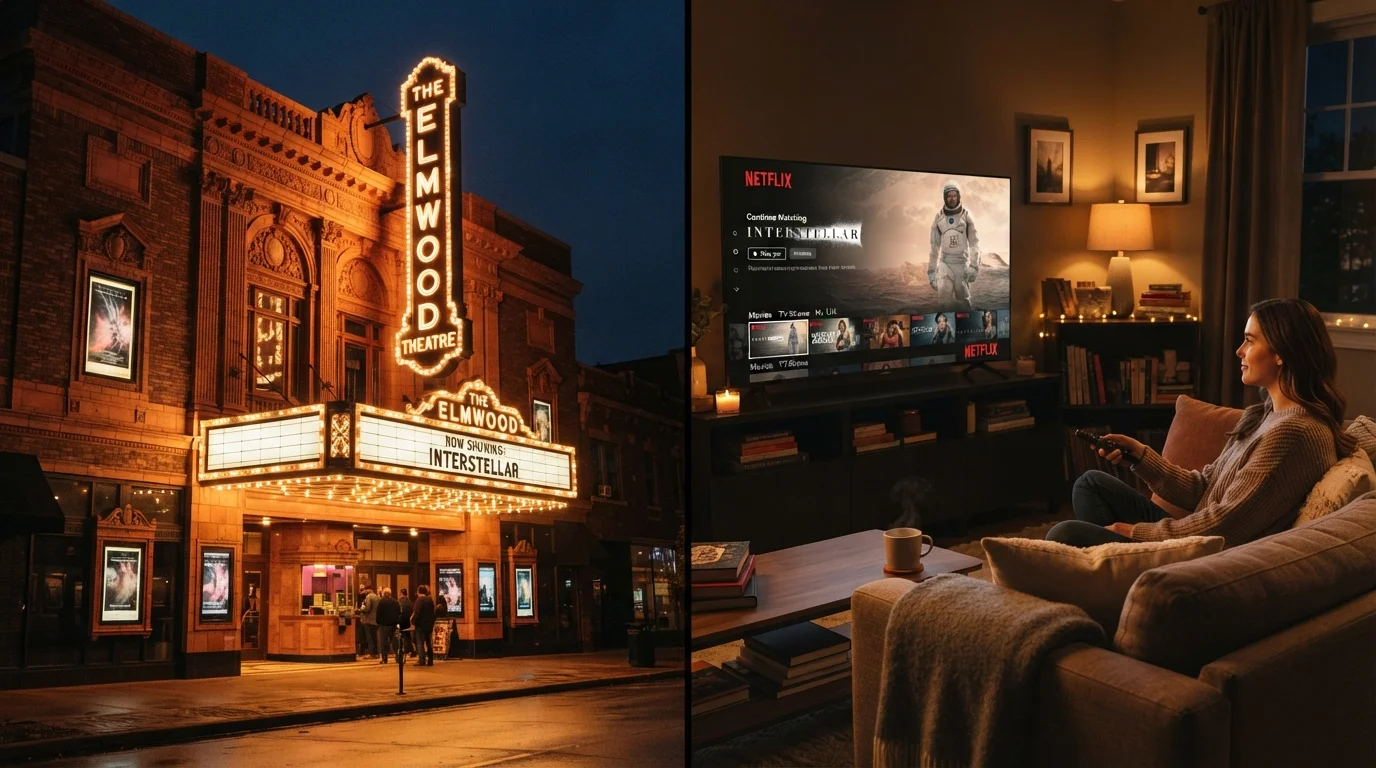
Key Takeaways
- Theatrical releases generate box office revenue that funds future film production and studio deals.
- Streaming releases offer immediate access but may bypass the cinematic scale a film was designed for.
- The theatrical window - typically 45 days - determines how long before a film reaches streaming platforms.
- Studios use both paths strategically depending on budget, genre, and target audience.
- Neither format is universally superior; the right choice depends on the film and the viewer.
Option A
Theatrical Release
The immersive, communal cinema experience.
Best for: Viewers who want large-screen spectacle, opening-weekend energy, and the full cinematic event.
Option B
Streaming Release
The flexible, on-demand home viewing alternative.
Best for: Audiences who prioritize convenience, cost control, and watching on their own schedule.
If you want the full sensory experience of big-budget blockbusters
Theatrical Release
Large-screen visuals, immersive sound design, and the shared audience energy are difficult to replicate at home, especially for action or epic-scale films.
If you value flexibility and watching on your own timeline
Streaming Release
Streaming lets you pause, rewatch, and fit films around your schedule without ticket costs or travel - a genuine advantage for everyday viewing.
If you follow awards season and want to see Oscar contenders
Theatrical Release
Many prestige films still require a theatrical run to qualify for major awards, so cinemas often host titles that shape the cultural conversation.
If you're interested in niche, independent, or foreign language films
Streaming Release
Streaming platforms have dramatically expanded access to films that rarely reach local multiplexes, bringing global cinema to mainstream US audiences.
How Each Release Path Actually Works
When a studio decides how to release a film, it isn't simply choosing between two options - it's navigating a complex ecosystem of contracts, revenue models, and audience expectations. A theatrical release means the film opens in cinemas first, generating ticket sales split between theaters and distributors. A streaming release means the film debuts directly on a subscription platform, bypassing cinemas entirely or running alongside them in a simultaneous release.
The mechanics behind this split matter more than most viewers realize. Box office economics involve layered revenue streams - opening weekend performance, international markets, and eventual home video or streaming licensing. Streaming-exclusive films skip that chain entirely, with platforms typically paying a flat licensing or production fee rather than sharing ongoing revenue with exhibitors.
For studios, the calculus involves projected audience size, marketing costs, and the kind of cultural footprint they want a film to have. A $200 million franchise entry almost always gets a theatrical push. A mid-budget drama or documentary may go straight to streaming, where it can find a broader, more patient audience over time.
| Criterion | Theatrical Release | Streaming Release |
|---|---|---|
| Viewing environment | Large screen, calibrated sound | Home screen, variable quality |
| Access timing | Opening day in cinemas | Immediate or after theatrical window |
| Cost to viewer | Per-ticket purchase | Included in subscription |
| Revenue model | Box office split with exhibitors | Flat fee or platform production deal |
| Awards eligibility | Typically required for major awards | Eligible with qualifying theatrical run |
| Discovery reach | Dependent on marketing and geography | Algorithm-driven, nationwide access |
| Control for viewers | Fixed schedule, no pausing | Pause, rewind, watch anytime |
What Viewers Actually Experience Differently
The difference isn't just where you sit - it's how a film lands. Theaters provide calibrated audio, massive screens, and the psychological shift of a dedicated viewing space. That communal dimension - laughing or gasping alongside strangers - is a genuine part of how certain films register emotionally. Horror, action, and large-scale spectacle are frequently cited by filmmakers as genres designed specifically for that environment.
Streaming, by contrast, trades scale for intimacy and control. You can pause, rewind, and watch in fragments across several evenings. That flexibility is genuinely valuable for complex narratives, foreign language films (see our guide to foreign language films and American audiences), or long documentary features where rewinding and reflection matter.
There's also the question of discovery. Streaming algorithms serve films to audiences who might never have sought them out, which has become a meaningful pipeline for independent and international cinema. Theatrical discovery, meanwhile, still depends heavily on marketing budgets and geographic reach - not every film playing in New York or Los Angeles opens in smaller markets at all.
45 days
Typical theatrical exclusivity window
The standard theatrical window has compressed from roughly 90 days to around 45 days for many major studio releases in recent years.
~78%
US households with at least one streaming subscription
According to Nielsen's 2023 State of Play report, the vast majority of American households subscribe to at least one video streaming service.
Top 3
Streaming hours vs. cable and broadcast
Nielsen's 2023 data showed streaming surpassed both cable and broadcast in total US TV viewing time for the first time, reflecting a significant audience shift.
The Industry Implications Behind the Shift
The streaming vs. theatrical debate isn't just a viewer preference question - it's reshaping how films are financed, greenlit, and recognized. The theatrical window - the exclusivity period that keeps films in cinemas before streaming - has shortened significantly in recent years, from the traditional 90 days to around 45 days for many major releases. That compression affects how much box office revenue a film can accumulate and how exhibitors (theater chains) plan their schedules.
Awards eligibility adds another layer. The Academy of Motion Picture Arts and Sciences has updated its rules to accommodate streaming-first films, but theatrical runs remain a signal of prestige. Studios chasing Oscar nominations often engineer brief theatrical releases for streaming-destined films precisely to stay eligible and culturally prominent.
For filmmakers, the stakes are personal. Directors working in visually ambitious formats often argue their work is compromised by small-screen delivery. Meanwhile, storytellers focused on character-driven narratives may find streaming offers the audience reach and creative latitude that a limited theatrical run would never provide. The rise of streaming-exclusive films has genuinely expanded what kinds of stories get told - even as it has altered how those stories are experienced.
Simultaneous Releases: A Middle Ground
Some studios have experimented with releasing films in theaters and on streaming platforms on the same day - a model that gained traction during the pandemic. While this approach expands access, theater chains have pushed back, as same-day streaming undercuts their ability to attract audiences. The practice has become less common for major titles since 2022, though it persists for select mid-budget and family films.