

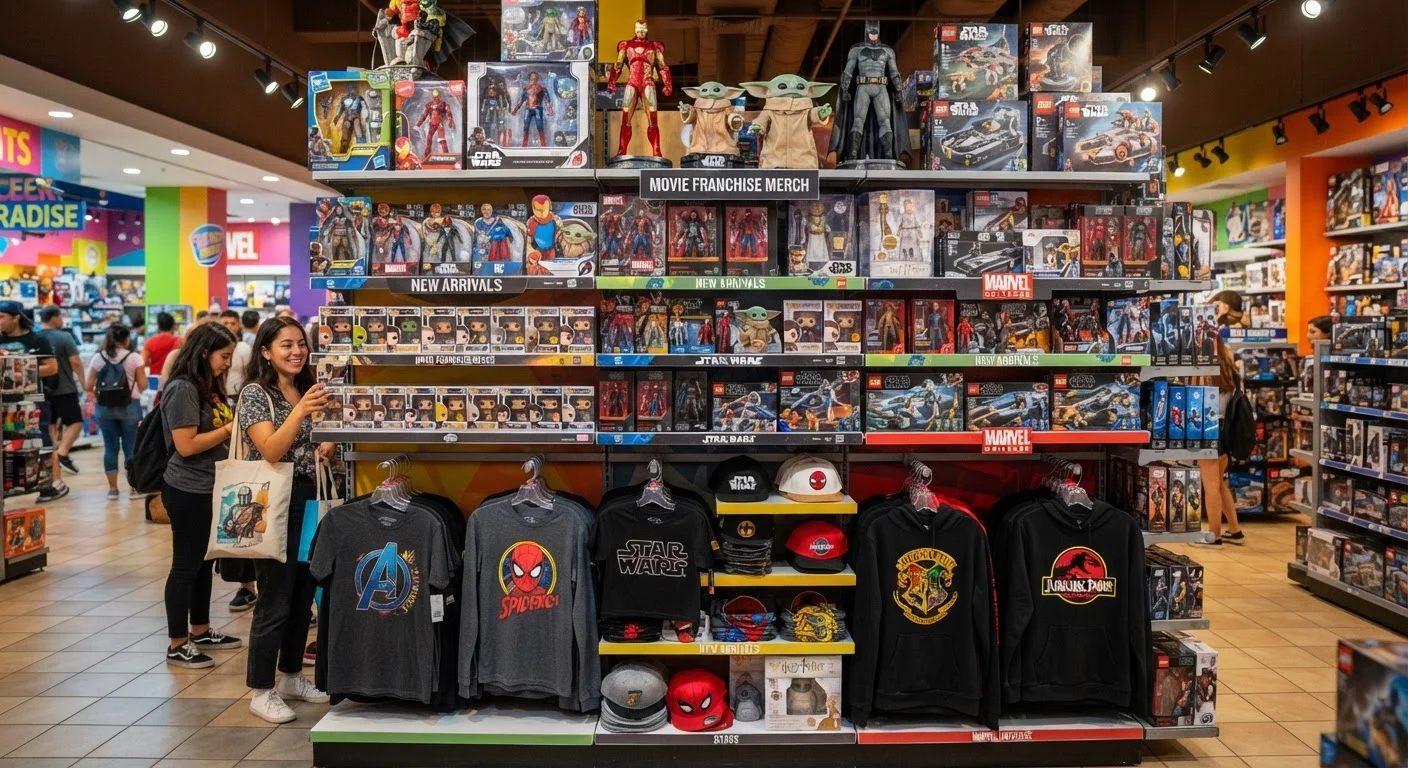
Key Takeaways
- Major film franchises often earn more from merchandise than from box office ticket sales.
- Studios design characters and worlds with licensing and merchandising potential built in from the start.
- Theme park attractions represent one of the highest-value extensions of a film franchise.
- Toy lines, apparel, and video games each target different audience segments within the same fan base.
- Merchandise revenue helps studios absorb the financial risk of expensive productions.
Franchise Merchandise Economy
The franchise merchandise economy refers to the revenue a film franchise generates through products and experiences sold outside of theaters - including toys, apparel, video games, theme park attractions, and licensed goods. Studios deliberately build intellectual property with this extended commercial life in mind, treating merchandise not as an afterthought but as a core part of a film's financial strategy. For major franchises, these off-screen revenues can equal or far exceed what the movie earns in ticket sales.
In industry terms, licensing agreements allow third-party manufacturers to produce branded goods in exchange for royalty payments to the studio or IP holder - typically a percentage of wholesale or retail revenue.
When the Theater Is Just the Beginning
The moment a major blockbuster hits screens, something else is already happening in retail aisles, online storefronts, and theme park queues: a parallel economy built entirely around the film's characters, worlds, and iconography. For the biggest franchises, the theatrical run is less a revenue destination than a marketing event - a global advertisement for everything the studio plans to sell next.
This isn't accidental. As our explainer on where movies actually make money makes clear, ticket sales represent only one slice of a film's total financial picture. Merchandise, licensing, and experiential products have grown into a foundational piece of that picture - one studios now plan around before production even begins.
$54B+
Star Wars franchise merchandise revenue (estimated lifetime)
Industry analysts have long cited Star Wars as the most merchandised franchise in history, with estimated lifetime licensed product revenue exceeding theatrical box office by a wide margin.
~$700M
Global licensed merchandise market (annual)
According to the Licensing International Global Licensing Industry Study, the global market for licensed merchandise was estimated in the hundreds of billions of dollars annually, with entertainment IP representing a significant portion.
2-3x
Merchandise-to-box-office revenue ratio for top franchises
For the most successful children's-oriented franchises, industry observers note that merchandise and licensing revenues frequently outpace theatrical gross by a factor of two or more.
How Licensing Turns Characters Into Products
At the heart of the merchandise economy is the licensing agreement. A studio owns intellectual property - characters, names, logos, story worlds - and grants manufacturers the right to use those elements on products in exchange for royalty payments. The range of categories is staggering: plush toys, video game adaptations, apparel lines, bedroom décor, school supplies, fast-food collectibles, and premium collector editions aimed at adult fans.
Studios don't manufacture most of this themselves. They operate as IP holders and brand managers, curating which partners get licenses and ensuring that products meet quality and brand consistency standards. The more beloved and durable the franchise, the more leverage a studio holds in these negotiations - and the higher the royalty rates they can command.
Watch for Pre-Release Merchandise Clues
When toy lines or licensed products appear in stores before a film opens, they often reveal character designs, plot details, or new additions to the franchise roster. Savvy fans have used early merchandise drops to piece together story information studios hadn't officially announced. It's a natural side effect of the production-to-retail timeline that studios have struggled to fully control.
Understanding how studios shape what reaches audiences helps explain why franchise properties dominate so heavily - they're engineered for exactly this kind of commercial scalability.
Toyetic Design: Building Franchises With Merchandise in Mind
Industry insiders use the word toyetic to describe characters and concepts that translate naturally into toys and collectibles - visually distinctive, action-ready figures with recognizable costumes or accessories. The most successful franchise properties tend to score high on toyetic appeal by design. Studios consult with licensing partners early in development to assess how characters might translate into physical products before the screenplay is finalized.
This influence on creative development is worth taking seriously. The pressure to produce characters that merchandise well can subtly shape storytelling decisions - which characters get prominent screen time, which visual designs get approved, and which story arcs get extended into sequels. As explored in our piece on why studios build franchises instead of standalone films, the commercial architecture of a shared universe creates natural platforms for sustained merchandise programs across years of releases.
Theme Parks and the Premium Tier of Franchise Experience
Theme park attractions represent arguably the most immersive - and lucrative - extension of the franchise merchandise economy. Purpose-built lands, rides, and resort experiences transform film IP into physical destinations fans pay significant sums to visit. These attractions generate not just admission revenue but also in-park merchandise and food purchases that can be substantial.
The economics here cut both ways: a beloved film franchise drives theme park attendance, while a beloved theme park experience reinforces emotional attachment to the franchise and drives interest in future films. It's a feedback loop studios have learned to cultivate deliberately. Even when a specific film underperforms - a scenario explored in our breakdown of why box office bombs happen - the broader franchise may retain enough cultural equity to sustain its theme park presence and merchandise program.
“The movie is the advertisement. The merchandise is the business.”
— Anonymous Studio Executive, Frequently cited maxim in entertainment industry discussions of franchise economics
The franchise merchandise economy ultimately reflects a fundamental shift in how studios think about storytelling: not as a single theatrical event, but as a persistent cultural property with commercial legs across every platform, product, and place fans are willing to engage with it.