

Key Takeaways
- Independent artists retain full creative and financial ownership but must self-fund promotion and distribution.
- Major label deals bring significant resources and reach, but typically involve giving up a percentage of royalties and some creative input.
- Neither path guarantees commercial success - both require talent, strategy, and sustained effort.
- Streaming platforms have narrowed some advantages major labels once held in distribution.
- Many artists today operate on a spectrum, using hybrid deals or independent labels with major-label distribution.
Option A
Independent Artists
The self-directed, ownership-first route.
Best for: Artists who prioritize creative control, royalty ownership, and building a loyal fanbase on their own terms.
Option B
Major Label Signees
The resource-rich, industry-backed path.
Best for: Artists ready to trade some autonomy for large-scale marketing, production budgets, and distribution infrastructure.
If you want full ownership of your masters and creative direction
Independent Artists
Going independent means you own your recordings and call every artistic shot, though you'll need to manage or fund every aspect of your career yourself.
If you need large-scale marketing, radio promotion, and global distribution
Major Label Signees
Major labels have the infrastructure, industry relationships, and budgets to push an artist into mainstream markets at a scale that's difficult to replicate independently.
If you're an emerging artist building an audience online
Independent Artists
Social platforms and digital distribution tools now allow independent artists to reach millions without a label's help, making early-career independence more viable than ever.
If you want to break into film, TV licensing, or brand partnerships at scale
Major Label Signees
Labels maintain dedicated licensing and sync departments that actively pitch their roster to studios and advertisers - a pipeline that's hard for solo artists to replicate.
The Two Roads in American Music
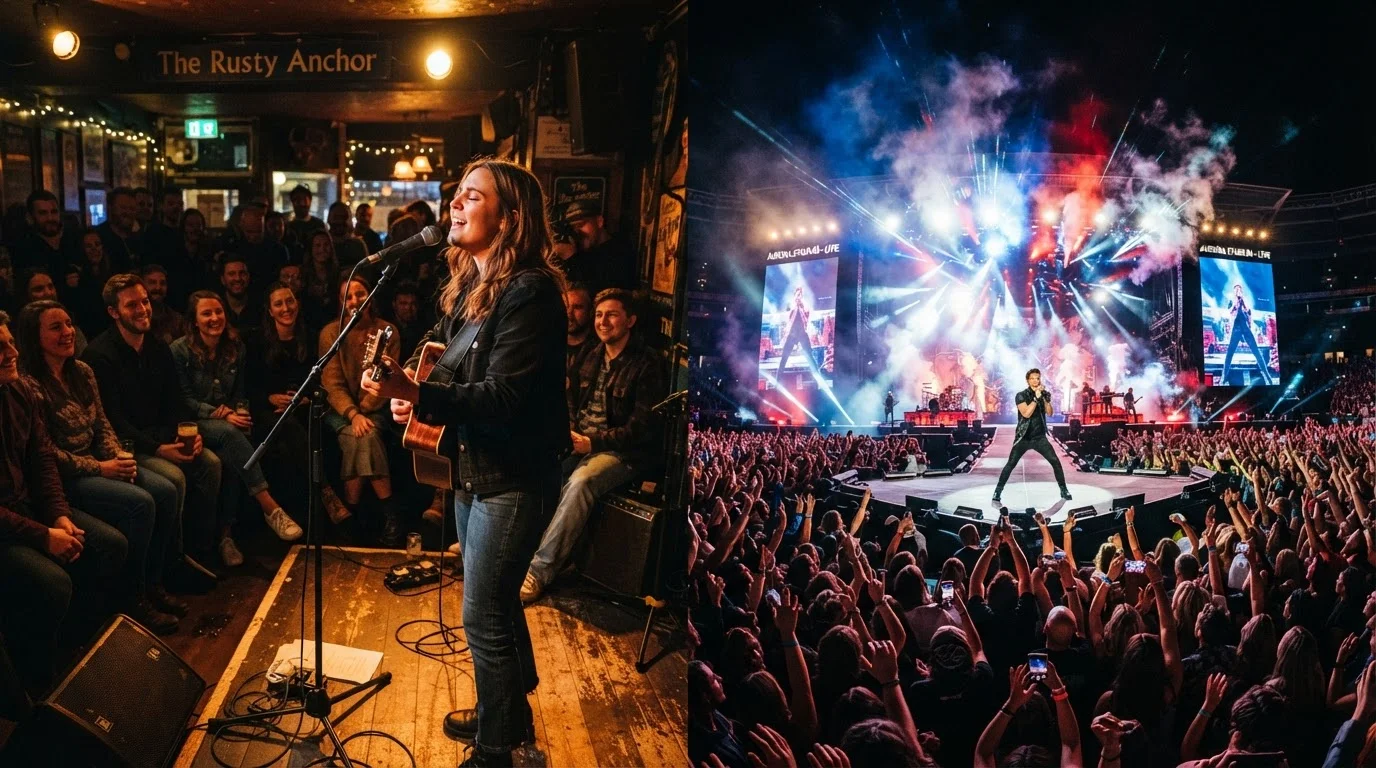
The music industry has always offered artists a fundamental choice: go it alone or partner with an established label. That tension has shaped American pop culture for decades - from the DIY punk scene of the 1970s to the bedroom-pop explosion of the 2010s. What's changed is how each path actually functions in a streaming-first world.
Major labels - think the "Big Three" of Universal Music Group, Sony Music Entertainment, and Warner Music Group - have historically dominated radio airplay, retail shelf space, and music video budgets. Signing with one meant access to a machine built for scale. Independent artists, by contrast, operated with scrappier tools, often recording on shoestring budgets and relying on word-of-mouth and touring to build a following.
Today, that gap has narrowed in meaningful ways. Digital distribution services allow any artist to put music on streaming platforms within days. Social media lets creators talk directly to millions. But the structural differences between going indie and signing with a major label remain real and worth understanding - especially for fans curious about why their favorite artists make the choices they do. Just as the word "independent" in film carries more nuance than it seems, the same is true in music.
What Each Path Actually Looks Like
An independent artist controls their own recordings - those master rights are theirs to license, sell, or pass down. They choose collaborators, set release timelines, and keep a higher percentage of streaming royalties. The trade-off is that they shoulder every cost: recording, mixing, mastering, artwork, promotion, touring logistics, and playlist pitching. That's a lot of hats for one person or a small team.
A major label deal flips some of those burdens. The label typically funds recording and marketing, covers promotional costs, and activates a global network of radio pluggers, press contacts, and sync licensing teams. In return, the label usually takes ownership of the master recordings for the contract's duration and claims a significant share of royalties. Contract structures vary widely - advances, royalty splits, and term lengths differ from deal to deal - but the exchange of ownership for resources is nearly universal.
| Criterion | Independent Artists | Major Label Signees |
|---|---|---|
| Master ownership | Artist retains masters | Label typically owns masters |
| Royalty share | Higher percentage kept | Smaller share after label recoupment |
| Marketing budget | Self-funded or minimal | Substantial label investment |
| Creative control | Full artistic autonomy | Shared or negotiated input |
| Distribution reach | Digital platforms via distributors | Global label infrastructure |
| Radio & playlist access | Limited dedicated promotion | Dedicated plugger teams |
| Upfront funding | Artist covers costs | Advance provided (recoupable) |
It's a dynamic not entirely unlike free agency in professional sports: artists weigh short-term backing against long-term leverage, and the right answer depends on where they are in their career.
The Streaming Era's Effect on Both Paths
Streaming has reshuffled the deck. An independent artist releasing music through a digital distributor now appears on the same platform as a major label act. Algorithmic playlists don't inherently favor one over the other - though labels do have dedicated teams that pitch tracks for editorial consideration, which is an advantage that matters.
~43%
Share of new music releases from independent artists
According to Merlin and various industry reports, independent music has accounted for a growing share of global streaming consumption in recent years.
3
Major labels controlling most mainstream distribution
Universal Music Group, Sony Music Entertainment, and Warner Music Group collectively distribute a substantial majority of commercially charting music worldwide.
~$0.003-$0.005
Estimated per-stream payout range on major platforms
Industry estimates suggest streaming royalties typically fall in this range per stream before label or distributor splits are applied, though exact rates vary by platform and contract.
Still, independent artists have racked up genuine wins in the streaming era. Artists like Chance the Rapper demonstrated that a musician could reach Grammy recognition without a traditional label deal. Closer examination of streaming charts regularly shows independent and indie-label tracks mixing with major releases. That said, sustainable success at a mainstream commercial level still typically involves significant marketing infrastructure - something labels provide.
For fans curious about how recorded output shapes an artist's career, it's worth exploring how live and studio albums serve different artistic purposes - a distinction that applies regardless of which industry path an artist chooses.
Weighing the Trade-Offs Honestly
Neither path is a guaranteed formula. Independent artists who retain full ownership may struggle to break through noisy markets without promotional firepower. Major label signees who gain that firepower may find that contract terms limit their flexibility for years - or that the label's commercial priorities don't always align with their artistic instincts.
Hybrid arrangements have grown more common: artists signing with independent labels that have major-label distribution deals, or releasing one project independently before negotiating a more favorable deal later. The music industry is less binary than it once was.
The 'Indie Label' Middle Ground
Not all independent music comes from solo self-releasing artists. Independent labels - those not owned by the Big Three - operate across every genre and vary enormously in size. Some have distribution agreements with major labels, giving artists a middle path: indie label creative culture with wider commercial reach. When an artist describes themselves as 'independent,' it's worth checking what that actually means in their specific situation.
What both paths share is this: no contract or independence status replaces the work. Craft, consistency, audience connection, and timing matter on both roads. The path shapes the journey, but it doesn't write the music.