

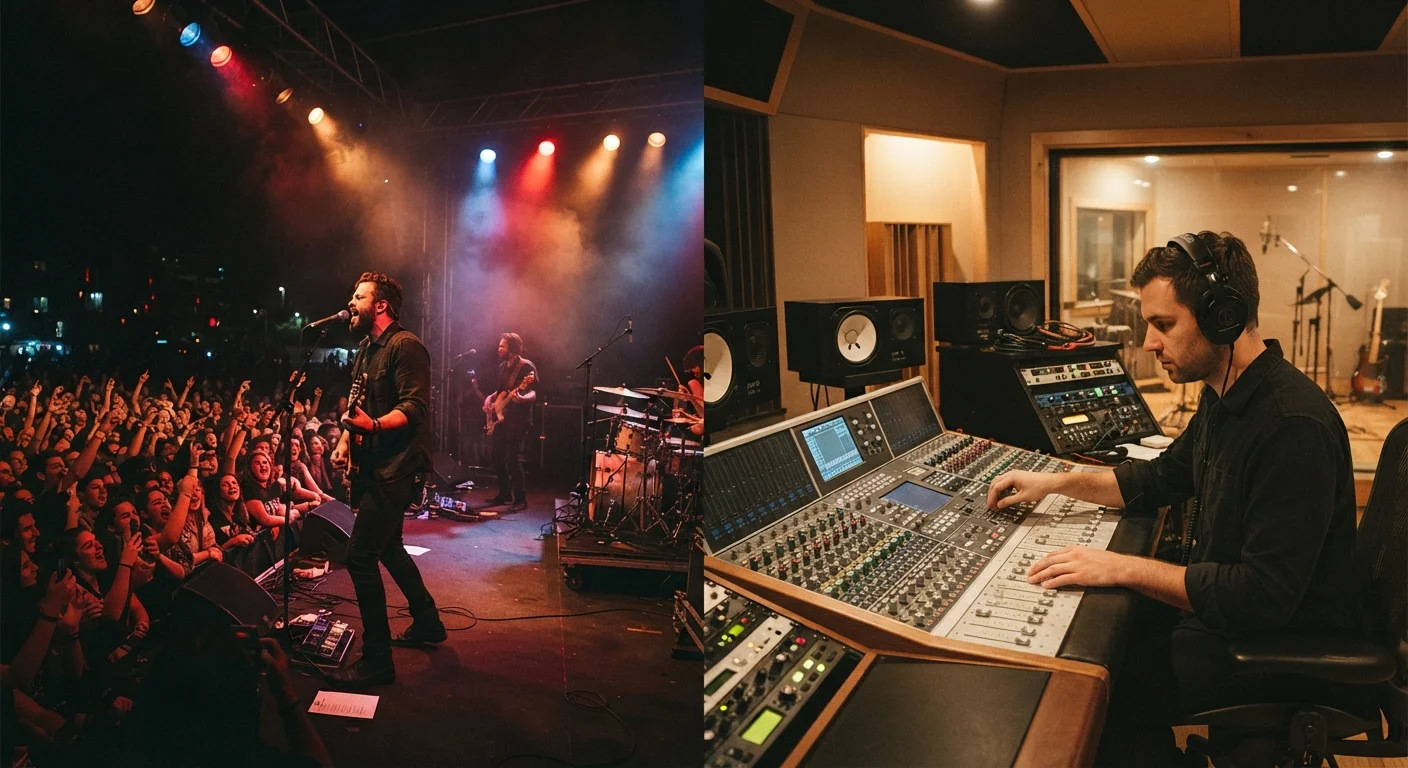
Key Takeaways
- Studio albums reflect deliberate artistic craft, with every element refined over weeks or months.
- Live albums document real-time performance energy, crowd connection, and spontaneous moments.
- Each format can reveal aspects of an artist's identity that the other simply cannot.
- Some artists use live albums to reinterpret and expand upon their studio work.
- Neither format is superior - they serve genuinely different artistic and emotional purposes.
Option A
Studio Albums
The artist's crafted, controlled statement.
Best for: Listeners who want to experience an artist's fullest creative vision, polished and intentional.
Option B
Live Albums
The unfiltered, in-the-moment performance document.
Best for: Fans who want the electricity of a real show captured in recorded form.
If you want to understand an artist's creative intentions and songwriting depth
Studio Albums
Studio recordings allow artists to shape every sonic detail, making them the clearest window into an artist's deliberate artistic vision.
If you want to feel the energy of a performance without being there in person
Live Albums
Live recordings capture crowd noise, improvisation, and raw energy that studio sessions simply cannot replicate.
If you're exploring a new artist and want a comprehensive introduction
Studio Albums
Studio albums typically offer the most polished, sequenced representation of where an artist stands creatively.
If you're a longtime fan curious how an artist evolves their songs on the road
Live Albums
Artists often stretch, rearrange, or emotionally deepen songs in live settings in ways that reward dedicated listeners.
The Studio Album: Where Craft Becomes Permanent
A studio album is an artist's most deliberate act. Inside the recording studio, time slows down - producers, engineers, and musicians collaborate across days, months, sometimes years to shape a specific sonic world. Every breath, chord voicing, and lyrical choice is considered. The result is a record that represents intent more than any other musical artifact.
That control is both the studio album's greatest strength and its defining limitation. The Beatles' Sgt. Pepper's Lonely Hearts Club Band, Kendrick Lamar's To Pimp a Butterfly, and Fleetwood Mac's Rumours are landmark works precisely because the studio gave each artist the freedom to realize a fully formed vision - one that would have been impossible to capture live. For a deeper look at how this format evolved culturally, explore how the album era shaped music history.
Studio albums also reveal how an artist thinks. Track sequencing, thematic arcs, production choices - these decisions communicate something beyond the individual songs. An artist who sequences an album like a novel is telling you how they want you to listen.
| Criterion | Studio Albums | Live Albums |
|---|---|---|
| Primary appeal | Craft, intention, polish | Energy, spontaneity, authenticity |
| Production control | Total - every detail refined | Limited - captured in real time |
| What it reveals | Artist's creative vision | Artist's performance identity |
| Audience role | Absent - imagined listener | Present - co-creator of energy |
| Song interpretation | Fixed, definitive version | Fluid, often reinterpreted |
| Best introduction to an artist? | Yes - complete creative statement | Better as second or third listen |
The Live Album: Where Energy Becomes Evidence
A live album does something no studio recording can: it proves the music works in a room full of people. The crowd noise, the slight tempo push from an excited drummer, the way a singer's voice cracks on a high note at the end of a two-hour set - these imperfections are the point. They document a shared human event.
Landmark live albums like James Brown's Live at the Apollo or Nirvana's MTV Unplugged in New York became definitive recordings partly because they captured an artist in communion with an audience. Brown's charisma leaped off the tape; Nirvana's stripped-down vulnerability felt raw and honest in a way their studio records approached but never quite matched. Understanding how concerts are structured helps explain why certain live recordings feel so dramatically different from their studio counterparts - the setlist itself is a performance tool.
Live albums also serve as artistic reinterpretation. Songs that feel one way in the studio can be expanded into extended jams, slowed into confessional ballads, or accelerated into anthems depending on what the room demands. For fans curious about those performance dynamics, festival and club culture shape live music differently.
1962
Year live albums changed music history
James Brown's 'Live at the Apollo,' recorded in 1962 and released in 1963, became a commercial and cultural milestone that proved live recordings could rival studio albums in impact.
~30%
Of top-selling albums that are live recordings
Industry analysts have noted that live albums consistently represent a meaningful share of catalog sales, particularly for classic rock and country artists with devoted touring fanbases.
What Each Format Reveals - and Conceals
Studio albums can obscure as much as they reveal. Heavy production can mask a weak live voice. Perfect pitch correction can hide the emotional quiver that makes a performance memorable. Some artists are magnificent in the studio but struggle to translate that magic to a stage - and a studio album will never tell you that.
Live albums carry their own blind spots. A bad night, a shaky sound mix, or a nervous performance can misrepresent an artist who normally commands a stage. Early live recordings from artists who later became icons sometimes show the rough edges of someone still finding their footing - which is fascinating historically but potentially misleading as a character study.
The tension between these two formats is part of what makes music fandom so rewarding. Fans debate whether the studio version or the live version of a song is the "real" one - a conversation that has no clean answer and isn't meant to. Both are real. Both are true. They're just true in different ways. The debate around analog vs. digital recording adds yet another layer to how format choices shape what listeners ultimately hear.
When Artists Blur the Line
Some recordings intentionally blend both formats - overdubbing studio fixes onto live tracks, or adding crowd noise to studio sessions for atmosphere. The result is a hybrid that courts both intimacy and polish. Listeners who care about authenticity often find it useful to check liner notes or interviews to understand exactly how a live album was produced before treating it as a purely unedited document.