

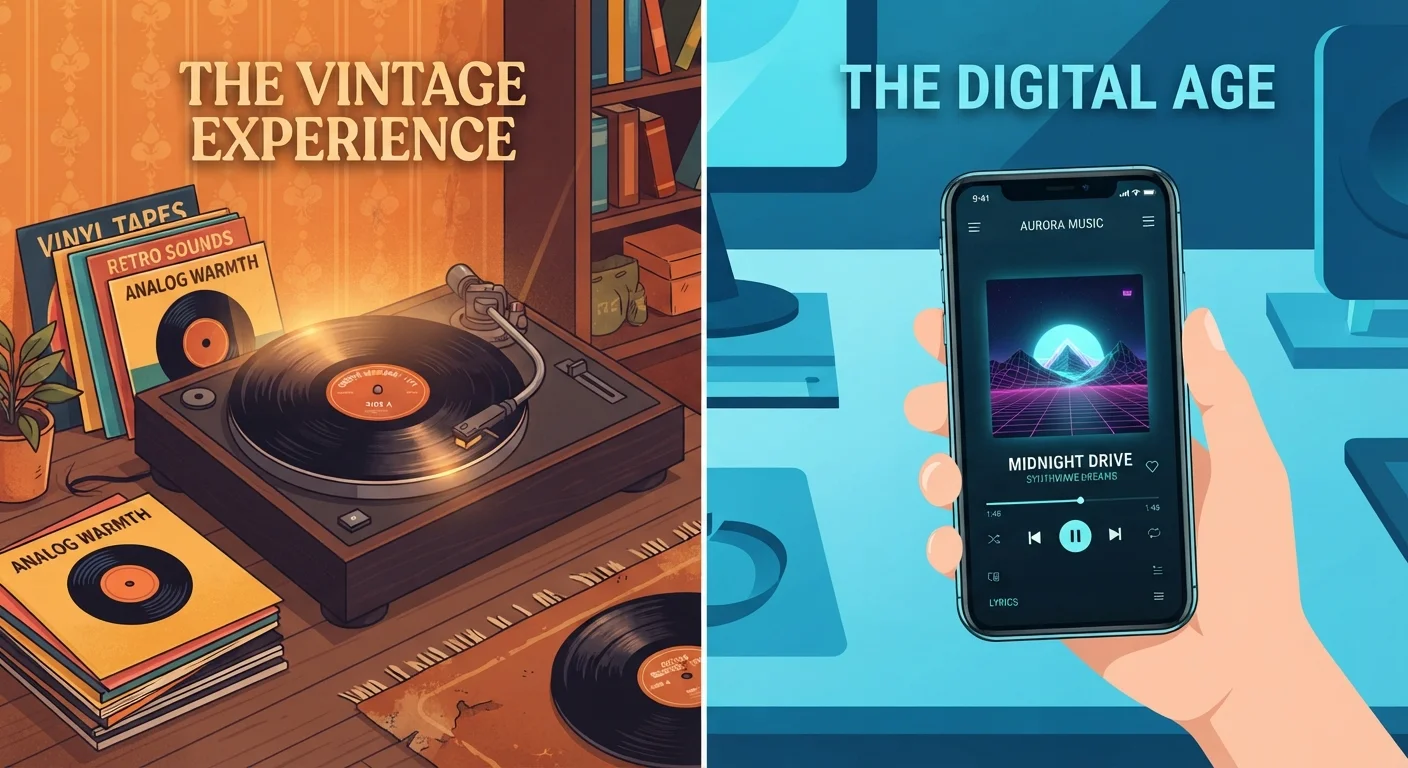
Key Takeaways
- Streaming gives you access to music, not ownership - that access can disappear if a service shuts down or removes content.
- Purchasing a digital or physical copy grants you a personal-use license, not copyright ownership of the music itself.
- Streaming offers vast catalogs at low monthly cost; ownership means permanent access to a specific collection.
- Audio quality, offline access, and long-term reliability differ meaningfully between the two models.
- Neither model is universally superior - the right choice depends on how you listen and what you value.
Our Verdict
Streaming and ownership answer different listener needs. Streaming wins on variety, convenience, and discovery, while owning music wins on permanence, reliability, and independence from subscription fees. Most dedicated music fans find value in a combination of both approaches rather than committing to one exclusively.
| Best for | Recommended |
|---|---|
| Casual listeners who want broad access with minimal commitment | Streaming |
| Fans who want guaranteed, permanent access to specific albums or artists | Music Ownership |
| Audiophiles prioritizing the highest possible sound quality | Music Ownership (lossless files or vinyl) |
| Listeners who enjoy discovering new music across many genres | Streaming |
The Core Question: Access vs. Ownership
Here's something that surprises a lot of people: when you pay for a music streaming subscription, you don't own a single song. What you're buying is access - a license to listen to a catalog for as long as you keep paying and as long as the platform keeps operating. The moment you cancel, the music goes silent.
Buying a digital download or a CD works differently, though it's still worth unpacking. Purchasing a song through a digital storefront grants you a personal-use license - not copyright ownership. You can't legally resell a digital file the way you could a used CD, and you can't reproduce or distribute it commercially. What you do get is the right to listen to that specific file, essentially forever, without an ongoing subscription. Think of it like the difference between renting an apartment and owning one: both let you live there, but only one remains yours unconditionally.
This distinction shapes everything else about how these two models serve listeners. See also: how music licensing works for broader context on who controls what in the music rights ecosystem.
What Each Model Actually Delivers
Streaming's headline advantage is scale. Major platforms offer catalogs of 80-100 million tracks - a selection no personal collection could match. Discovery features, curated playlists, and algorithm-driven recommendations have genuinely changed how Americans find new music, fueling entire cultural moments around emerging artists overnight.
The tradeoffs are real, though. Streaming audio is compressed for efficient delivery, meaning the same song can sound noticeably different depending on which service and which quality setting you use. Some platforms now offer lossless or high-resolution options, but those often cost extra or require specific hardware to appreciate.
Ownership, by contrast, means your library doesn't change when a label pulls an album from a platform or when a service shuts down entirely. If you've ever gone looking for a favorite record only to find it missing from a streaming catalog, you've felt this gap firsthand. Owned files - whether MP3s, FLACs, or physical media like vinyl - play whether or not you have an internet connection and whether or not the company you bought from still exists.
| Streaming | Music Ownership | |
|---|---|---|
| What you receive | Access license while subscribed | Personal-use license to specific files |
| Catalog size | 80-100 million tracks | Limited to purchased items |
| Ongoing cost | Monthly subscription fee | One-time purchase per item |
| Offline access | Requires download & active subscription | Always available, no subscription needed |
| Audio quality ceiling | Compressed; lossless available on some plans | Lossless or uncompressed possible |
| Content permanence | Can be removed by labels or platforms | File stays in your possession |
| Discovery features | Algorithm-driven recommendations | Manual curation only |
For listeners drawn to the ritual and sonic character of physical formats, vinyl vs. streaming is a comparison worth exploring in its own right.
The Economics Behind Both Models
On a monthly basis, streaming is inexpensive relative to buying albums - a standard individual subscription typically costs less than one CD purchase. Over years, however, subscription costs add up. A listener who pays for a decade of streaming at typical US pricing will spend considerably more than someone who curated a personal library of their most-loved albums.
There's also a subtler economic story on the artist side. Streaming royalties are complex and often small - artists generally earn a fraction of a cent per stream, with the total pool divided across all rights holders. Buying a digital album or physical copy typically delivers a more direct per-unit payment to the artist and label. Neither model makes every artist financially whole, but understanding the difference helps listeners make choices aligned with how they want to support musicians they care about. For a deeper look at how royalty structures break down, mechanical, performance, and sync royalties each play distinct roles.
Make Your Music Work Harder for You
If supporting artists directly matters to you, consider buying digital albums or physical copies from artists whose work you return to most. Streaming can serve discovery while ownership anchors your core collection. Many online storefronts let artists retain a larger share per sale than streaming platforms typically provide per stream.
Which Model Fits Which Listener?
Neither streaming nor ownership is objectively better - they serve genuinely different listening habits. Streaming excels for people who explore widely, want background music across moods and genres, and value convenience over permanence. It's also transformed how albums and singles are released and consumed, reshaping the culture around music itself.
Ownership suits listeners with deep attachments to specific artists or albums, those who prioritize audio fidelity, or anyone who simply prefers not to depend on a subscription staying intact. Many enthusiasts land somewhere in the middle - streaming for discovery and everyday listening, buying albums from artists they love most. Before locking into any platform commitment, there are practical questions worth asking about catalog depth, quality tiers, and offline access. The best model is the one that matches how music actually fits into your life.
~84%
US recorded music revenue from streaming
According to the RIAA's 2023 annual report, streaming accounted for the large majority of recorded music revenues in the United States.
43M+
Vinyl records sold in the US in 2023
The RIAA reported that vinyl LP and EP sales reached their highest level since the early 1980s in 2023, reflecting continued physical media interest.