

Key Takeaways
- The LP album became music's primary artistic format in the 1960s, giving artists room to tell bigger stories across multiple tracks.
- Digital downloads in the early 2000s introduced track-level purchasing, quietly weakening the album's commercial grip.
- Streaming platforms reward individual songs through playlist placement and per-stream metrics, incentivizing single-first release strategies.
- Artists now often release songs in rolling drops to keep algorithms engaged rather than saving everything for one big launch.
- The album hasn't vanished - it has evolved into an event format, often accompanied by merchandise, tour announcements, or visual companion pieces.
The Album Era
The Album Era refers to the decades - roughly the 1960s through the early 2000s - when the long-play (LP) album was the dominant format for releasing and experiencing recorded music. Artists structured their creative output around cohesive collections of songs designed to be heard together. Labels, critics, and fans all treated the album as the definitive artistic statement. Streaming platforms and digital distribution have since shifted that center of gravity toward individual tracks.
In industry terms, the transition is reflected in how chart performance is now measured - the Billboard Hot 100 weighs audio streams, video streams, and digital sales together, making a viral single easier to chart than a deep album cut.
When Albums Were the Main Event
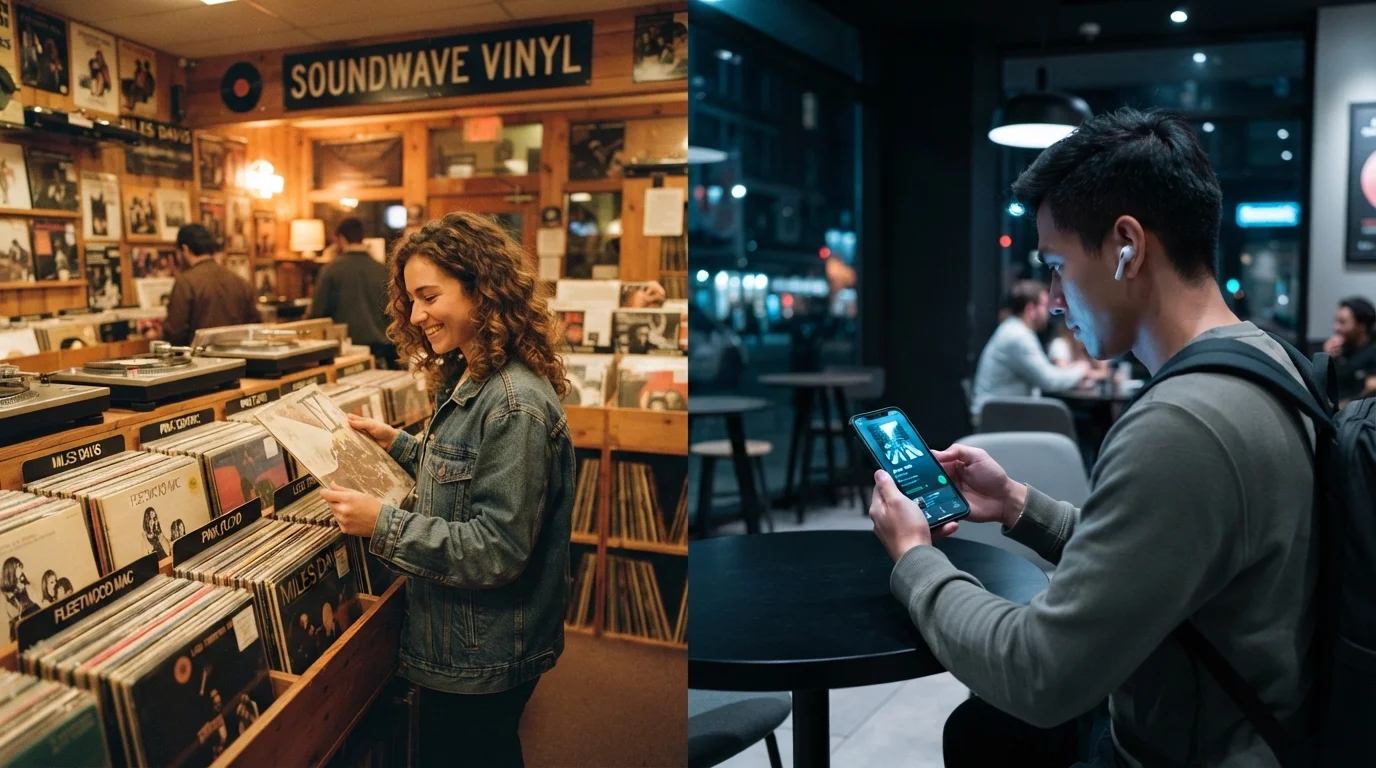
Before playlists and streaming queues existed, buying music meant committing. You walked into a record store, paid for an LP, and took home whatever the artist - and their label - decided you needed to hear. Albums like Marvin Gaye's What's Going On and Fleetwood Mac's Rumours weren't just collections of songs; they were experiences designed to unspool from beginning to end. Skipping tracks wasn't really the point.
That format shaped how artists thought about creativity. A strong album needed sequencing, thematic coherence, and enough range to hold a listener for 40 to 60 minutes. Labels invested in that vision because the album was the revenue unit - not the song. Singles existed, but they functioned as advertisements for the bigger package.
Studio albums in particular became the definitive measure of an artist's craft, while live recordings captured something different: energy, spontaneity, the proof that it could be replicated on a stage.
“The album was always a technology of attention - it asked listeners to sit with something long enough to let it change them. Streaming is a technology of choice, which is a different relationship entirely.”
— Ted Gioia, Music critic and author of 'The History of Jazz'
How Digital Downloads Cracked the Album Open
The first fracture came with the MP3 and digital storefronts in the early 2000s. When iTunes launched in 2003, it offered songs for 99 cents each - a price point that made buying one song easier than buying twelve. Listeners who only wanted the hit could now have exactly that, legally and instantly. Album sales began a long, slow decline that never fully reversed.
This wasn't just a consumer behavior shift - it signaled something about value. If listeners were cherry-picking, the album's bundled economics were breaking apart. Artists and labels had to start thinking about which tracks could stand alone, and the idea of sequencing an album for a continuous listening experience became less commercially central.
80%+
Share of US music revenue from streaming
According to the Recording Industry Association of America (RIAA), streaming accounted for the vast majority of recorded music revenue in the US by the early 2020s.
99¢
iTunes per-song price at launch (2003)
Apple's per-track pricing model was widely credited with normalizing the idea of buying individual songs rather than full albums, reshaping consumer expectations permanently.
100M+
Songs available on major streaming platforms
Spotify reported its catalog surpassed 100 million tracks, reflecting how streaming opened the market to independent and niche artists alongside major-label releases.
Streaming Rewrote the Rules Entirely
Spotify launched in the US in 2011, and the music industry's relationship with the song - not the album - fully crystallized. On a streaming platform, every track competes for playlist slots, algorithm recommendations, and listener time. A buried deep cut on a 16-track album gets no more algorithmic advantage than a throwaway B-side. What gets rewarded is what gets played, replayed, and saved.
The result: artists and labels began designing release strategies around the single. Drop a song, watch the data, build buzz, then perhaps release another song a few weeks later. Repeat. By the time a full album arrives - if it does - an audience has already been cultivated track by track. Surprise drops added another layer, letting high-profile artists bypass the traditional rollout entirely and generate immediate cultural impact.
The shift also opened doors for independent artists. Bedroom pop producers found that a single well-placed song on a popular playlist could reach millions without label infrastructure. The playing field didn't fully level, but it changed shape.
Follow an Artist's Release Pattern
If you want to understand how a modern artist thinks about their music, track their release cadence over a full album cycle. Notice when they drop singles, how long they wait between releases, and how they use social media around each drop. It reveals a deliberate strategy shaped as much by data as by artistry.
The Album Isn't Dead - It's Just Different
Albums still arrive, and some generate massive cultural moments. But their role has shifted. Today's album release is often an event - accompanied by a visual album, a documentary, a stadium tour announcement, or an elaborate merchandise drop. The music itself may have been trickling out for months via singles; the album release consolidates and elevates it into something fans can hold, discuss, and celebrate as a complete work.
Listeners who want depth still seek it out, and the format still carries artistic weight. Understanding what streaming actually gives you as a listener - versus owning a physical or digital copy - adds another layer to how people relate to full albums versus individual tracks. Much like how the film industry has had to navigate streaming versus theatrical release, music is finding a new equilibrium - not a total replacement of the old, but a reshaping of what each format is for.