

Key Takeaways
- Many dominant music genres today began as small, tight-knit underground communities with DIY ethics.
- Geography played a crucial role - cities like Seattle, Detroit, New York, and Atlanta incubated genre-defining sounds.
- Commercial crossover often sparked debates about authenticity among original subcultural communities.
- Technology, from cassette tapes to streaming algorithms, repeatedly accelerated the underground-to-mainstream pipeline.
When the Margins Become the Mainstream
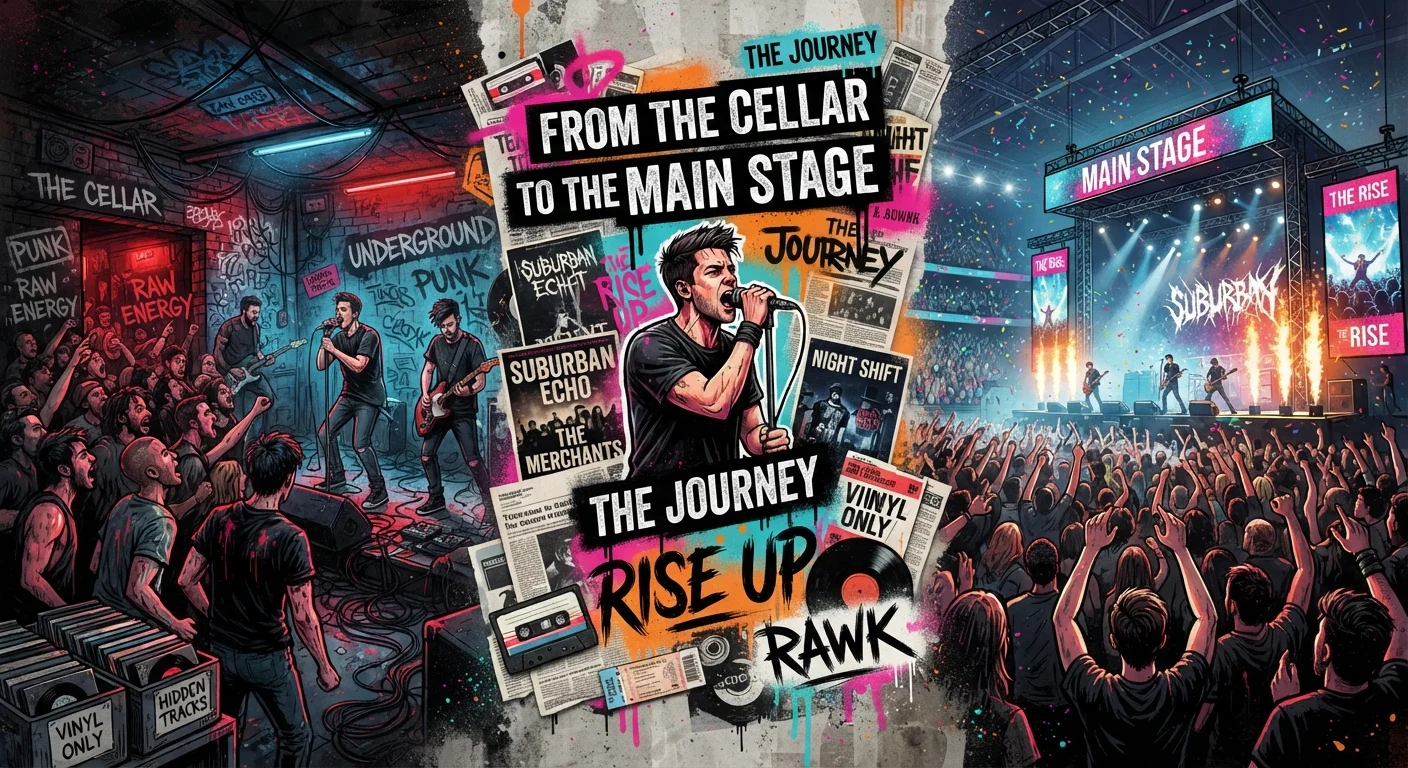
The history of popular music in America is largely the history of underground sounds going overground. What begins as a community's private language - built in basements, warehouses, record shops, and DIY venues - eventually finds a wider audience, and the story gets complicated fast. The sounds spread, the commercial machinery arrives, and the original community debates what was gained and what was lost. This pattern has repeated across decades and genres with remarkable consistency.
Understanding how subcultures move from margins to mainstream isn't just music trivia. It reveals how cultural innovation actually works: rarely from the center, almost always from the edges. The six movements below each followed their own version of this arc.
Authenticity Debates Are Part of the Pattern
Almost every underground genre that crossed over sparked intense disputes about whether mainstream success meant artistic sellout. These arguments are recurring features of subcultural history, not unique crises. Scholars who study music subcultures, including sociologist Dick Hebdige, have documented how incorporation into commercial culture is a near-universal stage in subcultural evolution - even if it feels like betrayal from inside the community.
Six Subcultures That Crossed Over
Punk: Rebellion Packaged and Sold Back
Punk erupted in mid-1970s New York and London as a direct rebuke of bloated arena rock. CBGB in New York - a venue that literally shaped American music culture - hosted early sets by the Ramones and Television before the movement had a name. The aesthetic was cheap, confrontational, and fiercely anti-commercial. Within a decade, major labels had signed punk-adjacent acts, MTV broadcast the look, and Hot Topic turned the iconography into retail. The contradiction was unavoidable, but punk's core influence on indie and alternative rock proved genuinely durable.
Punk's anti-commercial spirit survived even after the mainstream packaged and sold the aesthetic.
Grunge: Seattle's Best-Kept Secret Gone Global
Through the late 1980s, Seattle nurtured a dense, rain-soaked rock scene on Sub Pop Records with virtually no national spotlight - a reminder that great American music scenes thrive far from the obvious hubs. Nirvana's 1991 breakthrough didn't just launch an era - it made an underground scene the dominant sound of American youth almost overnight. The sudden commercial explosion caught many participants off guard. Grunge's implosion was as fast as its rise, but it permanently shifted rock's center of gravity away from polished production.
Seattle's grunge scene went from regional obscurity to global dominance in under two years.
Electronic Dance Music: From Detroit Warehouses to Festival Mainstages
Techno was born in Detroit in the 1980s, created largely by Black producers drawing on industrial soundscapes and European electronic music. House music emerged almost simultaneously in Chicago. Both genres circulated on imported vinyl and in underground clubs for years before European audiences embraced them enthusiastically. By the 2010s, EDM had become one of the biggest live music industries in the world. The contrast between club culture and festival culture captures exactly how these sounds scaled - intimate origins, massive commercial destinations.
Techno and house music traveled from Detroit basements to global festival mainstages over three decades.
Hip-Hop: From the Bronx Block Party to Everywhere
Hip-hop originated at block parties in the South Bronx in the early 1970s, built on DJing, MCing, breakdancing, and graffiti. For years it circulated through homemade cassette tapes, radio battles, and local club nights with minimal mainstream acknowledgment. By the late 1980s, it had become a chart force; today it consistently ranks among the most-streamed genres globally. The genre's evolution also illustrates how subgenres incubate their own underground-to-mainstream cycles - hip-hop's crossover collisions with country and pop show how far its influence has radiated.
Hip-hop's journey from Bronx block parties to global dominance remains one of music's most significant cultural arcs.
Trap: Atlanta's Export That Redefined Pop Production
Trap music crystallized in early 2000s Atlanta, defined by layered 808 bass kicks, rapid hi-hat patterns, and lyrics rooted in Southern street life. It moved through mixtape culture and regional radio before producers began applying its sonic template across pop, R&B, and even K-pop. The trap aesthetic became so widely adopted that it's now embedded in mainstream production almost invisibly. Streaming platforms - explored more deeply through our streaming guides and trend coverage - accelerated trap's spread by surfacing regional sounds to global listeners without traditional label gatekeeping.
Trap's production blueprint became so pervasive that mainstream pop absorbed it almost without noticing.
Emo: Diary Entries Turned Arena Anthems
Emo grew from Washington D.C.'s post-hardcore scene in the mid-1980s, emphasizing confessional lyrics and emotional vulnerability in a genre that typically prized toughness. It spent years as a college radio curiosity before mid-2000s acts brought it to MTV and sold-out tours. The surprise album drop - a strategy increasingly used by major artists - echoes emo's original spirit of releasing music without fanfare, purely for the community. Emo's mainstream moment faded but its emotional directness influenced a generation of pop songwriters who may not even know its roots.
Emo's confessional vulnerability quietly reshaped what emotional openness could sound like in pop music.
Trace a Genre Back to Its Roots
If a genre interests you, look up its foundational venues, early labels, and original cities of origin. Hearing the early recordings alongside the mainstream hits reveals exactly how much - and how little - changed during the crossover. Documentaries, oral histories, and music journalism archives are excellent starting points for this kind of deep listening.
What the Pattern Tells Us
These six stories share structural similarities that go beyond coincidence. Each subculture built its identity in geographic and social spaces that kept it insulated from commercial pressure long enough for a distinctive sound to solidify. Each used the technology of its era - cassette tapes, vinyl imports, mixtapes, streaming algorithms - to circulate before mainstream gatekeepers noticed. And each eventually faced the same tension between growth and integrity.
Cult films occupy a parallel cultural space, and the reasons cult cinema endures echo what keeps underground music movements alive even after commercial success has diluted the original community. In both cases, dedicated audiences preserve something the mainstream version can't fully replicate. The underground never disappears entirely - it just goes looking for the next basement.