

Key Takeaways
- Cult films typically build their following through communal, repeated viewings rather than opening-weekend box office performance.
- Midnight movie screenings in the 1970s established the cultural infrastructure that cult cinema still relies on today.
- Films earn cult status through perceived authenticity, transgression, or a quality audiences describe as 'so bad it's good.'
- Streaming has widened access to cult films while raising questions about whether digital discovery can replicate the communal experience.
- Cult cinema often emerges from the margins of the studio system, reflecting countercultural or outsider perspectives.
Cult Cinema
Cult cinema refers to films that develop intensely devoted followings outside the mainstream - often long after their initial release or commercial failure. These movies tend to be unconventional, transgressive, or so distinctly weird that they resonate deeply with specific audiences who claim them as their own. The passion they inspire often goes far beyond passive viewership, spawning repeated communal screenings, fan rituals, and decades-long cultural conversation.
Film scholars sometimes distinguish between 'accidental' cult films (those that failed commercially but found an audience) and 'intentional' ones made with cult appeal in mind - though the latter rarely achieve the same organic devotion.
The Midnight Movie Movement That Started It All
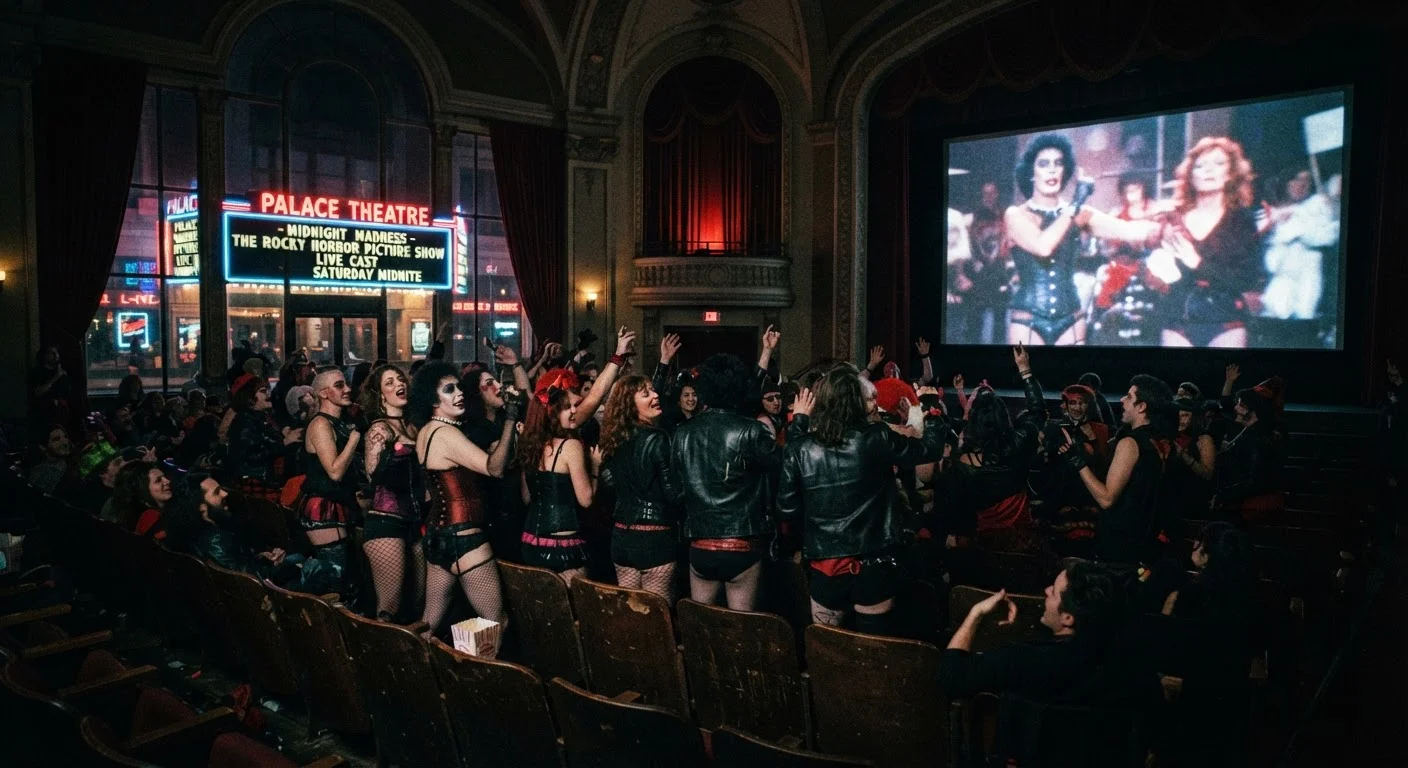
Before streaming algorithms and social media fandoms, cult cinema lived in the back rows of late-night theaters. The midnight movie movement emerged in the early 1970s as a deliberate countercultural act - a rejection of wholesome mainstream entertainment in favor of the transgressive, bizarre, and unapologetically weird.
New York City venues like the Elgin Theater became pilgrimage sites for cinephiles seeking films that the mainstream refused to touch. Alejandro Jodorowsky's surrealist western El Topo drew devoted repeat audiences in 1970; John Waters' gleefully outrageous Pink Flamingos followed in 1972. But no single film crystallized the midnight movie phenomenon like The Rocky Horror Picture Show. Opening in 1975, it bombed in conventional release before finding its people at midnight screenings - where audiences began showing up in costume, shouting callbacks at the screen, and turning a passive viewing into a participatory ritual that continues today.
This wasn't accidental. The midnight format created specific social conditions: a self-selected crowd, a late hour that signaled transgression, and the freedom to be as strange as the film itself. As the Hollywood studio system optimized for mass appeal and safe returns, midnight cinema became the release valve for everything it wouldn't greenlight.
49+ years
Continuous midnight run of Rocky Horror Picture Show
The Rocky Horror Picture Show has been in continuous theatrical midnight exhibition since 1975, making it one of the longest-running releases in cinema history.
~6M
Estimated tickets sold for The Room screenings globally
Fan-compiled estimates suggest The Room has generated millions of theatrical screening admissions worldwide since its cult status emerged in the mid-2000s.
1970s
Decade midnight movie culture was formalized in the US
Film historians trace the organized midnight movie circuit to New York City art-house theaters in the early 1970s, which laid the cultural groundwork for decades of cult cinema.
How Cult Status Actually Forms
Cult status is rarely manufactured - it's earned through a specific alchemy of audience devotion, cultural timing, and often some form of mainstream rejection. Film scholars identify a few recurring pathways.
Commercial failure followed by rediscovery is perhaps the most common. A film opens to empty theaters or savage reviews, gets shelved, and then finds its audience through home video, cable reruns, or word of mouth years later. The Big Lebowski underperformed on its 1998 release and is now one of the most referenced comedies in American pop culture, complete with an annual fan festival called Lebowski Fest.
Transgression is another reliable engine. Films that push against social norms - in terms of sexuality, violence, politics, or sheer weirdness - attract audiences who feel seen by content the mainstream rejects. This is why cult cinema often skews toward horror, exploitation, and underground genres that international filmmaking traditions have long embraced while Hollywood kept at arm's length.
Sincere, spectacular failure produces the beloved 'so bad it's good' category. Tommy Wiseau's The Room - made in 2003 with mysterious funding, baffling dialogue, and inexplicable creative choices - has become a communal comedy experience, spawning regular screenings where audiences hurl plastic spoons at the screen in response to an inexplicable framed spoon photo in the film's set.
Community, Ritual, and Why Rewatching Matters
What separates a cult film from one that's simply underrated is the community that forms around it. Cult audiences don't just watch - they participate, quote, dress up, debate, and evangelize. Repeated viewings aren't about forgetting the plot; they're about deepening the shared vocabulary of the group.
This communal quality poses real questions for the streaming era. Streaming vs. theatrical release debates often focus on economics or director intent, but cult cinema highlights a third dimension: the social experience of film. Watching Plan 9 from Outer Space alone on a couch is a different act than watching it in a theater with 200 people who all know the same punchlines.
That said, online communities have found ways to sustain cult devotion digitally - fan forums, Discord servers, synchronized watch parties, and dedicated subreddits serve some of the same social functions that late-night theater crowds once did. Streaming-exclusive films have even developed their own cult followings, suggesting that while the format is changing, the human impulse driving cult cinema - the need to share something strange and special with a like-minded tribe - hasn't gone anywhere.
“Cult movies are about the audience as much as the film. The movie provides the occasion, but the community provides the meaning.”
— J. Hoberman, Film critic and co-author of Midnight Movies
Much like musical subcultures that began underground, cult films often gain cultural power precisely because they exist outside the mainstream - offering identity, community, and a sense of discovery that mass entertainment rarely provides.
Finding Cult Films Worth Your Time
If you're exploring cult cinema for the first time, seek out communal viewing experiences rather than solo streams - local repertory theaters, film clubs, and even organized online watch parties can replicate the social dimension that makes these films resonate. Many cities host regular cult screenings; a quick search for midnight movies or rep cinema in your area is a good starting point.