
Docuseries vs. Feature Documentaries on Streaming: What Shapes the Format Choice

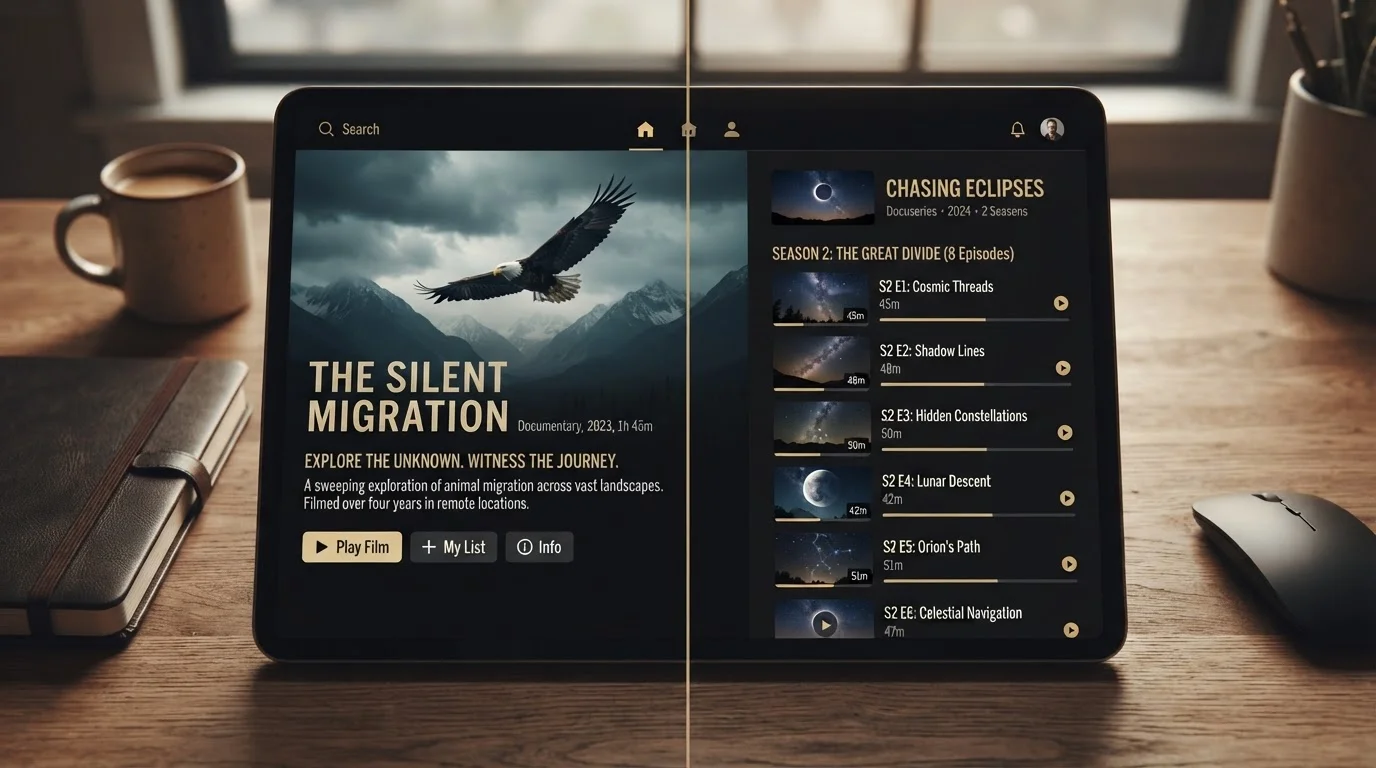
Key Takeaways
- Feature documentaries typically run 90-120 minutes and aim for a single, self-contained narrative arc.
- Docuseries spread storytelling across multiple episodes, allowing deeper character development and sustained audience engagement.
- Platform strategy, subject complexity, and audience retention goals all influence which format gets greenlit.
- Neither format is inherently superior - the subject matter and intended viewer experience usually determine the best fit.
- Streaming has accelerated demand for both formats, with docuseries often driving stronger subscriber retention.
Our Verdict
Feature documentaries excel when a story has a clear beginning, middle, and end that can be told compellingly in one sitting. Docuseries shine when the subject demands time, complexity, or an episodic hook that keeps viewers coming back. On streaming platforms, both formats serve distinct strategic and storytelling purposes - and savvy viewers benefit from understanding the difference.
| Best for | Recommended |
|---|---|
| Viewers wanting a complete, impactful story in one session | Feature Documentary |
| Those drawn to deep dives with evolving narratives and cliffhangers | Docuseries |
| Platforms prioritizing subscriber retention and watch-time metrics | Docuseries |
| Stories with a singular, focused event or subject | Feature Documentary |
Two Formats, One Booming Genre
Documentary content has never been more prominent on streaming platforms. From true crime deep dives to celebrity profiles and investigative journalism, non-fiction storytelling has exploded in popularity. But not all docs are created equal - and the choice between a feature-length documentary and a multi-episode docuseries is far from arbitrary.
Understanding what shapes that decision helps viewers appreciate what they're watching - and helps them find the format that suits their viewing habits. For a broader look at how platforms approach content overall, see how major streaming platforms differ in content strategy.
| Feature Documentary | Docuseries | |
|---|---|---|
| Typical length | 80-120 minutes | 3-10+ episodes |
| Narrative structure | Single, self-contained arc | Multi-episode with recurring hooks |
| Pacing | Tight, disciplined editing | More expansive, episodic rhythm |
| Viewer time commitment | One sitting | Multiple sessions |
| Platform retention value | Lower (one-time view) | Higher (repeat engagement) |
| Best suited for | Focused singular events | Complex, evolving subjects |
What Defines Each Format
Feature documentaries are standalone films - typically 80 to 120 minutes long - that follow a single narrative thread to a conclusion. They function much like traditional cinema: a filmmaker frames a subject, builds to a revelation or emotional climax, and delivers a complete experience. They're designed to be watched in one sitting and often aim for festival recognition or award consideration.
Docuseries, by contrast, spread their subject across multiple episodes - sometimes an entire season. Each episode typically ends with a hook, revelation, or unresolved thread that compels the viewer to keep watching. This format borrows narrative techniques from scripted television and thrives on character development, mounting tension, and episodic pacing.
Match the Format to Your Mood
If you have a free evening and want something complete and emotionally resonant, a feature documentary is a natural fit. If you're looking for something to pace across a week - or want to get deep into a rabbit hole - queue up a docuseries instead. Being intentional about format before you press play can meaningfully improve your viewing experience.
What Drives the Format Decision
Several factors push a non-fiction project toward one format or the other:
- Subject complexity: A single pivotal event - a heist, a trial, a cultural moment - often fits neatly into feature length. A multi-decade fraud, an evolving legal case, or a sprawling subculture may demand the breathing room of a series.
- Available footage and access: More raw material - interviews, archival video, embedded access over time - typically favors a series format where that footage can be meaningfully deployed.
- Platform goals: Streaming platforms track watch-time and retention carefully. A docuseries that brings subscribers back for four or six episodes generates more engagement data than a film watched once. This business reality shapes commissioning decisions.
- Audience expectations: True crime audiences, in particular, have demonstrated a strong appetite for multi-episode formats. Platforms have responded accordingly.
The binge vs. weekly release debate also intersects here - a docuseries released all at once invites marathon viewing, while weekly drops can sustain cultural conversation over time.
60%+
of Netflix non-fiction titles are series format
Industry analysts have noted that docuseries make up the majority of non-fiction commissions on major streaming platforms, reflecting audience engagement patterns.
4-6 hrs
Average docuseries total runtime
Most streaming docuseries run between four and six total hours, giving filmmakers roughly three to five times the space of a standard feature documentary.
Storytelling Trade-Offs Worth Knowing
Each format comes with genuine creative trade-offs. Feature documentaries demand disciplined editing - every minute must earn its place. The result is often a tighter, more emotionally concentrated experience. When a feature doc lands well, it can feel like a gut punch delivered in under two hours.
Docuseries offer space that features simply can't. Filmmakers can follow subjects over time, revisit contradictions, and let complicated people breathe on screen. The downside? Pacing can suffer. Critics of the format note that some docuseries feel padded - structured to fill episodes rather than to serve the story.
This tension between depth and efficiency is one reason cinephiles and streaming strategists often disagree about which format is healthier for non-fiction filmmaking. As streaming continues reshaping how films reach audiences, that debate is only getting louder. The shift from theatrical to streaming releases adds another layer to how documentary filmmakers think about format and distribution.
How Viewers Can Use This Knowledge
Knowing the difference between formats can genuinely improve how you spend your viewing time. If you're after something emotionally complete and efficient, a well-crafted feature documentary is hard to beat. If you want to live inside a story for a week - debating theories, rewatching key moments - a docuseries is built for that.
Before subscribing to a new platform specifically for documentary content, it's worth evaluating what that service actually prioritizes. Our guide on questions to ask before subscribing to a streaming platform can help you make a more informed call. More documentary coverage and streaming trend analysis is available through our movies and streaming hub.