

Key Takeaways
- Streaming platforms use private viewing data - not public ratings - to decide a show's fate.
- Cost per episode is a major factor; expensive productions need proportionally larger audiences to justify renewal.
- A show can have passionate fans and still be cancelled if it doesn't attract new subscribers.
- International appeal increasingly helps shows survive, as global audiences boost a series' overall value.
- Completion rate - how many viewers finish a full season - is one of the most telling metrics platforms track.
Streaming Cancellation
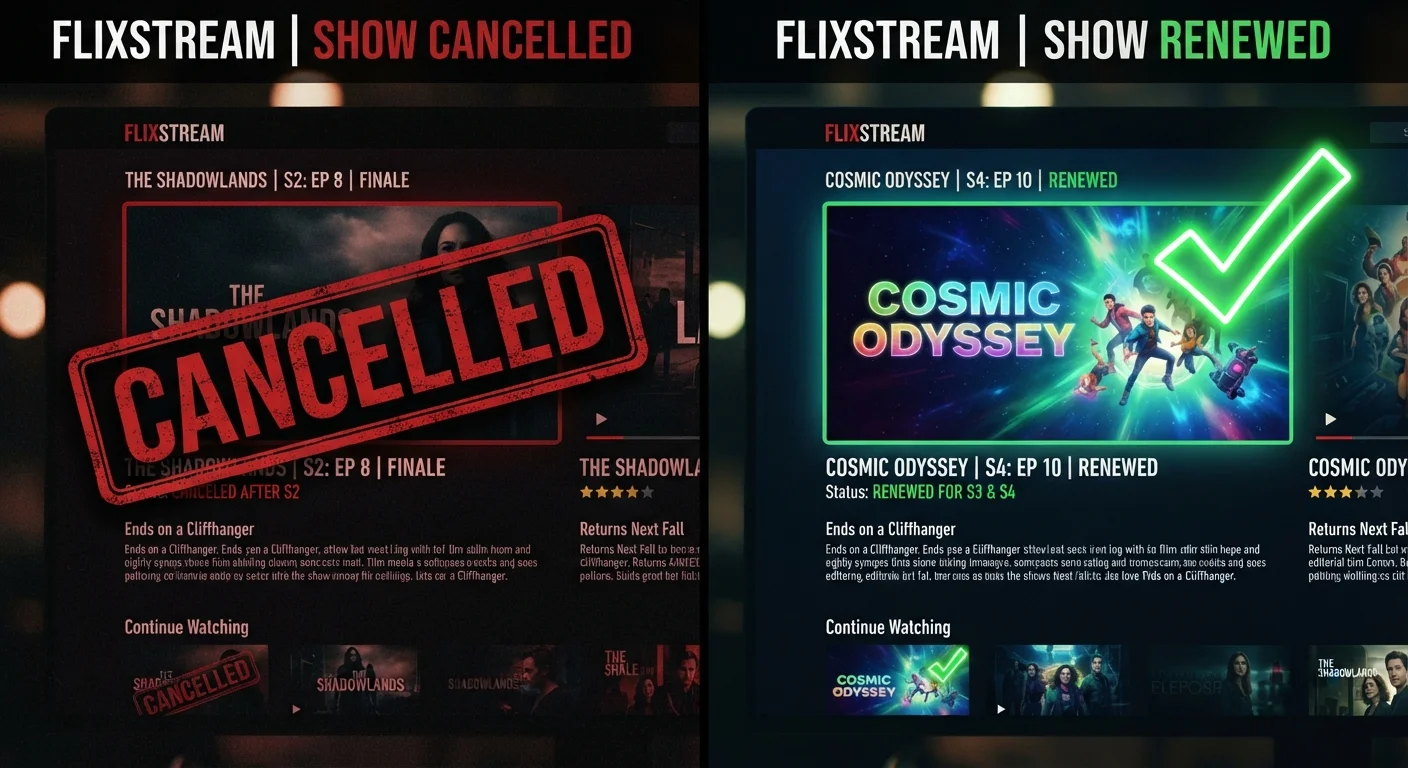
A streaming cancellation happens when a platform decides not to produce additional seasons of an original series. Unlike traditional TV, where ratings are public and decisions play out visibly, streaming platforms make these calls using private data - and often without much public explanation. The result can feel sudden and confusing for fans who thought a show was thriving.
Streaming platforms typically measure 'completion rate,' 'household reach,' and 'cost-per-engaged-viewer' rather than the traditional Nielsen overnight ratings used by broadcast networks.
The Hidden Scoreboard: How Streaming Platforms Measure a Show
When a network TV show struggled in the ratings, it was a public reckoning - the numbers were out every Tuesday morning. Streaming works differently. Platforms like Netflix, Amazon Prime Video, Hulu, and Disney+ keep most of their viewership data private, which means cancellations often arrive without visible warning signs for fans.
The metrics that actually matter are layered and proprietary. Completion rate - the share of viewers who watch an entire season - is widely considered one of the most important signals. A show that hooks people all the way to the finale demonstrates sustained engagement. By contrast, a show with a big premiere weekend but steep drop-off each episode may be signaling that audiences aren't invested enough to stick around.
Platforms also track what's sometimes called subscriber acquisition value: whether a new show is actively convincing people to sign up. A series that drives subscription spikes is enormously valuable, even if it isn't the most-watched show by volume after the initial launch buzz fades.
To understand how streaming arrived at this data-first environment, it helps to know how radically the industry has shifted - see our full breakdown of how streaming replaced linear TV for context.
~45%
Share of streaming viewers who abandon a series mid-season
Industry research from Parrot Analytics and similar measurement firms has consistently found that audience drop-off within a season is a leading predictor of cancellation decisions.
Top 10
Netflix weekly chart titles that influence internal renewal signals
Netflix introduced a public top-10 chart to provide some transparency, though analysts note it reflects hours viewed and does not capture the full suite of engagement metrics the platform uses internally.
2-3x
Cost multiplier for high-concept sci-fi vs. reality formats
Production budget estimates reported by entertainment trade outlets like Variety and The Hollywood Reporter consistently show a significant gap between genre costs, affecting renewal math.
The Budget Equation: Why Cost Shapes Every Decision
Streaming originals range wildly in production cost. A prestige drama with A-list talent, elaborate sets, and cinematic visual effects might cost tens of millions of dollars per episode. A reality competition or documentary series might cost a fraction of that. This matters enormously when platforms weigh renewal.
The math is straightforward, even if the data behind it isn't public: a more expensive show needs a proportionally larger, more engaged audience to justify its budget. When a high-cost series pulls impressive but not extraordinary numbers, the economics often tip toward cancellation - even if critics loved it and Twitter was enthusiastic about it.
Watch to the End If You Want to Help
If you genuinely want a show to survive, the most useful thing you can do is watch every episode all the way through - and encourage others in your household to do the same. Completion rate is one of the clearest signals platforms use to gauge real engagement. Pressing play and wandering off barely counts.
Genre plays a role here too. Reality formats, true crime documentaries, and talk-driven series have favorable cost profiles, which is part of why they proliferate on streaming platforms. High-concept sci-fi and fantasy shows face a steeper path to renewal because the production bar is higher before a single frame is filmed.
International co-productions have become one creative response to this pressure. By sharing production costs across multiple markets and building in multilingual storylines, platforms can greenlight ambitious content at lower risk. This dynamic is explored in depth in our look at how international shows broke through on streaming.
What Actually Keeps a Show Alive
If completion rate and subscriber acquisition are the biggest factors, a few other elements also carry weight in renewal conversations.
- Demographic reach: A show that skews toward a highly sought-after advertiser demographic (for ad-supported tiers) or a hard-to-retain subscriber group gets credit for its strategic value beyond raw numbers.
- Global audience: A series that performs modestly in the US but dominates internationally can stay on the air. Streaming is a global business, and international viewers count toward the overall calculation.
- Cultural conversation: While social media buzz doesn't directly translate into a renewal, a show that generates genuine cultural discussion - award nominations, press coverage, word-of-mouth - can have outsized marketing value that platforms weigh informally.
- Platform identity: Some shows survive because they define what a platform stands for, even if they aren't the most-watched. A critically respected series can signal quality and seriousness to potential subscribers.
“The metrics that matter in streaming aren't the ones fans can see. Platforms are looking at engagement depth - how far people get, how often they return, and whether a show brought anyone new through the door.”
— Julia Alexander, Streaming industry analyst and former senior strategy editor
It's worth noting that the recommendation algorithm also plays an indirect role. A show that the platform actively surfaces to likely viewers has a better shot at building the audience it needs. Understanding how those algorithms work can shed light on the full picture - see our guide on how streaming platforms decide what to recommend.
What Fans Can and Can't Control
Viewer behavior does matter - just not always in the ways fans expect. Watching a show to completion, re-watching episodes, and getting friends and family to sign up and start watching all register as positive signals in platform data. Tweeting passionately or signing a petition, while emotionally meaningful, doesn't feed directly into the metrics that inform renewal.
The broader reality is that streaming cancellations are often a reflection of business priorities shifting as quickly as the industry itself. Platforms have pulled back on ambitious content spending, recalibrated subscriber-growth expectations, and renegotiated what constitutes a sustainable original slate - all of which affects individual shows caught in the crossfire.
Fans who've experienced sudden cancellations are often left wondering what happened to the content they loved - a feeling that also applies when shows and movies disappear from a platform entirely. Our piece on why streaming content libraries are shrinking explores that related frustration in detail.
In the end, no show is completely cancellation-proof. But understanding the business logic behind these decisions can at least demystify the process - and help viewers make smarter choices about where they invest their streaming attention.
Renewal Timelines Vary Widely by Platform
There's no industry-standard window for announcing renewals or cancellations. Some platforms greenlight a second season before a first season even drops; others take six months or longer to analyze data before deciding. If your favorite show hasn't been renewed yet, that silence isn't necessarily a bad sign - it may just reflect how a particular platform operates its decision cycle.