

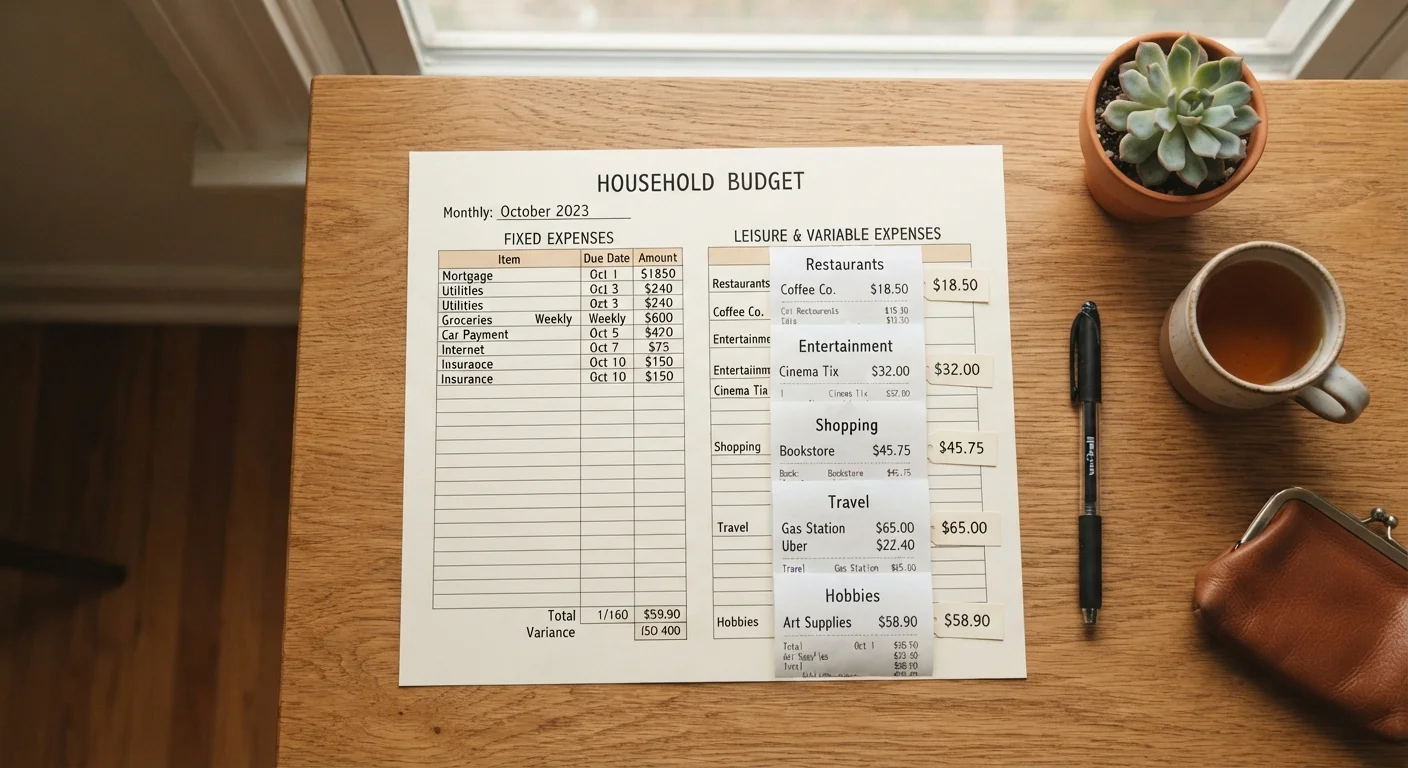
Key Takeaways
- Non-discretionary expenses are fixed or essential obligations you must meet each month.
- Discretionary spending is flexible and driven by personal choice, not survival.
- Many expenses sit in a grey zone - context and income level affect which category they fall into.
- Separating these two categories is the first step toward building an honest, workable budget.
- Reducing discretionary spending is typically easier and faster than cutting essential costs.
Discretionary vs. Non-Discretionary Spending
Non-discretionary spending refers to expenses you cannot reasonably avoid - things like rent, utilities, groceries, and minimum debt payments. Discretionary spending covers everything else: the purchases you choose to make based on preference rather than necessity, such as dining out, subscriptions, or entertainment. The line between the two isn't always obvious, but the distinction is central to building a budget that actually works.
In macroeconomics, 'discretionary' also refers to government spending subject to annual appropriations, as opposed to mandatory entitlement programs - a separate but related use of the same terminology.
What Makes an Expense Non-Discretionary?
Non-discretionary expenses are the costs you're effectively committed to, whether by contract, physical necessity, or legal obligation. If skipping a payment would put your housing, health, or financial standing at serious risk, it almost certainly belongs in this category.
Common examples include:
- Rent or mortgage payments - your primary housing obligation
- Utilities - electricity, heat, and water needed to safely occupy your home
- Minimum debt payments - credit cards, student loans, auto loans
- Health insurance premiums - especially if employer-deducted
- Basic groceries - food required for everyday nutrition
- Transportation to work - gas, transit passes, or necessary vehicle costs
These costs tend to be relatively stable month to month, making them easier to plan around. They form what budgeters often call your financial floor - the non-negotiable baseline your income must cover first. See a full breakdown of standard budget categories for typical allocation ranges across these essential areas.
Income Level Shapes the Line
What qualifies as non-discretionary isn't purely objective - income plays a role. A household with tight margins may rightly classify a reliable internet connection as essential for remote work or job searching, while a higher-income household might treat it as a lower-stakes decision. Categorize expenses based on your real circumstances, not an idealized standard.
What Counts as Discretionary Spending?
Discretionary spending covers purchases you make by choice - items that enhance your life but aren't required to maintain your basic wellbeing or meet obligations. This is the flexible portion of your budget, and it's where most people have the most room to adjust.
Typical discretionary expenses include:
- Dining out and coffee shops
- Streaming services, gaming, and entertainment subscriptions
- Clothing beyond basic necessities
- Vacations and travel
- Hobbies and recreational activities
- Home décor upgrades
- Personal care services (salon visits, spa treatments)
Discretionary doesn't mean unimportant. Spending on experiences, relationships, and personal interests contributes meaningfully to quality of life. The key insight is that these expenses are adjustable - if finances tighten, they're where you look first.
Try a 30-Day Spending Audit
Before adjusting your budget, spend one full month tracking every expense and labeling it as discretionary or non-discretionary. Even a simple spreadsheet or notes app works. Seeing your actual spending pattern - rather than your assumed one - often reveals surprising opportunities to redirect money toward priorities.
For a deeper look at how this maps to shopping decisions in real time, drawing the line between needs and wants offers practical guidance at the point of purchase.
~30%
Recommended share for discretionary 'wants'
The widely referenced 50/30/20 budgeting guideline suggests allocating roughly 30% of after-tax income to discretionary wants, 50% to needs, and 20% to savings and debt repayment.
~$6,000
Average annual US household entertainment spending
According to the U.S. Bureau of Labor Statistics Consumer Expenditure Survey, American households spend several thousand dollars annually on entertainment - a largely discretionary category.
The Grey Zone: Expenses That Don't Fit Neatly
The needs-vs-wants framework sounds clean in theory, but real spending is messier. Many everyday expenses straddle the line, and where you draw it often depends on your income, location, and life situation.
Consider a few examples:
- A smartphone plan
- Widely considered a necessity for work and safety, yet the tier of plan you choose - unlimited data vs. a basic option - has a discretionary component.
- A car
- Non-discretionary if public transit isn't viable in your area; potentially discretionary for someone who lives steps from a subway line.
- Organic or premium groceries
- Food itself is non-discretionary; the premium you pay for specific brands or quality levels is discretionary.
This grey zone is worth examining honestly rather than glossing over. What 'Needs vs. Wants' Really Means in a Budget explores how to apply this distinction more rigorously to your own spending patterns.
Putting the Distinction to Work in Your Budget
Once you can separate your non-discretionary baseline from your discretionary spending, you have the raw material for a functional budget. The process is straightforward:
- List all fixed, essential expenses and total them. This is your floor.
- Subtract that total from your monthly take-home income. What remains is available for discretionary spending, saving, and investing.
- Prioritize savings before discretionary spending - a principle sometimes called paying yourself first. See Pay-Yourself-First vs. Traditional Budgeting for a comparison of this approach against conventional expense-tracking methods.
- Set intentional limits on discretionary categories - dining, entertainment, shopping - based on what's left after savings.
This structure makes trade-offs visible and deliberate rather than accidental. When money gets tight, you know exactly where flexibility exists - and where it doesn't.
“A budget is telling your money where to go instead of wondering where it went.”
— Dave Ramsey, Personal finance author and radio host
This article is for general informational and educational purposes only and does not constitute personalized financial advice. Consider consulting a qualified financial professional for guidance specific to your situation.