

Key Takeaways
- Sinking funds cover known future expenses by spreading the cost into small, regular contributions.
- They differ from emergency funds, which are reserved for truly unexpected events.
- You can run multiple sinking funds simultaneously for different expense categories.
- Keeping sinking funds in a separate account reduces the temptation to spend the money elsewhere.
- Even modest monthly contributions can eliminate the sting of large, irregular bills.
Sinking Fund
A sinking fund is a dedicated savings pool you build up gradually by setting aside a fixed amount each month toward a specific, known future expense. Unlike a general savings account, each sinking fund has a clear purpose - a car repair reserve, holiday gifts, or an annual insurance premium. The goal is to have the money ready exactly when that expense arrives, so it never hits your budget as a surprise.
The term originates in corporate finance, where businesses use sinking funds to retire debt systematically. In personal finance, the principle is the same: regular, intentional contributions accumulate toward a predetermined obligation.
Why Irregular Expenses Break Budgets
Most household budgets handle monthly bills reasonably well - rent, utilities, and subscriptions are predictable. What derails even well-intentioned budgets are the expenses that come once or twice a year: car registration fees, annual insurance premiums, holiday gifts, back-to-school shopping, or a vacation. These costs are not emergencies - you know they're coming - but without a plan, they land like one.
When a $900 car repair or $500 holiday budget appears with no savings set aside, the typical response is to raid the emergency fund, carry a credit card balance, or skip other financial priorities. A sinking fund closes that gap by converting a lump-sum future cost into a predictable monthly line item.
For a broader look at how irregular costs fit into an overall spending plan, see how to budget for irregular annual expenses.
36%
Americans who cannot cover a $400 emergency expense
According to Federal Reserve survey data, a significant share of US households have limited financial buffers, making planned saving tools like sinking funds especially valuable.
$1,000+
Typical cost of an unexpected car repair
Industry repair cost surveys consistently show mid-range vehicle repairs frequently exceed $1,000, an amount that strains budgets without advance planning.
How Sinking Funds Actually Work
The math behind a sinking fund is straightforward. Identify the expense, estimate its total cost, determine when you'll need the money, and divide the total by the number of months you have available. That quotient is your monthly contribution.
For example: if you expect to spend $1,200 on holiday gifts and travel in December and you're starting in January, you'd contribute $100 per month into a dedicated holiday fund. By December, the money is there - no scramble, no credit card balance.
You can run multiple sinking funds at once, each labeled and tracked separately. Common categories include:
- Vehicle maintenance and registration
- Home repairs and appliances
- Medical or dental co-pays
- Annual subscriptions and memberships
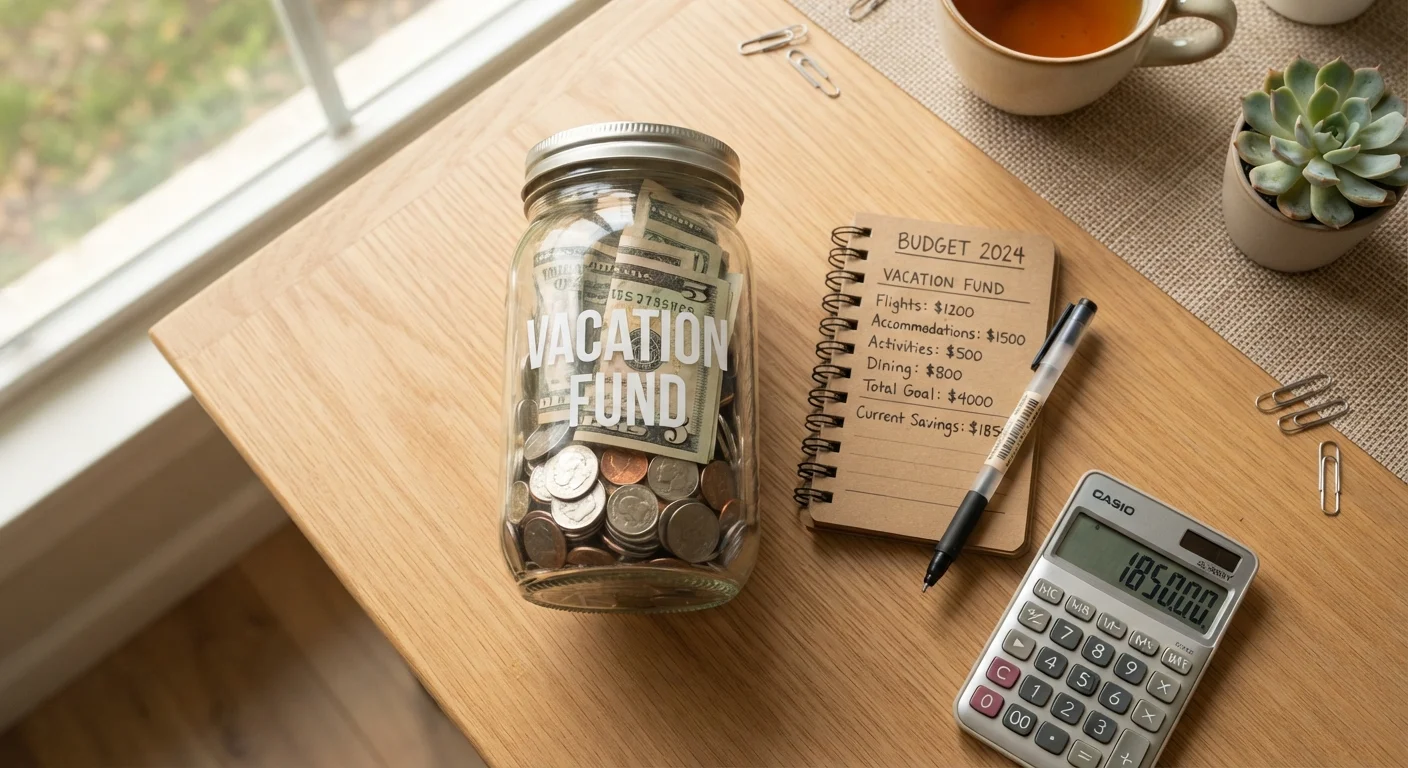
- Travel and vacations
- Holiday and gift spending
The more specifically you label each fund, the less tempted you'll be to redirect the money.
Use Sub-Accounts to Stay Organized
Many online banks and credit unions let you create multiple savings buckets or sub-accounts within a single login. Labeling each one - 'Car Repair,' 'Vacation,' 'Holiday Gifts' - makes it easy to see your progress and removes any ambiguity about which money is spoken for. This small organizational step dramatically reduces the chance you'll accidentally spend sinking fund money on something else.
Sinking Funds vs. Emergency Funds: A Critical Distinction
These two tools are often confused, but they serve distinct roles. An emergency fund is a financial buffer for genuinely unpredictable events - a layoff, a health crisis, or an appliance failure you couldn't anticipate. It should remain untouched for non-emergencies.
A sinking fund, by contrast, is built to be spent. You accumulate it with a specific purchase or expense in mind, and when that expense arrives, you use the fund - that's the whole point. Tapping your sinking fund for its intended purpose is not a failure; it's the system working correctly.
Running both in parallel creates a resilient financial foundation: sinking funds absorb the predictable irregulars, while the emergency fund stands ready for true surprises. Learn how to size and structure an emergency fund if you haven't established one yet.
Setting Up Your First Sinking Fund
Getting started requires only three decisions: what to save for, how much you need, and where to keep it.
Step 1 - List your known irregular expenses. Review last year's bank and credit card statements. Look for any non-monthly charge over $100. These are your sinking fund candidates.
Step 2 - Estimate and calculate. For each expense, note the likely cost and the next date you'll need it. Divide the total by the number of months remaining. That's your monthly contribution per fund.
Step 3 - Open a separate account. Many online banks allow you to create multiple labeled savings buckets within one account. Keeping sinking fund money physically separate from your checking account removes the temptation to spend it casually.
Step 4 - Automate the contributions. Set up a recurring transfer on payday. Automation removes the decision-making friction that causes people to skip contributions in busy months.
This approach pairs naturally with a pay-yourself-first mindset. Compare pay-yourself-first and traditional budgeting philosophies to decide which structure suits you best.
“The budget is not just a collection of numbers, but an expression of our values and aspirations. A sinking fund is simply the practical tool that keeps those aspirations funded.”
— Jacob Frenkel, Economist and former Governor of the Bank of Israel
Making Sinking Funds a Lasting Habit
The most common reason sinking funds fail is inconsistency - contributions stop during tight months and never restart. A few structural habits help prevent this:
- Review and adjust annually. Costs change. Revisit each fund's target amount once a year to account for inflation or changing needs.
- Add new funds when new expenses emerge. Expecting a home renovation or a new baby? Open a sinking fund early, even if the contribution is small at first.
- Resist repurposing funds. If the car fund has a surplus after registration is paid, resist the urge to spend the buffer. Roll it into next year's target or redirect it to the fund with the most urgent gap.
Building durable financial habits takes time, but the structural simplicity of sinking funds makes them one of the easier tools to maintain. For a deeper look at the behaviors that make budgeting systems stick long-term, see behavioral habits that make budgeting easier over time.
This article is for general informational and educational purposes only and does not constitute personalized financial advice. Consult a qualified financial professional for guidance tailored to your individual circumstances.