

Key Takeaways
- A budget is simply a plan for your money - not a punishment for spending.
- Choosing a method that fits your habits dramatically increases long-term success.
- Tracking expenses consistently is the single most important budgeting habit.
- Setbacks are normal; adjusting your budget is a sign of progress, not failure.
- A solid budget creates the foundation for saving, investing, and reducing debt.
Why Budgeting Matters
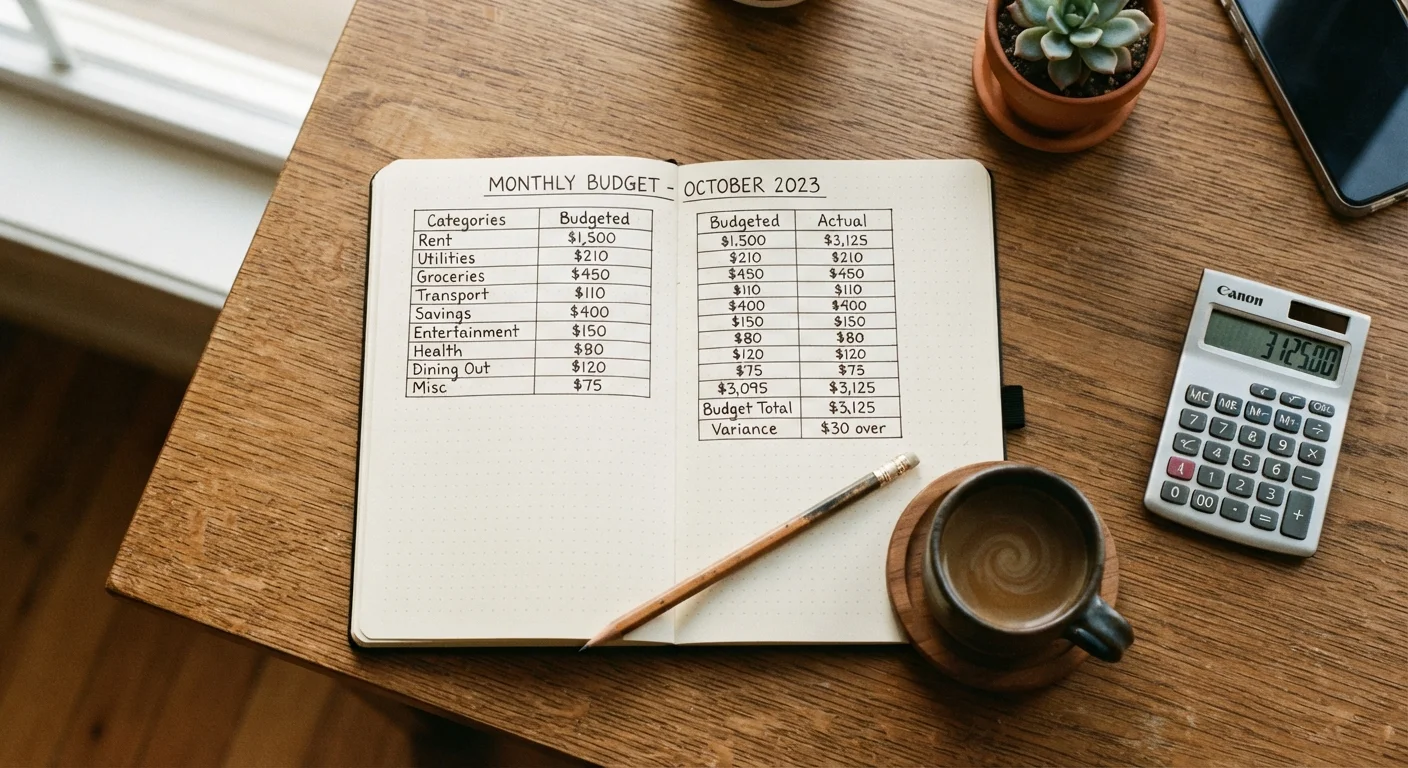
A personal budget is simply a written plan for how you intend to use your money each month. Despite that straightforward definition, many people avoid budgeting - often because it feels restrictive or overwhelming. In reality, a well-designed budget does the opposite: it gives you clarity about where your money is going and, more importantly, control over where it goes next.
Without a budget, spending decisions happen reactively. Bills arrive, purchases accumulate, and saving often gets pushed to whatever is left over at month's end - which is frequently nothing. A budget reverses that dynamic by making your financial priorities explicit before the month begins.
~33%
Americans with a detailed household budget
Gallup polling has consistently found that fewer than one-third of American households maintain a detailed monthly budget.
$1,000
Emergency savings gap for many households
Federal Reserve surveys have found a significant share of US adults would struggle to cover an unexpected $1,000 expense from savings alone.
Budgeting is also foundational to other financial goals. Managing credit and debt effectively, building an emergency fund, or eventually moving into investing - all of these become significantly easier once you have a functioning budget in place.
This article is for general informational and educational purposes only and does not constitute personalized financial advice. Consult a qualified financial professional for guidance tailored to your situation.
Choosing a Budgeting Method
There is no single correct way to budget. The best method is the one you will actually maintain. Here are three widely used approaches:
- 50/30/20 Rule: Allocate roughly 50% of after-tax income to needs (housing, groceries, utilities), 30% to wants (dining, entertainment), and 20% to savings and debt repayment. This is a useful starting framework for beginners.
- Zero-Based Budgeting: Every dollar of income is assigned a specific purpose so that income minus expenses equals zero. This method offers maximum control and works well for people who want to be very deliberate with each dollar.
- Pay-Yourself-First: Savings contributions are automated at the start of the month before any discretionary spending occurs. This approach prioritizes saving without requiring constant willpower.
Not sure which philosophy fits your habits? The pay-yourself-first vs. traditional budgeting comparison can help you evaluate both approaches side by side.
Start with the method that feels least intimidating, even if it is imperfect. A simple, maintained budget always outperforms a sophisticated one you abandon after two weeks.
Consistency is the primary driver of budgeting success; the friction of an overly complex system is one of the most common reasons people quit.
If your income is irregular, build your monthly budget around your lowest expected paycheck rather than an optimistic average. Adjust upward when a strong month arrives.
Planning from a conservative income baseline prevents the common cycle of overspending in high-income months and scrambling in low-income ones.
Setting Up Your Budget
If you have never built a budget before, the process can feel daunting. Breaking it into concrete steps removes that barrier. For a detailed walkthrough, see Your First Budget in Five Steps. At a high level, here is the structure to follow:
- Calculate your net income. Use your actual take-home pay after taxes, not your gross salary. If your income varies, average the last three months.
- List all fixed expenses. These are consistent monthly obligations - rent or mortgage, car payment, insurance premiums, and subscription services.
- Estimate variable expenses. Groceries, gas, dining out, and entertainment fluctuate month to month. Review three months of bank or credit card statements to find realistic averages.
- Set savings targets. Before assigning spending limits, decide how much you want to save. Even a small, consistent amount builds meaningful momentum over time.
- Assign remaining income to spending categories. Total your expenses and savings. If they exceed your income, identify which variable categories can be reduced.
Use Real Numbers, Not Round Guesses
When estimating variable expenses, pull actual figures from your bank or credit card statements rather than estimating from memory. Most people underestimate their spending in categories like dining out or subscriptions by a meaningful margin. Accurate baseline data makes your budget far more effective from day one.
Tracking and Staying Consistent
Building a budget is step one. Following it requires consistent tracking. Many people create a thoughtful budget in January and abandon it by February - not because budgeting is hard, but because they stop monitoring their actual spending against their plan.
Effective tracking does not need to be time-consuming. Reviewing transactions for 10 to 15 minutes once or twice a week is typically enough to catch overspending early. Many banking apps categorize spending automatically, making this even easier.
Ignoring Small Overruns Adds Up Fast
It is tempting to overlook a $15 or $20 overage in a spending category, but these small gaps compound quickly across multiple categories. A budget that is consistently 5-10% over plan in several areas can derail savings goals just as effectively as one large splurge. Catching overruns early keeps your plan on track.
The habits that make tracking sustainable over the long run are explored in Behavioral Habits That Make Budgeting Easier Over Time, which covers evidence-informed routines that reduce friction and improve consistency.
Handling Setbacks and Adjusting Over Time
Every budget encounters unexpected expenses - a car repair, a medical bill, a higher-than-usual utility statement. These events are not budget failures; they are the reason emergency funds exist and why budgets need periodic review.
When a setback occurs, revisit your budget before the month ends rather than ignoring it. Identify which categories have flexibility and reallocate accordingly. If an expense was truly one-time, your next month's budget can reset to normal. If it signals a recurring cost you had underestimated, adjust the relevant category permanently.
Build an Emergency Fund Before Investing
Before directing discretionary budget surplus toward investments, prioritize building a liquid emergency fund. Without this cushion, an unexpected expense often forces high-interest borrowing, which can undermine months of financial progress. The specific size of your emergency fund should reflect your household's income stability and expense level - a financial professional can help you determine an appropriate target.
Budget reviews should also happen proactively. Major life changes - a new job, a move, a new household member - all shift your income and expense picture. A quarterly budget review catches drift before it becomes a problem.
Building From Your Budget: Saving and Investing
A functional budget does more than prevent overspending - it creates the margin needed to build long-term financial security. Once your spending is stable and an emergency fund is in place (a commonly cited guideline is three to six months of essential expenses, though the right amount varies by individual circumstances), a budget makes it possible to consistently direct money toward longer-term goals.
Those goals might include paying down high-interest debt, building retirement savings, or beginning to invest. General principles of growing savings and understanding investment options are covered in the Investing hub. Similarly, if debt repayment is a priority, the Credit hub provides clear guidance on managing debt and improving your credit standing.
“A budget is telling your money where to go instead of wondering where it went.”
— John C. Maxwell, Author and leadership speaker
The key insight is that budgeting is not the end goal - it is the foundation. A budget converts financial intentions into a reliable, repeatable system. Over time, that system becomes habitual, requiring less effort while delivering steadily improving results.
Your First Budget in Five Steps
A step-by-step walkthrough for first-time budgeters covering income tracking, expense categorization, and setting realistic spending limits.
Consumer Financial Protection Bureau (CFPB) Budget Worksheet
A free, government-produced budgeting worksheet that helps households organize income and expenses into a structured monthly plan.
Behavioral Habits That Make Budgeting Easier Over Time
Evidence-informed routines that reduce the mental effort of budgeting and improve long-term consistency - ideal once your initial budget is in place.