

Key Takeaways
- Chapter 7 bankruptcy can remain on your credit report for up to 10 years; Chapter 13 for up to 7 years.
- Filing for bankruptcy typically causes a significant, immediate drop in credit score.
- Credit rebuilding is possible after bankruptcy - it requires time, consistency, and deliberate action.
- Individual accounts discharged in bankruptcy may carry their own negative notations alongside the bankruptcy record.
- Consulting a licensed bankruptcy attorney or nonprofit credit counselor before filing is strongly recommended.
Bankruptcy and Credit
Bankruptcy is a legal process that allows individuals overwhelmed by debt to either eliminate or restructure what they owe under court supervision. When you file for bankruptcy, it appears as a public record on your credit report and can significantly lower your credit score. However, it is a time-limited entry - meaning it doesn't stay on your report forever. The two most common types for individuals, Chapter 7 and Chapter 13, each have different timelines and credit consequences.
Under the Fair Credit Reporting Act (FCRA), Chapter 7 bankruptcies may remain on a credit report for up to 10 years from the filing date, while Chapter 13 bankruptcies are generally removed after 7 years.
What Bankruptcy Does to Your Credit Report
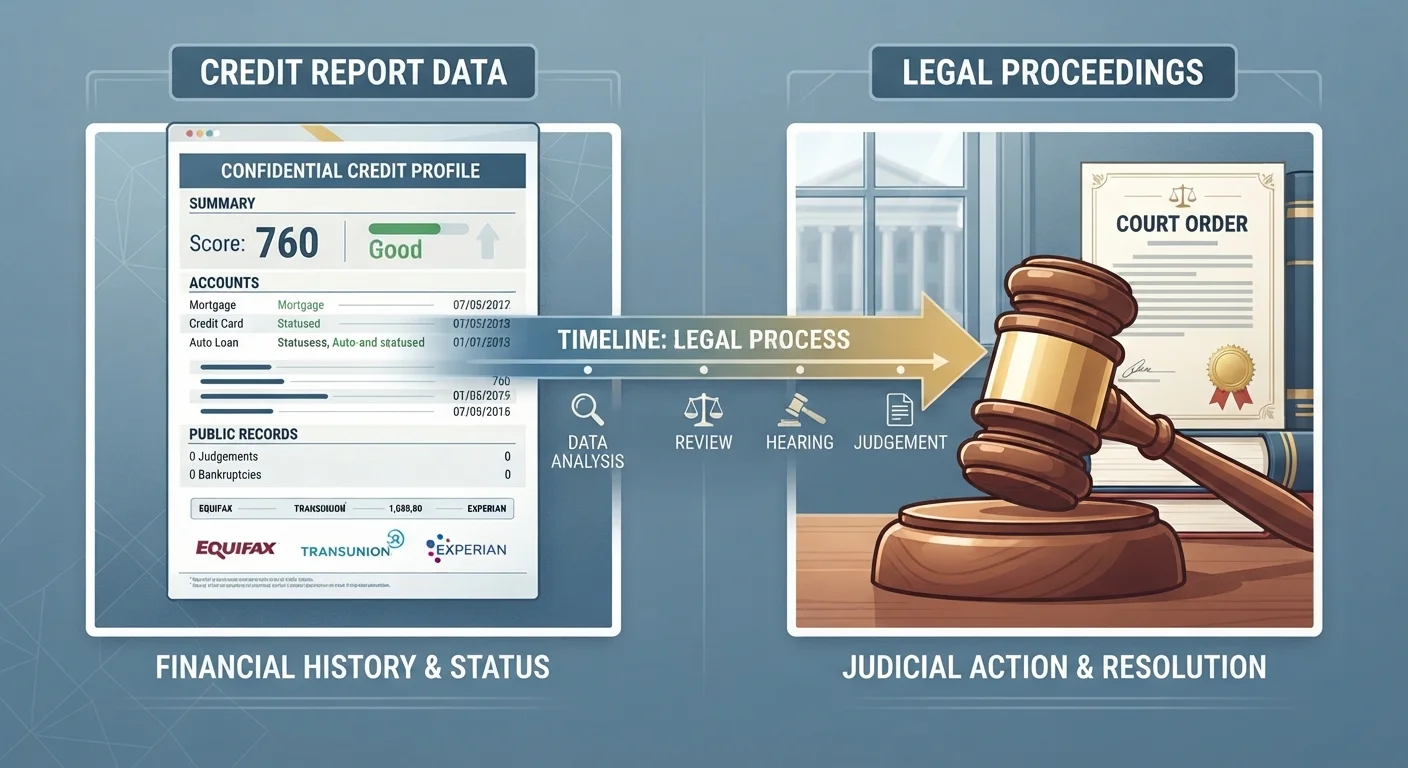
When a bankruptcy case is filed with a federal court, it becomes part of the public record - and that record is reported to the three major credit bureaus (Equifax, Experian, and TransUnion). The result is typically a sharp drop in credit score, often ranging from 130 to 240 points depending on where your score stood before filing. People with higher scores before filing generally see the largest point drops.
Beyond the score impact, each account included in the bankruptcy filing may be separately marked as "included in bankruptcy" on your report. So while the bankruptcy public record is one entry, its ripple effects across your individual accounts can make your report look more complex. To understand how all these entries interact, it helps to know how to read your credit report section by section.
Bankruptcy Is a Federal Legal Process
Bankruptcy cases are filed in federal court, not state court, and are governed by federal law - specifically Title 11 of the U.S. Code. This means the basic framework is the same across all states, though exemptions (what property you can keep) vary by state. Because the legal and financial implications are significant and complex, working with a licensed bankruptcy attorney is strongly advisable before filing.
Chapter 7 vs. Chapter 13: The Credit Timeline Difference
Chapter 7 (often called "liquidation bankruptcy") discharges most unsecured debts - such as credit card balances and medical bills - after a court process that typically takes three to six months. The trade-off is a longer credit reporting period: up to 10 years from the filing date.
Chapter 13 (sometimes called "reorganization bankruptcy") involves committing to a three-to-five-year repayment plan approved by the court. Because you are repaying a portion of your debts, the reporting window is shorter: up to 7 years from the filing date. For a broader view of how different negative entries compare in duration, see how long negative items stay on a credit report.
10 Years
Chapter 7 bankruptcy reporting period
Under the Fair Credit Reporting Act, a Chapter 7 bankruptcy public record may remain on a credit report for up to 10 years from the filing date.
7 Years
Chapter 7 bankruptcy reporting period
Chapter 13 bankruptcy, which involves a repayment plan, is generally removed from credit reports after 7 years from the filing date under FCRA guidelines.
130-240
Typical credit score point drop after bankruptcy
Credit scoring experts generally estimate that filing for bankruptcy can reduce a credit score by 130 to 240 points, with the impact varying based on the filer's pre-filing score.
Life After Bankruptcy: Rebuilding Your Credit
Once a bankruptcy is discharged, rebuilding credit becomes the priority. The process is slow and steady - but it is real. Here are practical, low-risk approaches many people use:
- Secured credit cards: These require a cash deposit that becomes your credit limit. Used responsibly and paid in full each month, they demonstrate positive payment behavior to the credit bureaus.
- Credit-builder loans: Offered by some credit unions and community banks, these loans are designed specifically for people rebuilding credit. Payments are reported to the bureaus, establishing a track record.
- Authorized user status: If a trusted family member or friend adds you to an existing account in good standing, that account history may appear on your report, giving your score a potential lift.
- On-time payments across all accounts: Payment history is the single largest factor in most credit scoring models - consistently paying every bill on time is the most powerful rebuilding tool available.
If you are starting from a damaged or thin credit file, the strategies in our guide on building credit when you have no credit history apply equally to post-bankruptcy rebuilding.
Start Rebuilding Before the Bankruptcy Clears
You don't have to wait until a bankruptcy falls off your report to improve your credit. Many people begin seeing meaningful score improvements within two to three years of discharge by maintaining perfect payment history and keeping credit utilization low. Starting positive habits immediately after discharge gives you the longest possible runway of good credit history by the time the bankruptcy entry eventually disappears.
Putting Bankruptcy in Context
It is worth stepping back to consider what bankruptcy actually represents: a legal system designed to give people a structured path out of unmanageable debt. While the credit consequences are serious and last for years, they exist alongside real relief - discharged debt is no longer legally collectible, and the collections calls, lawsuits, and wage garnishments that often precede bankruptcy can stop.
Compare this to alternatives like ignoring debt entirely. A single missed payment can hurt your credit score meaningfully, and accounts that go to collections carry their own multi-year reporting periods. Understanding what happens to credit when you miss a payment and how a collections account affects your credit can help you weigh all the options before deciding on any path.
Your credit score is one piece of a larger financial picture. For a comprehensive view of how credit works across your financial life - from your first card to major borrowing decisions - explore the full credit score picture.
This article is for general informational and educational purposes only and does not constitute legal, financial, or tax advice. Bankruptcy law is complex and situation-specific. Consult a licensed bankruptcy attorney or a nonprofit credit counselor to understand your options based on your individual circumstances.