

Key Takeaways
- Payment history is the single most influential factor in your credit score.
- Keeping credit utilization below 30% generally supports a stronger score.
- Starting with a secured card or credit-builder loan can establish credit from zero.
- Lenders reviewing mortgage applications look at both your score and debt-to-income ratio.
- You are entitled to one free credit report per year from each major bureau at AnnualCreditReport.com.
- Errors on your credit report can be disputed and corrected, often improving your score.
What a Credit Score Actually Is
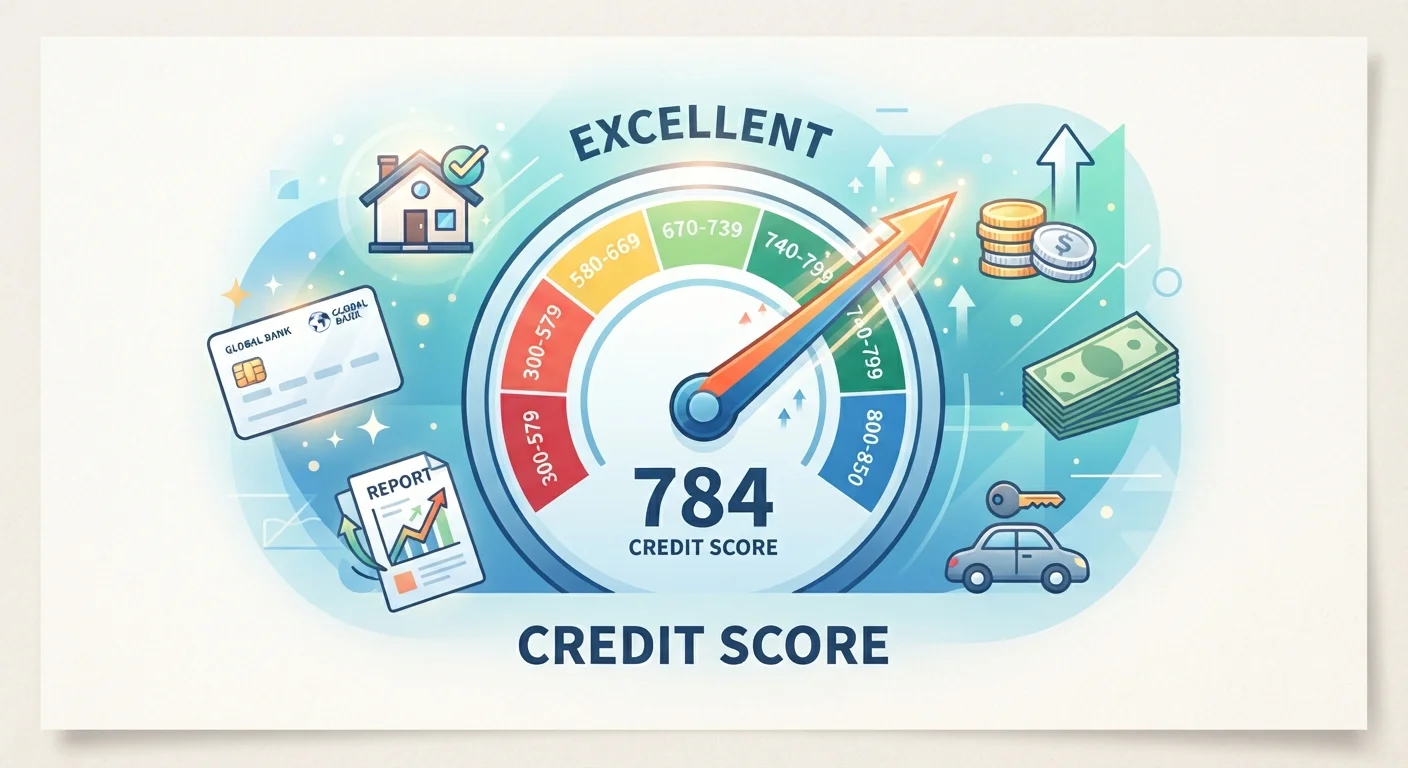
A credit score is a three-digit number - typically ranging from 300 to 850 - that summarizes how reliably you have managed borrowed money over time. Lenders, landlords, and sometimes even employers use it as a quick signal of financial trustworthiness. The most widely used scoring model is the FICO® Score, though VantageScore is also common.
The score itself is generated by applying a mathematical formula to data in your credit report - a detailed record maintained by the three major credit bureaus: Equifax, Experian, and TransUnion. Because each bureau may hold slightly different data, your score can vary modestly between them. For a deeper look at exactly what each factor measures, see what your credit score actually measures.
Check All Three Bureau Reports
Because lenders may report to only one or two bureaus, your credit reports can differ meaningfully across Equifax, Experian, and TransUnion. Review all three annually to get a complete picture and catch any discrepancies early.
The Five Factors That Shape Your Score
FICO scores are built from five weighted categories:
- Payment history (35%): Whether you pay on time. Even one 30-day late payment can cause a meaningful drop.
- Credit utilization (30%): The percentage of available revolving credit you are using. Lower is generally better. Credit utilization is one of the fastest factors you can influence.
- Length of credit history (15%): How long your accounts have been open. Older accounts help.
- Credit mix (10%): A variety of account types - credit cards, installment loans, auto loans - can strengthen your profile.
- New credit (10%): Each hard inquiry from a new application can temporarily lower your score by a few points.
35%
Weight of payment history in FICO score
According to FICO's published scoring model breakdown, payment history is the single largest factor in most credit scores.
26 million
Credit-invisible Americans
The Consumer Financial Protection Bureau has reported that approximately 26 million Americans have no credit history on file with a major bureau.
30%
Recommended credit utilization ceiling
Credit experts and bureau guidance widely cite keeping utilization at or below 30% as a benchmark for protecting your score.
Understanding how these factors interact helps you make smarter decisions about when to apply for new credit, how much of your limit to use, and how aggressively to pay down balances.
Pay your credit card balance twice a month rather than once. Because utilization is often measured before your statement closes, mid-cycle payments can reduce the balance reported to the bureaus.
Credit card issuers typically report your balance on or around the statement closing date, not the due date - so the timing of payments affects the snapshot bureaus see.
When rate-shopping for a mortgage or auto loan, submit all applications within a 14- to 45-day window. Most scoring models count multiple inquiries for the same loan type as a single inquiry during this period.
FICO and VantageScore both include rate-shopping protection windows specifically to avoid penalizing consumers for comparison shopping on large installment loans.
Building Credit from Scratch
If you have no credit history - sometimes called being "credit invisible" - lenders have nothing to evaluate. The Consumer Financial Protection Bureau estimates that tens of millions of Americans fall into this category. The good news is that several tools exist to establish credit responsibly:
- Secured credit cards: You deposit a sum as collateral, which typically becomes your credit limit. Use it for small, regular purchases and pay the balance in full each month.
- Credit-builder loans: Offered by some credit unions and community banks, these loans hold the borrowed amount in a savings account while you make monthly payments - reported to the bureaus to build your history.
- Becoming an authorized user: A family member or trusted friend can add you to an existing account. Their positive payment history may appear on your report.
Patience is essential here. Most scoring models require at least three to six months of account history before generating a score at all.
Avoid Credit-Building Pitfalls
Some products marketed to credit-invisible consumers - such as certain rent-reporting services or high-fee secured cards - charge significant fees that may outweigh their benefits. Research any product carefully before enrolling. Carrying a balance on a secured card to 'build credit faster' is a common misconception; interest charges are unnecessary since on-time payment of any amount reported is what matters.
Managing Credit as Life Gets More Complex
As your financial life expands - new jobs, car loans, student debt, higher credit limits - managing your credit profile becomes more nuanced. A few principles hold throughout:
- Pay every bill on time, every month. Automating at least the minimum payment eliminates the risk of a forgotten due date.
- Keep balances low relative to your limits. Carrying a high balance on one card hurts even if others are at zero.
- Avoid applying for multiple new accounts in a short window, which generates several hard inquiries at once.
- Keep older accounts open, even if you rarely use them, to preserve your average account age.
Lenders also weigh your overall debt load. Understanding your debt-to-income ratio - the share of your monthly gross income committed to debt payments - is critical, especially before major borrowing decisions.
Credit and the Mortgage Process
Buying a home is often the largest financial commitment a person makes, and your credit score plays a central role in determining whether you qualify and at what interest rate. Conventional mortgage lenders typically look for a minimum score around 620, though requirements vary by loan type and lender. A higher score generally translates to a lower interest rate, which compounds into significant savings over a 15- or 30-year loan.
Score Requirements Vary by Loan Type
Different mortgage programs have different minimum score thresholds. FHA loans, for example, may allow lower scores than conventional loans, but they require mortgage insurance premiums that add to your overall cost. A higher score does not just affect approval odds - it directly influences the interest rate offered, which can mean thousands of dollars over the life of the loan. Always consult a licensed mortgage professional for guidance specific to your circumstances.
Before applying for a mortgage, it is worth spending six to twelve months actively optimizing your credit: paying down revolving balances, correcting any errors on your report, and avoiding new credit applications. Even a modest score improvement can meaningfully change the terms you are offered. Once you have a strong financial foundation, consider exploring foundational investing guidance to grow the savings you are building alongside your credit health.
Protecting and Monitoring Your Credit
Maintaining a strong credit score requires ongoing attention. Federal law entitles you to one free credit report per year from each of the three major bureaus through AnnualCreditReport.com. Reviewing these reports regularly allows you to catch errors - such as accounts you did not open, incorrect balances, or payments wrongly marked late - and dispute them with the relevant bureau.
Additional protective steps include:
- Fraud alerts: A free service that asks lenders to take extra verification steps before opening accounts in your name.
- Credit freezes: A stronger tool that restricts access to your credit report entirely until you lift the freeze. Also free under federal law.
- Credit monitoring services: Many banks and financial apps offer alerts for significant changes to your report.
Identity theft and data breaches can damage your credit through no fault of your own. Acting quickly - reporting to the bureau, filing an FTC identity theft report at IdentityTheft.gov - limits long-term harm.
This article provides general financial education and is not personalized financial or legal advice. Consult a qualified financial professional for guidance specific to your situation.