

Key Takeaways
- Inflation gradually reduces what your money can buy, even when its dollar amount stays the same.
- Holding only cash over long periods may expose you to purchasing power loss.
- Many investors use assets like stocks or bonds to try to outpace inflation over time.
- Past performance of any investment doesn't guarantee future returns - all investing carries risk.
- An emergency fund in cash still makes sense; the concern applies to long-term idle savings.
- A licensed financial adviser can help you evaluate strategies suited to your personal situation.
Purchasing Power Erosion
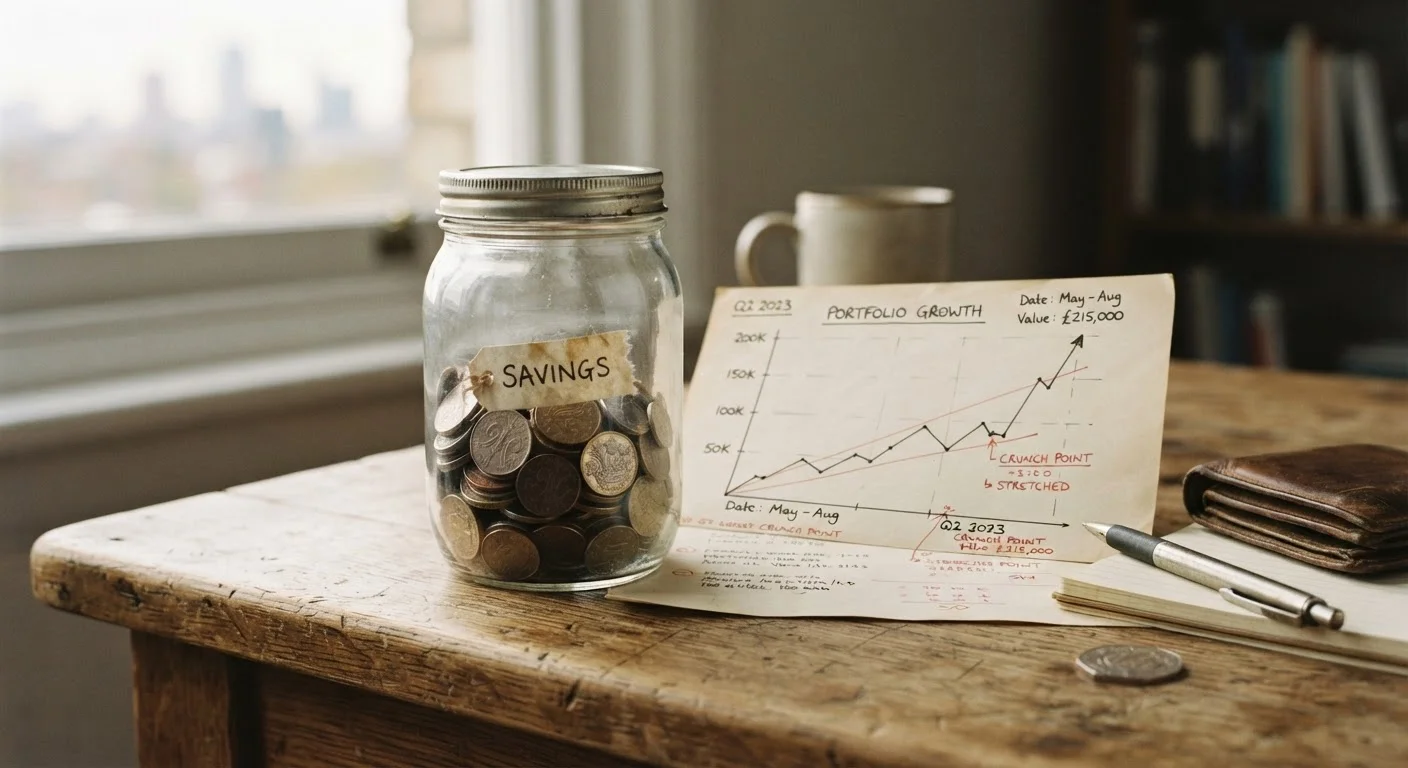
Purchasing power erosion is what happens when inflation rises faster than your money grows. In practical terms, the same amount of cash buys fewer goods and services over time. If your savings sit still while prices climb, your money is effectively losing value - even though the dollar amount in your account hasn't changed.
Economists measure this using the Consumer Price Index (CPI), which tracks price changes across a basket of common goods and services over time.
The Hidden Cost of Doing Nothing
Most people understand that spending money reduces it. Fewer recognize that not spending it - just leaving it parked - can also erode its value when inflation is at work. Inflation refers to the general rise in prices across the economy over time. When it climbs faster than the interest your savings earn, each dollar you hold quietly loses ground.
Consider a simple illustration: if a bag of groceries costs $100 today and inflation averages 3% annually, that same basket of goods could cost roughly $134 in ten years. If your savings earned nothing over that period, you'd need $34 more just to maintain the same standard of living. Your account balance stayed the same; what it could buy did not.
This is what financial educators call purchasing power erosion - and it's one reason many people look beyond cash savings when planning for longer-term financial goals. For more on how inflation affects everyday household budgets, it helps to see the effects play out across actual spending categories.
Why Cash Feels Safe - And When That Feeling Is Accurate
There's nothing irrational about keeping money in cash. It's immediately accessible, carries no market risk, and doesn't fluctuate in dollar value. For short-term needs and emergencies, cash is genuinely the right tool. Financial guidance widely recommends maintaining a liquid emergency fund - typically covering three to six months of essential expenses - before considering other strategies.
The risk calculus shifts when large sums remain idle for years or decades. Over long time horizons, inflation's compounding effect becomes more pronounced. A low-yield savings account earning 0.5% annually during a period of 4% inflation results in a real loss each year, even though the number on your statement grows slightly.
Cash Still Has an Important Role
Keeping money in cash isn't inherently wrong - it's a matter of proportion and purpose. Short-term savings, emergency funds, and money you'll need within one to two years are generally better held in accessible, stable accounts. The inflation concern is most relevant to money earmarked for long-term goals that won't be touched for many years.
This is not a call to avoid cash entirely. It's a prompt to be intentional about how much stays in low-yield accounts over the long term versus how much is put to work in ways that may outpace inflation - with the understanding that those alternatives carry their own risks.
How Investing Relates to Inflation Protection
Investing - putting money into assets that have the potential to grow over time - is one strategy people use to try to stay ahead of inflation. Understanding what investing means and how it differs from saving is a useful starting point for anyone new to the concept.
Historically, certain asset classes - such as broadly diversified stock funds - have produced returns that, over long periods, have exceeded inflation. But this is not guaranteed. All investments carry risk, including the possibility of losing principal. The relationship between potential return and risk is fundamental: generally, the higher the potential reward, the greater the uncertainty involved. Exploring the risk-return relationship can help frame realistic expectations.
Some investors also consider Treasury Inflation-Protected Securities (TIPS), which are U.S. government bonds specifically designed to adjust with inflation. Others look at real estate or commodities. Each option has trade-offs in terms of liquidity, complexity, and risk level.
3%+
Average annual U.S. inflation rate over recent decades
The U.S. Bureau of Labor Statistics tracks the Consumer Price Index; long-run averages have typically hovered around 3%, though rates vary significantly year to year.
~$134
What $100 buys after 10 years at 3% inflation
Using standard compound inflation math, $100 in purchasing power today would require roughly $134 in ten years at a steady 3% annual inflation rate.
0.01%-0.5%
Typical range of traditional savings account interest rates
According to Federal Deposit Insurance Corporation (FDIC) data, many standard savings accounts have historically offered rates well below prevailing inflation levels.
One concept that amplifies the impact of investing early is compounding - where returns generate their own returns over time. Compound interest's role in long-term wealth building illustrates why time in the market tends to matter significantly.
Building a Balanced Perspective
The goal isn't to alarm anyone about their savings or push them toward riskier behavior. It's to surface a risk that often goes unexamined: the risk of inaction. Many people assume that not investing is the cautious choice, but over long time frames, the math of inflation complicates that assumption.
Common misconceptions about investing - such as the idea that it requires large sums or specialized knowledge - often keep people on the sidelines longer than necessary. Awareness of how inflation works can be a useful reframe: it shifts the question from "should I invest?" to "what level of risk am I already accepting by not investing?"
Start With Your Emergency Fund First
Before thinking about investing, make sure you have liquid cash covering three to six months of essential expenses. This cushion protects you from needing to sell investments at a bad time. Once that foundation is in place, you're in a stronger position to consider where longer-term savings might work harder against inflation.
Neither extreme - all cash or all in the market - serves most people well. A thoughtful balance, built around your own timeline, goals, and risk tolerance, is generally what financial professionals recommend. If you're unsure where to start, a fee-only certified financial planner can offer guidance tailored to your situation without a product to sell you.
This article is for general informational and educational purposes only. It does not constitute personalized financial, investment, tax, or legal advice. All investing involves risk, including the potential loss of principal. Past performance does not guarantee future results. Please consult a qualified, licensed financial professional before making decisions based on your individual circumstances.