

Key Takeaways
- Volatility is a normal part of investing, not a sign that markets are broken.
- Price swings are driven by economic data, geopolitical events, investor sentiment, and market structure.
- Emotional reactions to volatility - like panic selling - often do more long-term damage than the volatility itself.
- Diversification and a long investment time horizon are two widely used tools for managing volatility's impact.
- Consulting a qualified financial adviser is important before making major decisions during turbulent markets.
Market Volatility
Market volatility refers to how much and how quickly asset prices - stocks, bonds, or other investments - move up or down over a given period. High volatility means prices are swinging sharply and frequently; low volatility means prices are relatively stable. It's a normal feature of financial markets, not an exceptional event.
Volatility is often measured statistically using standard deviation of returns or tracked through indexes like the CBOE Volatility Index (VIX), which reflects expected near-term turbulence in the U.S. stock market.
Why Prices Don't Move in a Straight Line
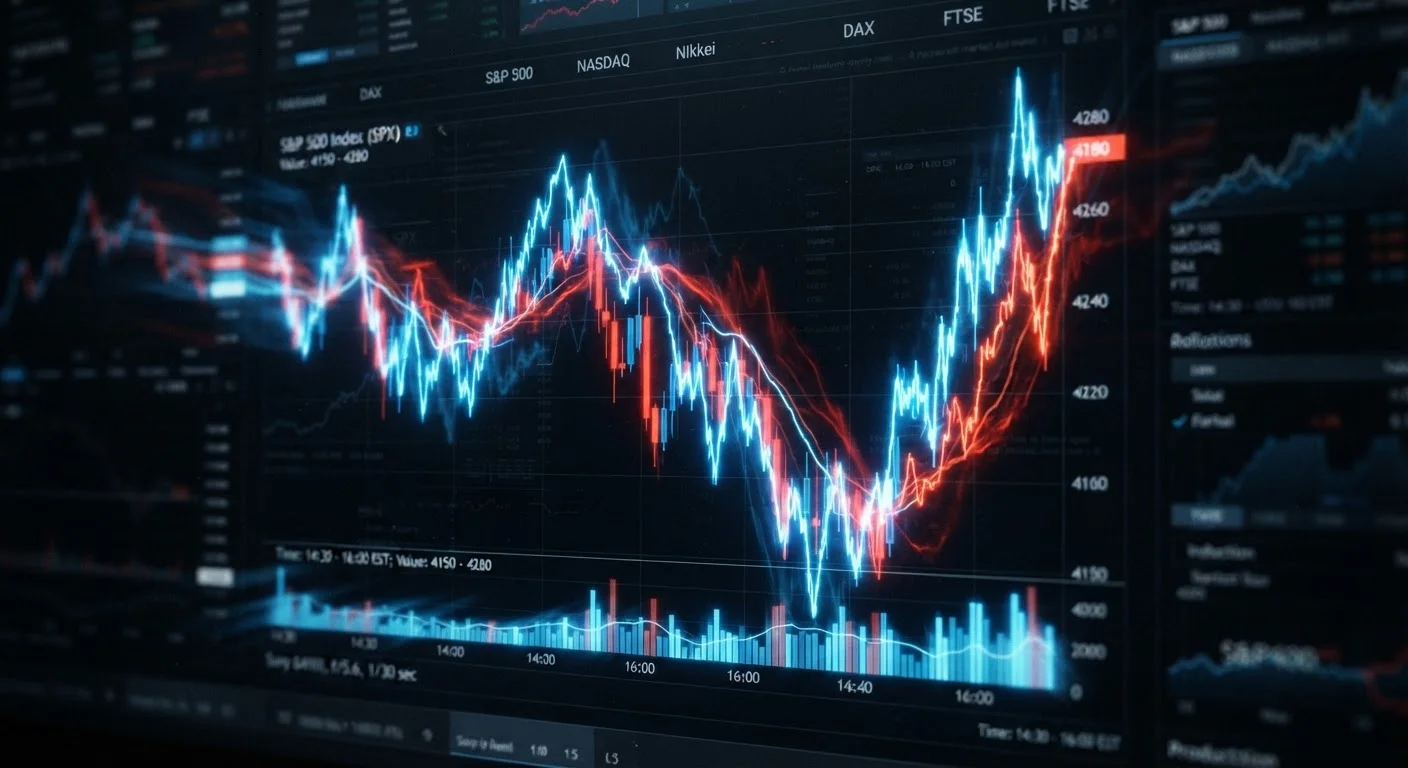
Many first-time investors are surprised to discover that stock prices can rise and fall significantly within a single day - sometimes for no obvious reason. This movement is volatility at work. At its core, a stock price represents what buyers and sellers agree it's worth right now, and that agreement shifts constantly as new information enters the market.
Markets process enormous amounts of data in real time: corporate earnings, unemployment figures, inflation reports, foreign policy developments, and even large investors shifting money between asset classes. Each data point recalibrates expectations, and prices move accordingly. The result is the jagged, unpredictable line you see on any financial chart.
Understanding this helps take some of the fear out of watching your portfolio fluctuate. Volatility isn't a malfunction - it's how markets discover and update prices.
Volatility Is Not the Same as a Market Crash
It's easy to conflate volatility with catastrophic loss, but they're different in scale and duration. Volatility describes regular price fluctuation - including large single-day moves - that is a normal part of market behavior. A crash refers to a severe, rapid decline that is far less common. Most periods of high volatility resolve without becoming crashes, though there are no guarantees about future market behavior.
The Main Forces That Drive Price Swings
Several overlapping forces tend to amplify market volatility. Knowing them doesn't make markets predictable, but it does make the swings feel less random.
- Economic data releases: Reports on inflation, jobs, and GDP growth move markets because they shape expectations about corporate profits and central bank policy. A higher-than-expected inflation figure, for instance, can trigger fears of rising interest rates, which pressures stock prices.
- Central bank decisions: When the Federal Reserve adjusts interest rates or signals a policy shift, markets often react sharply. Rate changes affect borrowing costs across the entire economy, from corporations to consumers.
- Geopolitical events: Wars, trade disputes, elections, and international crises introduce uncertainty. Markets generally dislike uncertainty, so major geopolitical developments tend to increase volatility.
- Investor sentiment: Fear and greed move markets in ways that sometimes have little to do with underlying business fundamentals. See our guide to how psychology influences investing decisions for a closer look at this dynamic.
- Market structure: Algorithmic and high-frequency trading can accelerate price moves. When many automated systems respond to the same trigger simultaneously, swings can be sharper and faster than in earlier market eras.
~20%
Typical intra-year stock market decline
According to J.P. Morgan Asset Management's long-running Guide to the Markets, U.S. stocks have historically experienced an average intra-year decline of around 14-20%, yet ended positively in many of those same years.
VIX > 30
Level associated with elevated market stress
The CBOE Volatility Index (VIX) is commonly interpreted as signaling elevated market anxiety when it rises above 30, compared to its long-run average closer to 20.
36 times
S&P 500 corrections of 10%+ since 1950
Market data compiled by various financial research sources show the U.S. stock market has experienced dozens of corrections of 10% or more since 1950, illustrating how regularly volatility occurs in normal market cycles.
How Thoughtful Investors Approach Volatility
Experienced investors tend to treat volatility as a feature of the landscape rather than a crisis to escape. Several frameworks help with this.
Maintaining a long time horizon is perhaps the most commonly cited approach. Short-term price swings tend to look smaller when viewed against a decade-long chart. Investors who stay focused on long-term goals are generally less reactive to daily market noise. For context on what broad market cycles actually look like, it's worth understanding what bear and bull markets mean and why the labels matter less than you think.
Diversification - spreading investments across different asset types, sectors, and geographies - is another widely used strategy. The idea is that when one part of a portfolio falls, another part may hold steady or rise, cushioning the overall impact.
Portfolio rebalancing is a structured way to respond to volatility without making emotionally driven decisions. When market swings shift your asset mix away from your original targets, rebalancing brings it back. Our article on what rebalancing means and when to adjust a portfolio explains the mechanics in plain terms.
What experienced investors generally try to avoid is reactive decision-making - selling during a downturn out of fear or chasing recent winners. These are patterns explored in our piece on traps new investors frequently fall into.
Write Down Your Plan Before Volatility Hits
One practical habit financial advisers often recommend is documenting your investment goals, time horizon, and risk tolerance during calm market conditions. Having a written plan makes it easier to stay disciplined when markets become turbulent - because you're following a decision you made rationally, not reacting to fear in the moment.
This article is for general informational and educational purposes only and does not constitute personalized financial, investment, or tax advice. Consult a qualified financial adviser before making decisions based on your specific circumstances.