

Key Takeaways
- Saving prioritizes safety and accessibility; investing prioritizes growth over time.
- An emergency fund - typically three to six months of expenses - should generally come before investing.
- Investing involves risk, including the possibility of losing money; saving in insured accounts does not.
- Time horizon is the key factor in deciding which approach fits a given financial goal.
- Most people benefit from using both saving and investing strategies simultaneously.
Option A
Saving
The foundation of financial security.
Best for: Short-term goals, emergency funds, and money you may need within one to three years.
Option B
Investing
The engine of long-term wealth building.
Best for: Long-term goals like retirement or wealth accumulation where you can leave money untouched for years.
If you need the money within the next one to three years
Saving
Short time horizons leave little room to recover from market downturns. Keeping funds in an insured savings account protects their value.
If you're building wealth for retirement or a goal 10+ years away
Investing
A longer time horizon gives investments room to grow and recover from volatility, making the growth potential of investing more relevant than the safety of saving.
If you don't yet have an emergency fund
Saving
Without a cash cushion, an unexpected expense could force you to liquidate investments at a loss. Establish a safety net first.
If you want to outpace inflation over the long run
Investing
Savings account interest rates frequently trail inflation, meaning the real purchasing power of saved money can decline over time. Investments have historically offered greater long-term returns, though past performance does not guarantee future results.
What Separates Saving from Investing?
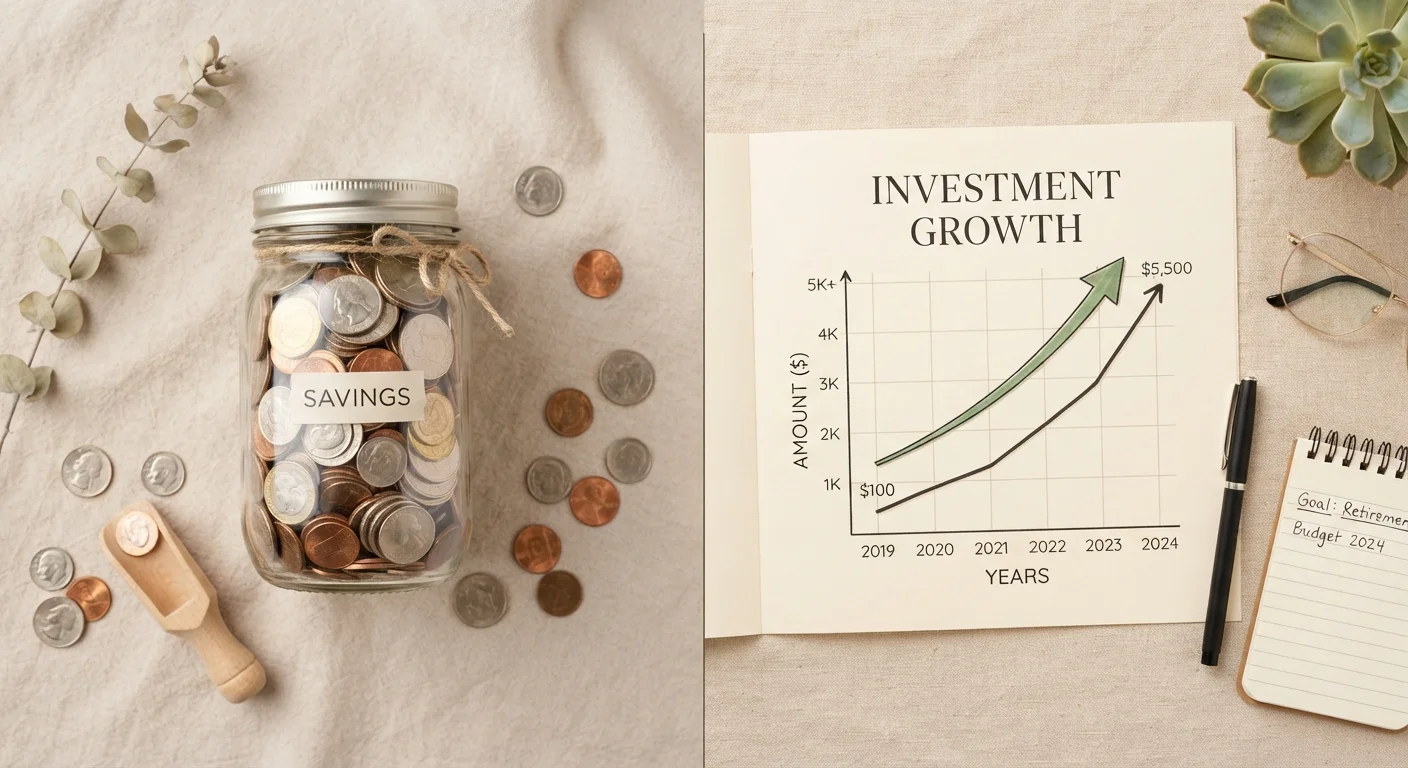
At their core, saving and investing are both ways of setting money aside - but they work very differently. Saving means placing money in a low-risk, accessible account (such as a bank savings account or a money market account) where the principal is protected. The goal is preservation and liquidity: your money is there when you need it. Investing means putting money into assets - such as stocks, bonds, or mutual funds - with the expectation that it may grow over time. That potential for growth comes with the trade-off of risk, including the possibility that the value of your investment could fall.
Think of saving as a sturdy shelf: reliable, steady, and exactly where you left it. Investing is more like planting seeds - with patience, they can grow considerably, but weather and timing matter. Understanding which tool fits which job is the foundation of sound personal finance.
| Criterion | Saving | Investing |
|---|---|---|
| Primary purpose | Preserve money, maintain access | Grow money over time |
| Risk level | Very low (insured accounts) | Varies; loss of principal possible |
| Typical time horizon | Short-term (under 3 years) | Long-term (3+ years, often decades) |
| Liquidity | High - accessible quickly | Lower - may take time or cost to access |
| Inflation protection | Limited; rates may trail inflation | Historically stronger over long periods |
| Best used for | Emergency fund, near-term goals | Retirement, long-term wealth building |
This article is for general informational purposes only and does not constitute personalized financial, investment, or tax advice. Consult a licensed financial professional for guidance specific to your situation.
When Saving Makes More Sense
Saving is the right first move in several clear situations. The most important is building an emergency fund - a cash reserve covering roughly three to six months of essential living expenses. An emergency fund acts as a financial buffer so that an unexpected car repair or medical bill doesn't derail your broader plans or force you to sell investments at an inopportune time.
Saving also makes more sense for short-term goals: a vacation planned for next year, a down payment you'll need in 18 months, or any expense you anticipate within roughly three years. When the timeline is short, the market's volatility poses a real threat - there simply isn't enough time to recover from a downturn. Keeping those funds in an insured account protects what you've set aside.
~56%
US adults with less than 3 months of emergency savings
A 2023 Bankrate survey found that a majority of American adults would struggle to cover an unexpected expense from savings alone.
3-6 months
Recommended emergency fund coverage
Financial planning guidelines commonly suggest maintaining three to six months of essential living expenses in an accessible, insured account.
How you structure that saving also matters. Budgeting approaches like pay-yourself-first can help you consistently direct money into savings before discretionary spending takes over.
When Investing Makes More Sense
Once a solid savings foundation is in place, investing becomes the more effective tool for goals that are years or decades away. The most common example is retirement. Because retirement savings typically sit untouched for 20 to 40 years, they have time to ride out market fluctuations and benefit from long-term compounding - the process by which returns generate their own returns over time.
A critical concept here is time horizon: how long you plan to leave money invested before you need it. Time horizon shapes everything, from how much risk is appropriate to what types of assets may fit your goals. Generally, a longer horizon allows for more tolerance of short-term volatility.
Inflation is another reason investing becomes important over time. Money held in low-yield savings accounts may lose purchasing power if interest rates don't keep pace with inflation. Historically, diversified investment portfolios have offered returns that outpace inflation over long periods - though this is not guaranteed. Understanding what investing actually involves is a useful starting point before committing any money.
Tax-advantaged accounts - such as 401(k)s and IRAs - are often the first place to consider for long-term investing. These account types offer meaningful tax benefits that can significantly affect how much you keep over time. Comparing tax-advantaged account options can help clarify which structure fits your situation.
Risk Is Part of Investing - By Design
All investing involves risk, including the potential loss of the money you put in. Markets go up and down, and short-term losses are a normal part of long-term investing. This is why time horizon matters so much: the longer your timeline, the more opportunity there is to recover from downturns. Never invest money you may need in the near term, and consider speaking with a licensed financial adviser before making investment decisions.
Using Both Together: A Practical Framework
Saving and investing aren't competing choices - for most people, both play an active role at the same time. A practical general sequence looks like this:
- Cover immediate needs first. Make sure monthly expenses are manageable before setting money aside for the future.
- Build an emergency fund. Three to six months of essential expenses in an accessible, insured account.
- Invest for long-term goals. Once the emergency fund is in place, direct additional dollars toward investing - particularly through tax-advantaged retirement accounts if available to you.
- Save separately for medium-term goals. A home down payment or a major expense in the next two to three years belongs in savings, not investments.
The exact balance depends on your income, expenses, goals, and risk comfort level - factors a licensed financial adviser can help you assess. Developing consistent investing habits over time, even with modest amounts, is a principle that appears frequently in discussions of long-term financial planning.
This article is for general informational and educational purposes only. It does not constitute personalized financial, investment, tax, or legal advice. Always consult a qualified financial professional before making decisions about your own money.