

Key Takeaways
- The plate method divides your dish into proportional sections without calorie counting.
- Visual cues like your hand or common objects can guide reasonable portion sizes.
- Prioritizing vegetables and protein supports satiety and nutrient density.
- Consistency across meals matters more than perfection at any single sitting.
- Balanced eating habits are sustainable when they're practical rather than obsessive.
What you will need
Why Portion Awareness Matters More Than Calorie Math
Calorie counting can be a useful tool for some people, but for many it becomes tedious, inaccurate, and - over time - unsustainable. Research consistently shows that estimates of calorie content, even by trained professionals, carry significant margins of error. Food labels themselves are permitted a degree of variance, and cooking methods further shift the actual energy content of a meal.
A more durable approach is portion awareness: a practical understanding of how much of each food group you're eating relative to the rest of your plate, without requiring a food diary or tracking app. This is the principle behind frameworks like the USDA's MyPlate, which replaced the older food pyramid with a visual plate-based model to make balance more intuitive.
The goal isn't perfection at every meal. It's building a pattern over time - one that provides adequate protein, fiber, vitamins, and healthy fats without regularly over-emphasizing any single food group. Pair this with a regular nutrition self-check and you have a practical system for staying on track.
This Approach Is General Guidance, Not Medical Advice
The plate method is a widely used educational framework for general healthy eating. It is not a substitute for personalized nutrition advice. Individual needs vary significantly based on age, activity level, medical history, and other factors. If you have a specific health condition, are pregnant, or have concerns about your diet, please consult a registered dietitian or your healthcare provider.
How to Build a Balanced Plate Step by Step
The following steps walk through a straightforward approach to assembling a nutritionally balanced meal using visual proportions rather than measurements. You'll need a standard-sized plate and a basic awareness of food groups.
What you will need
Standard Dinner Plate
Used as the visual template for dividing food groups into balanced proportions.
Your Hand
Serves as a portable, personal-scale guide for estimating protein, grain, and fat portions.
Measuring Cups (occasional use)
Helpful during an initial learning period to calibrate your visual estimates - not for daily use.
Divide your plate into three visual zones
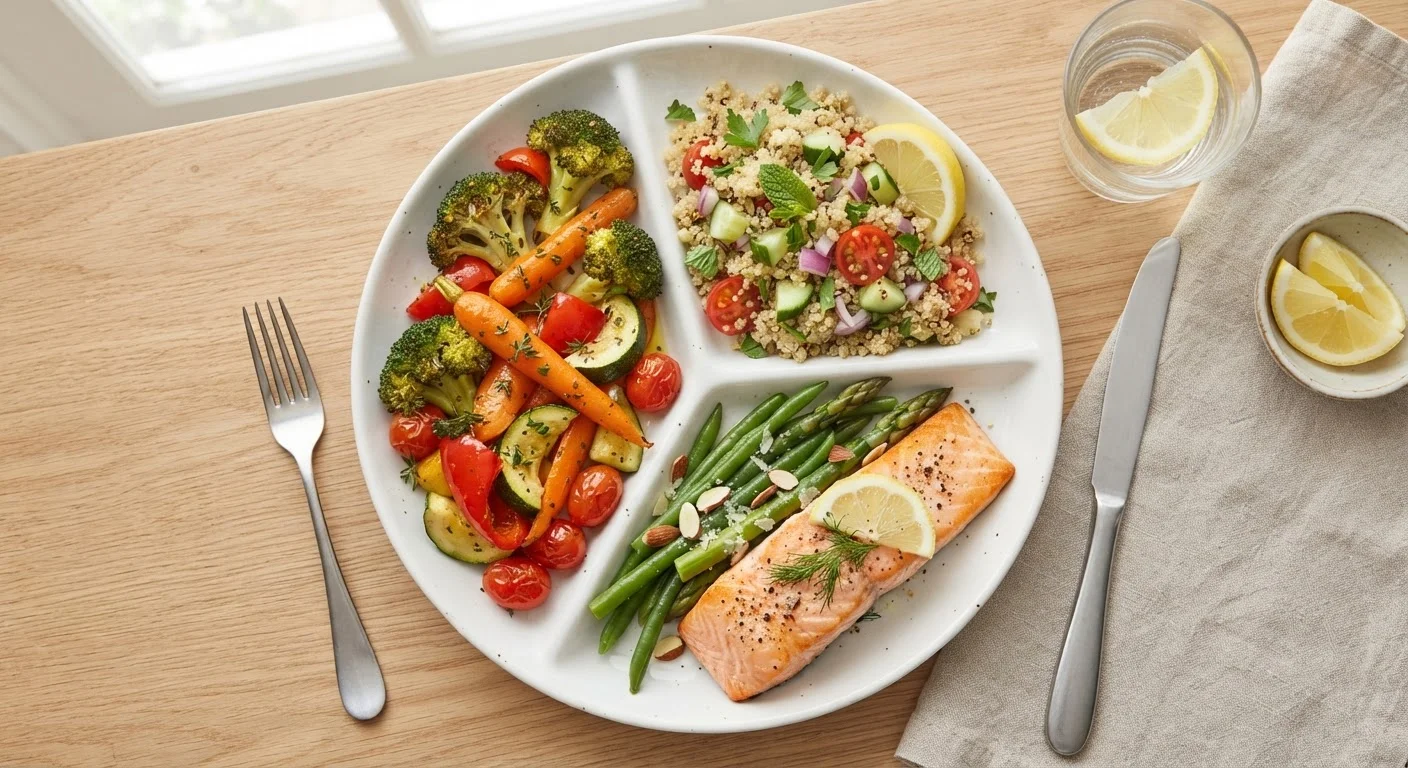
Before serving any food, mentally divide your plate in half, then split one of those halves in half again. You now have three sections: one large half and two smaller quarters. These zones will hold vegetables, protein, and grains or starchy foods respectively.
Fill the large half with non-starchy vegetables
The biggest section of your plate - half of it - should be filled with non-starchy vegetables. Think leafy greens, broccoli, peppers, cucumbers, tomatoes, or zucchini. These foods are high in fiber, vitamins, and minerals while being relatively low in caloric density, meaning they help you feel full without crowding out other nutrients.
Variety matters here. A mix of colors generally signals a broader range of micronutrients.
Add a palm-sized portion of protein
One quarter of your plate should hold a lean or plant-based protein source - chicken, fish, eggs, tofu, legumes, or Greek yogurt are common examples. A rough visual guide: aim for a portion roughly the size and thickness of your palm. This naturally scales to your body size, making it more personalized than a fixed gram target.
Protein supports muscle maintenance and contributes meaningfully to satiety, helping reduce the urge to snack between meals.
Use the remaining quarter for grains or starchy foods
The final quarter of your plate is for energy-dense carbohydrates: whole grains like brown rice, quinoa, or whole wheat pasta, or starchy vegetables like sweet potato or corn. Whole-grain options provide more fiber and nutrients than their refined counterparts, supporting steadier energy levels.
A cupped handful is a reasonable visual guide for cooked grains. This portion can flex up or down based on your activity level and hunger, but keeping it to roughly a quarter of the plate prevents it from crowding out vegetables.
Add a small amount of healthy fat
Dietary fats are essential for absorbing fat-soluble vitamins and supporting cell function. A thumb-sized portion of added fat - olive oil as a dressing, a few slices of avocado, or a small handful of nuts - rounds out a balanced plate. Fats are calorie-dense, so a modest addition is usually sufficient to provide both flavor and function.
Pause and check in with your hunger before seconds
After finishing your plate, wait five to ten minutes before deciding whether you need more food. Satiety signals from the gut take time to reach the brain - eating slowly and pausing between servings allows your body's feedback system to catch up. If you're still genuinely hungry, adding more vegetables or a small additional protein portion is a reasonable choice.
The Plate Method Works at Restaurants Too
You don't need to be at home for this approach to be useful. When eating out, mentally apply the same proportions to whatever is served. If the grain or protein portion dominates, consider shifting some of it to the side and requesting extra vegetables. For more strategies, see our guide on eating out without losing track of your nutritional goals.
Rigid Rules Can Backfire
Portion awareness is meant to reduce stress around eating, not add to it. Research on eating behavior suggests that highly restrictive or obsessive tracking can contribute to an unhealthy relationship with food for some individuals. If you find yourself anxious, guilty, or preoccupied with food quantities, speaking with a healthcare professional or registered dietitian is a worthwhile step.
For a broader view of how this fits into a weekly eating pattern, the meal planning framework provides a complementary structure. And if you're interested in how similar principles apply to a well-researched dietary pattern, see our overview of the Mediterranean diet.
This article is for general informational purposes only and does not constitute medical or nutritional advice. Individual dietary needs vary. Please consult a qualified healthcare professional or registered dietitian for guidance tailored to your personal health circumstances.