

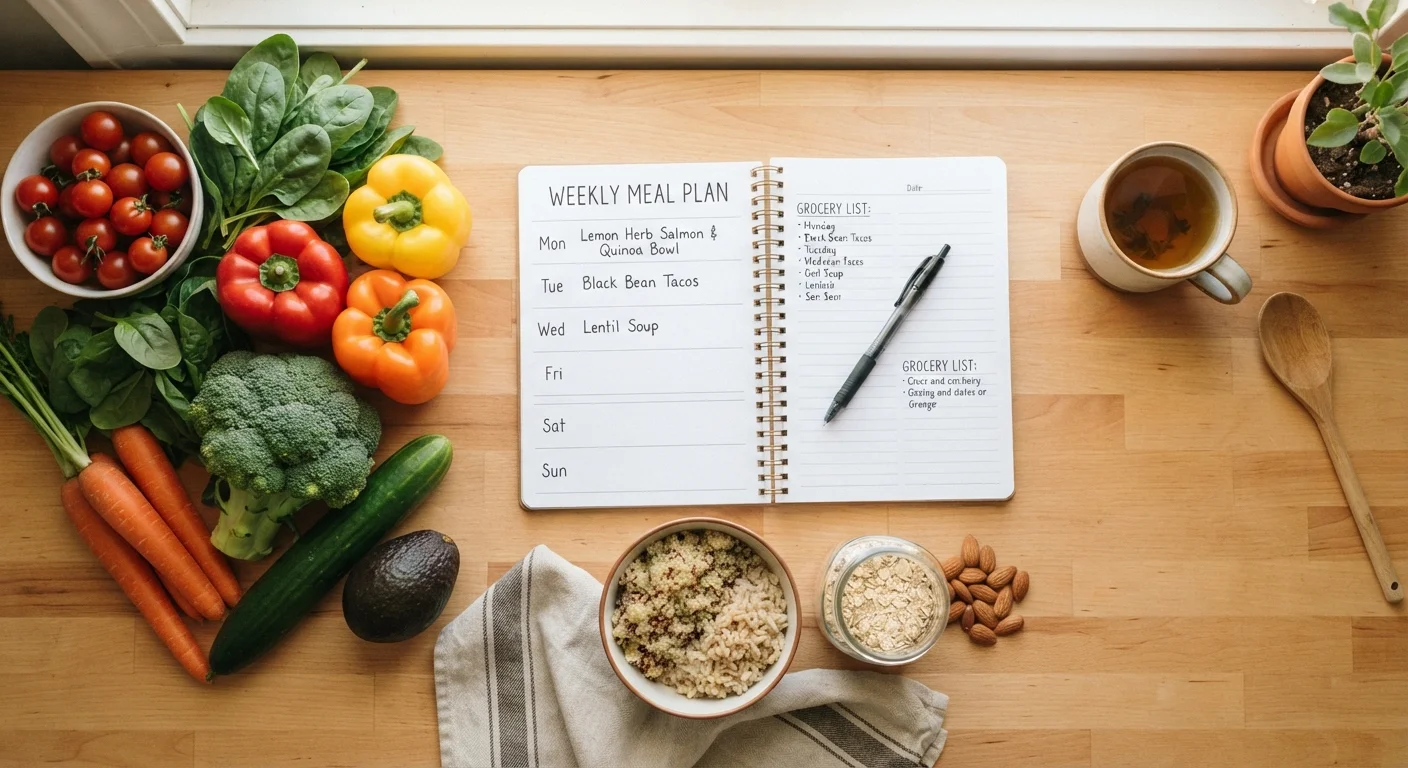
Key Takeaways
- A weekly meal plan reduces daily decision fatigue and makes nutritious choices more automatic.
- Auditing what you already have at home before planning saves time and cuts food waste.
- Batch cooking a few foundational ingredients covers multiple meals without extra daily effort.
- Building flexibility into your plan - not rigid perfection - makes the habit sustainable long-term.
- Pairing your meal plan with a grocery list keeps shopping focused and reduces impulse purchases.
What you will need
Why Weekly Meal Planning Works
Most people don't eat poorly because they lack nutritional knowledge - they eat poorly because healthy choices require more effort than convenient ones in the moment. Weekly meal planning addresses that directly by front-loading the decision-making. When you've already decided what's for dinner on Thursday, you don't need willpower on Thursday evening; you just follow the plan.
Research consistently links meal planning to more diverse diets, lower rates of food waste, and better adherence to nutritional goals. It doesn't require elaborate spreadsheets or hours of cooking. A practical framework focuses on reducing friction, not achieving perfection. For a broader look at how your current eating habits stack up, a weekly nutrition self-assessment can help you identify gaps worth addressing before you start planning.
What you will need
What You'll Need Before You Start
Gathering the right tools and information before sitting down to plan makes the process faster and more realistic. The goal is a plan that fits your actual life - not an idealized version of it.
Planning template or app
Provides a structured grid to map meals across each day of the week.
Grocery list (paper or digital)
Captures everything you need to buy based on your plan, preventing mid-week store runs.
Food storage containers
Essential for batch cooking and storing prepped ingredients safely in the fridge or freezer.
Kitchen scale or measuring cups
Useful for portioning batch-cooked staples consistently across meals.
Step-by-Step: Building Your Weekly Meal Plan
Work through these steps once per week - ideally on the same day each week so it becomes routine. Most people find that Sunday or the evening before their main grocery run works well.
Audit your pantry, fridge, and freezer
Before planning a single meal, spend five minutes scanning what you already have. Note proteins, grains, canned goods, and vegetables that need to be used. Building your plan around existing ingredients first reduces waste and cuts grocery costs. Prioritize anything approaching its use-by date.
Map your week's schedule first
Check your calendar before assigning meals. A 45-minute dinner recipe doesn't fit a night when you're home at 7:30 p.m. Assign quick, minimal-prep meals to your busiest evenings and save longer cooking projects for days when you have time. This is what separates a realistic plan from one that collapses by Tuesday.
Choose a balanced meal structure
For each meal, aim to include a protein source, a complex carbohydrate, and plenty of vegetables. You don't need to count grams or track macros to achieve this - a visual approach works well. For practical guidance on proportions without obsessive tracking, see building a balanced plate. If you're unsure which foods provide adequate protein, protein sources across food groups offers a clear reference by food category.
Write your grocery list from the plan
With your meals mapped, list every ingredient you need that you don't already have at home. Organize the list by supermarket section (produce, proteins, dairy, dry goods) to make the shopping trip faster. A focused list also reduces the impulse purchases that quietly inflate both your grocery bill and your calorie intake.
Batch prep a few foundational ingredients
After shopping, spend one session - typically one to two hours - cooking foundational ingredients rather than full meals. Cooked grains, roasted vegetables, and a prepared protein can be mixed and matched across several days. This approach gives you flexibility mid-week without requiring daily cooking from scratch.
Start Smaller Than You Think You Should
If weekly planning feels overwhelming, start by planning just dinners - lunches and breakfasts can follow once the habit is established. Even a partial plan is significantly better than no plan at all. Consistency over weeks builds more durable habits than a perfect but unsustainable system attempted once.
Making the System Sustainable
The biggest obstacle to consistent meal planning isn't the planning itself - it's over-planning. Scheduling seven perfectly optimized dinners leaves no room for the inevitable takeout night, social dinner, or evening when energy is low. Build deliberate flexibility by planning five dinners and leaving two open. If you do cook all five, great. If not, you're still ahead.
Meal planning also pairs naturally with other healthy habits. When your meals are mostly prepared, it's easier to support an active week - see how to build a weekly workout schedule that sticks alongside your nutrition routine. And if budget is a concern, healthy eating on a budget offers practical approaches to getting good nutrition without overspending. Even when the plan meets a restaurant meal, it doesn't have to derail progress - strategies for eating out without losing track of nutritional goals can help you stay consistent.
Don't Treat the Plan as a Rule
A meal plan is a tool, not a contract. If circumstances change mid-week - you're tired, you get an invitation to dinner, leftovers need using - adapt without guilt. The goal is a generally more structured approach to eating, not rigid compliance. Flexibility is part of a sustainable system, not a failure of it.
This article is for general informational purposes only and does not constitute medical or dietary advice. Consult a registered dietitian or qualified healthcare professional for guidance tailored to your individual health needs.