

Key Takeaways
- Most Americans consume roughly half the fiber their bodies need each day.
- Soluble fiber helps manage blood sugar and cholesterol; insoluble fiber supports regular digestion.
- Whole grains, legumes, fruits, and vegetables are the richest dietary sources of fiber.
- Increasing fiber intake gradually - and with adequate water - reduces digestive discomfort.
- Fiber also feeds beneficial gut bacteria, supporting a healthy microbiome.
Dietary Fiber
Dietary fiber is the indigestible part of plant foods - such as fruits, vegetables, legumes, and whole grains - that passes through the digestive system largely intact. Unlike proteins, fats, and digestible carbohydrates, fiber is not broken down for energy. It plays a critical role in digestive health, blood sugar regulation, and heart health.
Fiber is broadly classified into soluble fiber, which dissolves in water and forms a gel-like substance, and insoluble fiber, which adds bulk to stool. Most whole plant foods contain both types in varying proportions.
Why Fiber Is a Nutritional Priority
Dietary fiber is one of the most consistently under-consumed nutrients in the American diet, yet it is linked to a wide range of health outcomes that matter to everyday wellbeing. Research has associated adequate fiber intake with lower risks of cardiovascular disease, type 2 diabetes, and certain digestive conditions, as well as better weight management and improved gut health.
Despite this, national dietary surveys suggest that most Americans take in only about half the recommended daily amount. The primary driver is the prevalence of ultra-processed foods, which are low in fiber, and the displacement of whole plant foods in typical eating patterns. Understanding what fiber does - and where to find it - is a practical starting point for changing that.
~15 g
Average daily fiber intake for US adults
The Dietary Guidelines for Americans estimate average adult consumption at roughly 15-16 grams per day - well below the 25-38 gram recommendation.
95%
Americans falling short of fiber recommendations
According to research published in the American Journal of Lifestyle Medicine, approximately 95% of Americans do not meet daily fiber intake recommendations.
25-38 g
Recommended daily fiber intake for adults
The Academy of Nutrition and Dietetics recommends 25 grams per day for adult women and 38 grams per day for adult men.
Soluble vs. Insoluble Fiber: What Each Does
Soluble fiber dissolves in water to form a viscous gel in the digestive tract. This slows the absorption of glucose, helping to moderate blood sugar responses after meals, and it can bind to cholesterol in the gut, reducing how much the body absorbs. Oats, barley, apples, citrus fruit, and legumes are particularly rich in soluble fiber. For more on how meal composition shapes blood sugar, see our guide to blood sugar and food.
Insoluble fiber does not dissolve in water. Instead, it adds bulk to stool and helps food move through the digestive system more efficiently, reducing constipation and supporting regularity. Whole wheat, bran, many vegetables, and the skins of fruits are high in insoluble fiber.
Both types are valuable and most fiber-rich whole foods contain a blend of both, which is one reason dietary variety matters more than focusing on a single food or supplement.
Fiber and Medication Interactions
Very high fiber intake can affect the absorption timing of some medications. If you take prescription medications regularly - particularly those for thyroid conditions, diabetes, or heart disease - speak with your pharmacist or prescribing physician before significantly increasing your fiber intake. This is especially relevant for fiber supplements taken alongside medications.
Best Food Sources and How to Eat More
Boosting fiber intake does not require dramatic dietary changes. The most effective approach is substitution and addition - swapping refined grains for whole grains, building meals around legumes and vegetables, and keeping fruit accessible as a snack.
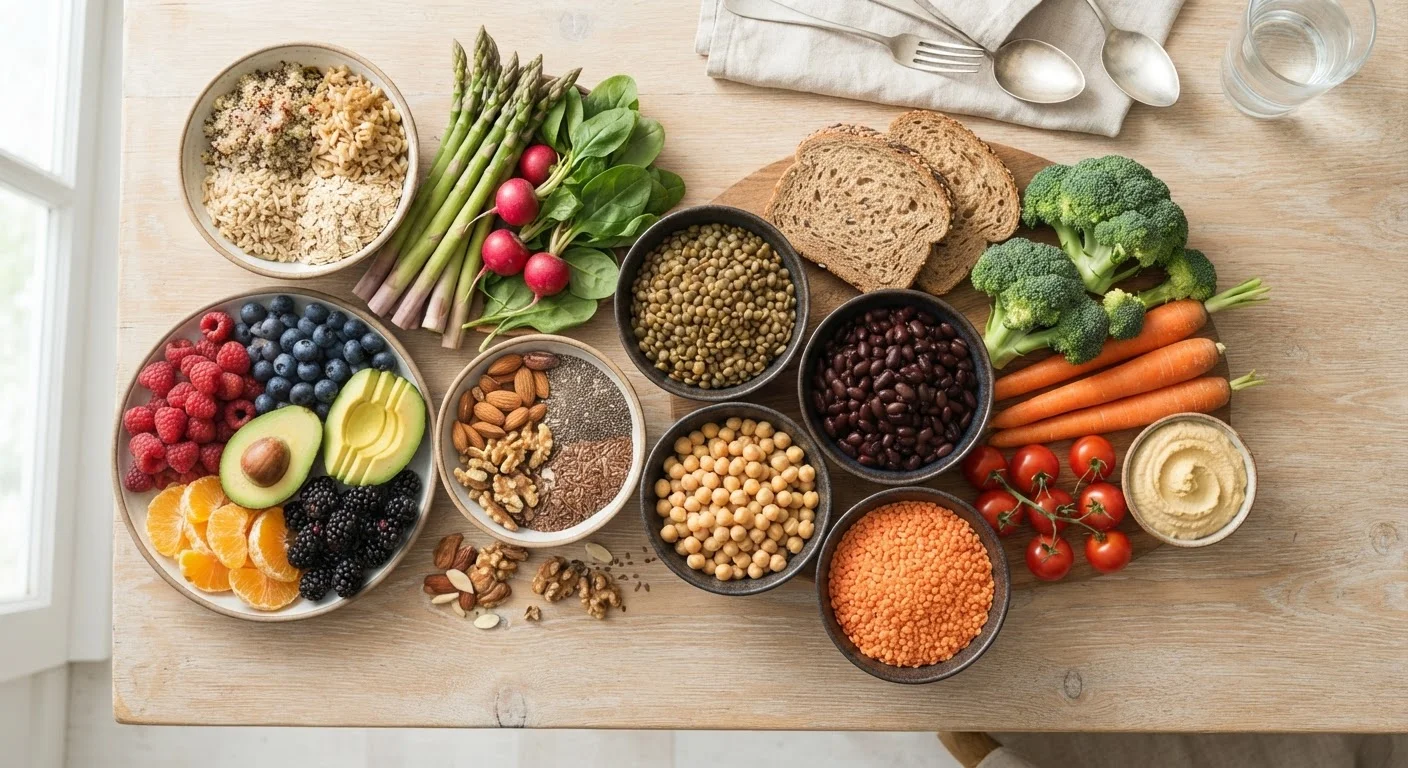
- Legumes: Lentils, black beans, chickpeas, and kidney beans provide among the highest fiber densities of any food, often 6-8 grams or more per half-cup cooked.
- Whole grains: Oats, barley, whole wheat bread, and brown rice offer considerably more fiber than their refined equivalents.
- Vegetables: Broccoli, Brussels sprouts, carrots, and artichokes are particularly fiber-dense among common vegetables.
- Fruits: Pears, apples (with skin), raspberries, and avocados are good sources of both soluble and insoluble fiber.
- Nuts and seeds: Chia seeds, flaxseeds, and almonds contribute fiber alongside healthy fats.
Fiber also plays an important role in nourishing gut bacteria. Many fiber-rich foods act as prebiotics - compounds that selectively feed beneficial microbes. For a deeper look at that connection, see our article on how food choices influence the gut microbiome.
Read the Nutrition Label for Fiber
When choosing packaged foods, check the Nutrition Facts panel for dietary fiber. A food providing 5 grams or more per serving is generally considered a 'high' fiber source; 2.5 grams or more qualifies as a 'good' source. Ingredient lists can also reveal whether a grain-based product genuinely uses whole grains as the primary ingredient.
Practical Tips for Increasing Fiber Gradually
One of the most common pitfalls is adding fiber too quickly. The gut microbiome needs time to adjust to a higher-fiber diet, and a rapid increase often causes bloating, cramps, and gas. A gradual increase over several weeks - paired with increased water intake - allows the digestive system to adapt comfortably.
Practical strategies include adding a serving of beans to soups or salads, choosing whole-grain bread over white, starting the day with oats or a high-fiber cereal, and keeping fresh or frozen vegetables on hand for easy additions to any meal.
For context on evaluating broader nutrition guidance you encounter, our article on evaluating online nutrition sources is a useful companion resource.
“Dietary fiber is not a single nutrient but a family of compounds, each with distinct properties and health effects. Treating fiber as a category - and eating a variety of plant foods - is more likely to deliver benefits than focusing on any one source.”
— David Katz, Physician and founding director of the Yale-Griffin Prevention Research Center
This article is for informational purposes only and is not a substitute for professional medical or dietary advice. Consult a qualified healthcare provider for guidance specific to your health needs.